Writers on Writing

What dystopian stories teach us about who controls history: An exploration of cultural narrative in Ruins

While reading Ruins, the latest novel by Lily Brooks-Dalton, I found myself thinking less about the far-future world it imagines and more about the stories civilizations tell about themselves — and why those stories so often begin to unravel the moment someone steps outside their borders. Set in a distant future where American civilization is long gone and no written records survive, Ruins follows an archaeologist who begins to question the official histories preserved by Leadership. In this world, what is accepted as truth has been shaped over thousands of years of retelling, and stability depends on the population’s belief in those narratives.

Civilizations survive through stories — but whose stories get left out? Inspired by Lily Brooks-Dalton’s Ruins, this post explores rules, exceptions, and the hidden structures of society.

It wasn’t just the mystery at the heart of the novel that stayed with me, but the way it mirrors a recurring pattern in literature: civilizations rely on shared stories to create order. Without these stories, cooperation becomes fragile, meaning begins to fray, and identity itself can feel uncertain. But stories, by necessity, simplify. They smooth contradictions, minimize uncertainty, and quietly remove perspectives that do not fit the larger arc. And what disappears is often invisible to those living comfortably within the story.

Continue reading “What dystopian stories teach us about who controls history: An exploration of cultural narrative in Ruins” →
Ask the Author

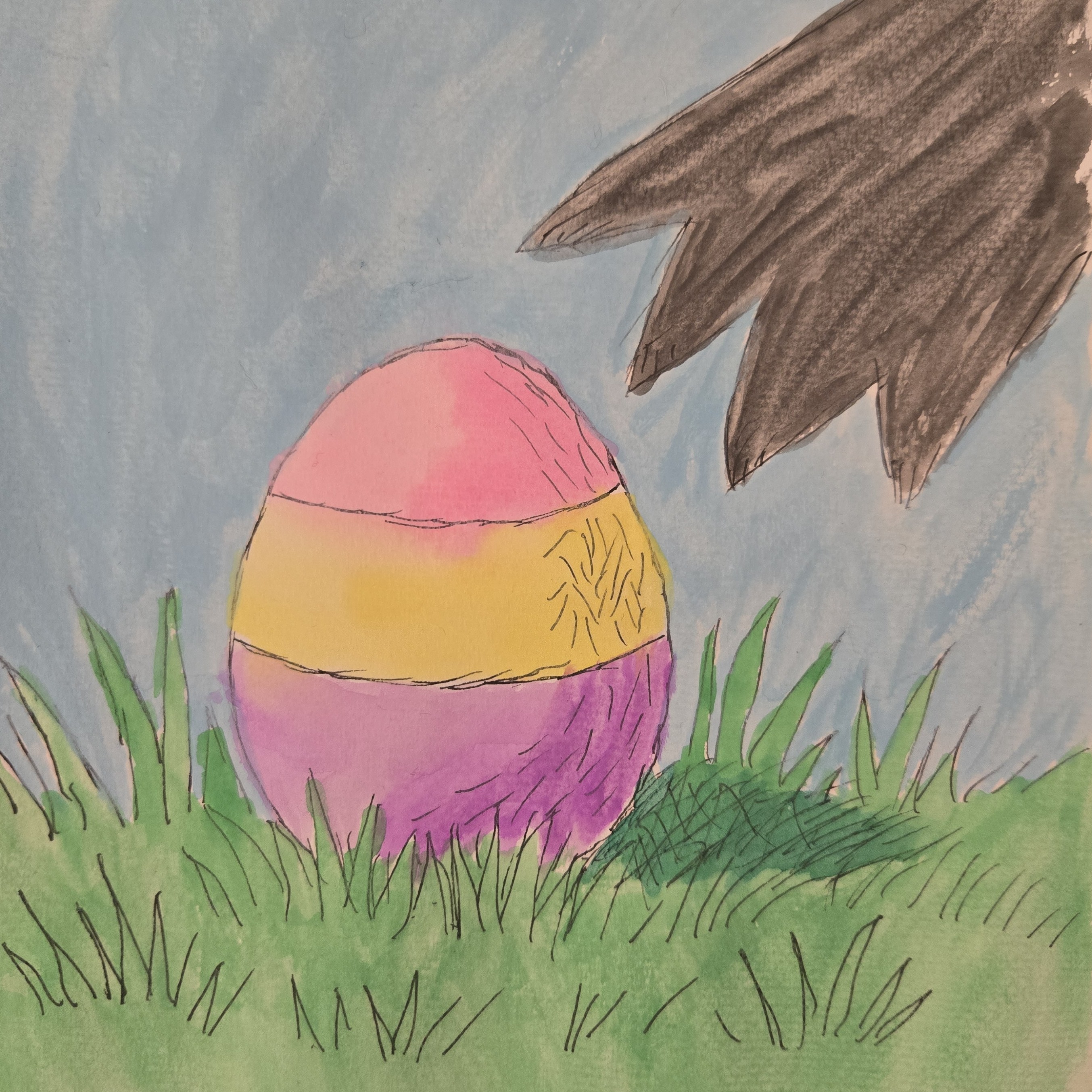
Ask the Author: Are easter eggs in novels just foreshadowing?

If you spend enough time on bookish social media, you’ll eventually see someone point out an “easter egg” in a novel—and there’s a good chance they’re actually talking about something else entirely. This is the topic of today’s Ask the Author.

Dear Mandy,

Question: Are easter eggs in a novel just foreshadowing?

Not every hidden detail in a story is an “easter egg.” Some are clues, some are foreshadowing—and some are just there for readers who like looking a little closer. In today’s Ask the Author, I unpack the difference– and how the internet sometimes gets literary terms hilariously wrong.

Answer: Lately I’ve noticed a lot of readers on social media using the term easter egg when what they really mean is foreshadowing. The two are not the same thing, even though they both involve details hidden in a story.

Foreshadowing is a storytelling technique. It’s when an author plants clues early in the narrative that hint at something that will happen later. A seemingly harmless line of dialogue, an object that appears briefly in chapter two, a character’s odd reaction to something—these details quietly prepare the reader for future events. When the twist or revelation finally arrives, the earlier hints suddenly make sense. Good foreshadowing makes a story feel inevitable rather than random.

Continue reading “Ask the Author: Are easter eggs in novels just foreshadowing?” →
Essays

Thankful for stories: how books anchor us during the holidays

As the holidays approach, our lives often feel packed with family obligations, travel, and the endless bustle of preparation. It’s easy to get swept up in the chaos, but there’s a quiet refuge I return to every year: stories. Books have a way of anchoring us, even during the busiest, most stressful times, offering both comfort and connection.

Some of my favorite stories are those I’ve heard around the dinner table with family and friends!

I’m grateful for the ways reading bridges generations—like the book you lent your sister, or the series your grandma read to you as a child, which she also read to your father and that you eventually shared with your own kids. Stories create shared experiences across time, connecting us in ways that linger long after the last page is turned.

Continue reading “Thankful for stories: how books anchor us during the holidays” →
Essays

Writing (and reading) through the holiday chaos: finding focus when life gets loud

The holidays are supposed to be a time of joy and connection, but for many of us, they also bring a whirlwind of obligations: family gatherings, travel, shopping, cooking, and endless to-do lists. Amid the chaos, finding time to write, read, or simply pause can feel impossible. Yet even during the busiest season of the year, it’s possible to carve out moments for creativity and reflection—if you approach it with intention and compassion.

Amid the holiday bustle, it’s important to carve out a moment for yourself to write and reflect—even when life around you is loud.
  • Set smaller, achievable goals: When life is hectic, long writing sessions or ambitious reading lists can feel overwhelming. Break your projects into smaller, manageable chunks. Write for twenty minutes in the morning, read a chapter before bed, or jot down ideas in a notebook while sipping your coffee. Small, consistent efforts often add up more than you realize—and they keep your creative momentum alive.
Continue reading “Writing (and reading) through the holiday chaos: finding focus when life gets loud” →
Book Reviews, Find Your Next Read

The Trap you won’t see coming: Catherine Ryan Howard’s masterclass in modern crime fiction

Catherine Ryan Howard’s The Trap is a masterfully crafted psychological thriller that deserves far more attention than its underwhelming cover might suggest. Inspired by the real-life disappearances of women in 1990s Ireland, the novel is as unsettling as it is propulsive, offering a chilling and suspenseful exploration of grief, obsession, and the desperate human need for answers.

Get your copy of The Trap from my independent online bookstore today!

The story unfolds through three distinct perspectives: Lucy, a woman determined to catch her sister’s killer after her mysterious disappearance; Angela, a civilian working with the Irish police whose side investigation threatens both the case and her career; and a nameless predator whose terrifying narration will keep your heart pounding. These shifting points of view give the book its pace and emotional heft, and Howard moves between them with expert precision.

Continue reading “The Trap you won’t see coming: Catherine Ryan Howard’s masterclass in modern crime fiction” →
Social Commentary

Ancient Technology Freed Humanity—Modern Tech Keeps Us Trapped

Ancient inventions like the wheel and the needle gave humanity the freedom to create art and stories, but modern technology has trapped us in a new kind of survival mode.

Throughout history, technological advancements have transformed the way humans live, work, and think. In ancient times, simple but revolutionary inventions such as the knife, the needle, and the wheel began to free humans from the constant struggle for survival. These tools enabled people to hunt, sew clothing, and transport goods more efficiently, allowing them to devote time and energy to higher-level activities such as storytelling, art, and religion. These pursuits not only enriched individual lives but also fostered the development of complex societies. By freeing humans from the grip of immediate survival, ancient technologies created the foundation for cultural and intellectual progress.

Continue reading “Ancient Technology Freed Humanity—Modern Tech Keeps Us Trapped” →
Finish Writing Your Novel Now!

How to Improve the Pacing of Your Novel Manuscript

Pacing is a vital element of storytelling that keeps readers engaged, guiding them through your novel’s peaks and lulls with the right amount of tension and release. If pacing is too slow, readers may lose interest; if it’s too fast, they might feel lost or overwhelmed. Finding the right balance is essential to delivering a satisfying story that readers can’t put down. Below is a quick guide on how to improve the pacing of your novel manuscript, from structuring scenes to managing detail and dialogue.

Your novel isn’t a race. The pacing should ebb and flow in a way that keeps readers engaged without overwhelming them. The goal is to get the reader to “The End” at a pace that leaves them wanting to read your next book.

Use Scene Structure to Build Momentum

The structure of your scenes directly impacts pacing. To maintain momentum, try following a clear goal-conflict-outcome structure in each scene. Begin with a character’s goal, introduce obstacles or conflict, and end with a consequence or revelation. This structure not only drives the plot forward but also helps create an engaging rhythm.

Continue reading “How to Improve the Pacing of Your Novel Manuscript” →
Finish Writing Your Novel Now!

How to check for consistency when revising your novel manuscript

Consistency is a crucial yet sometimes overlooked aspect of novel revision. When elements like character traits, timeline details, or even place names vary across chapters, readers may feel disoriented, which can pull them out of the story. Catching these inconsistencies is key to building a cohesive, believable world for your readers.

When revising and refining your novel manuscript, it will likely feel like there are an infinite number of details to keep track of!

Following are some strategies to help you check for and maintain consistency as you revise your novel manuscript:

Continue reading “How to check for consistency when revising your novel manuscript” →
Finish Writing Your Novel Now!

Tips and Tricks for Transitioning from Creator to Critic When Editing Your Novel

After pouring your heart and soul into drafting a novel, the editing stage can feel like a whole new mountain to climb. Shifting from the free-flowing creativity of writing to the analytical mindset needed for editing isn’t always easy, but making this transition is crucial for a polished, captivating manuscript.

As an author it’s important to learn how to transition efficiently from creator mode to critic mode when working through the revise and refine stage of the novel writing process.

Here are some tips and tricks to help you set aside your “creator” hat and put on your “critic” hat, so you can view your work with fresh, discerning eyes:

Continue reading “Tips and Tricks for Transitioning from Creator to Critic When Editing Your Novel” →
Finish Writing Your Novel Now!

Fine-tune your writing | Revise and Refine

Once structural issues in your manuscript are resolved, it’s time to focus on fine-tuning the writing itself. This stage of the novel writing process is all about polishing language, enhancing tone, and sharpening word choice to bring out the unique voice of your story. Look carefully at sentence flow, checking for rhythm and clarity; each sentence should build naturally into the next, making the prose smooth and engaging. Pay attention to descriptive details—are they vivid and evocative, or could they be strengthened?

Once you’ve addressed the big-picture issues in your novel manuscript, it’s time to start tinkering with the smaller problems.

This is also the moment to eliminate redundancies, awkward phrasing, and overly complex language that might slow readers down. Don’t forget to refine dialogue, ensuring it sounds authentic and reveals character. Fine-tuning is the last touch that elevates your manuscript from a draft to a compelling, immersive experience for readers.

Continue reading “Fine-tune your writing | Revise and Refine” →