Essays

Writing action scenes in novels: Why sequence and clarity matter

Nothing kills the momentum of an action scene faster than confusing choreography. Readers will forgive a lot in a fast-paced sequence. They’ll forgive impossible odds, dramatic coincidences, even a hero surviving injuries they probably shouldn’t. What they won’t forgive is not understanding where everyone is standing. One of the most common mistakes writers make in action scenes is putting events on the page out of sequence.

When action scenes lose their sequence, readers lose the thread. Clear choreography keeps readers inside the movement instead of forcing them to stop and untangle what happened.

The problem is usually small at the sentence level, but the effect on the reader is enormous because it forces them to stop, mentally rewind the scene, and reconstruct what actually happened. They’re no longer experiencing movement in real time—they’re translating it. And that translation breaks momentum.

The issue usually isn’t that the writing is unclear in isolation. Each sentence might make sense on its own. The problem is that the order of information doesn’t match the order of events as they happen in the scene. Readers don’t want to assemble a timeline. They want to experience it.

Continue reading “Writing action scenes in novels: Why sequence and clarity matter”
Ask the Author

Ask the Author: When does a novel become YA? Before you write it—or after?

Dear Mandy,

When do you decide if your novel is YA? Do you decide before you start writing or after you are done?

Answer: One of the questions writers ask constantly is whether a novel “counts” as Young Adult fiction. Sometimes the answer is obvious from page one. Other times, writers finish an entire manuscript before realizing they may have written for a different audience than they originally intended.

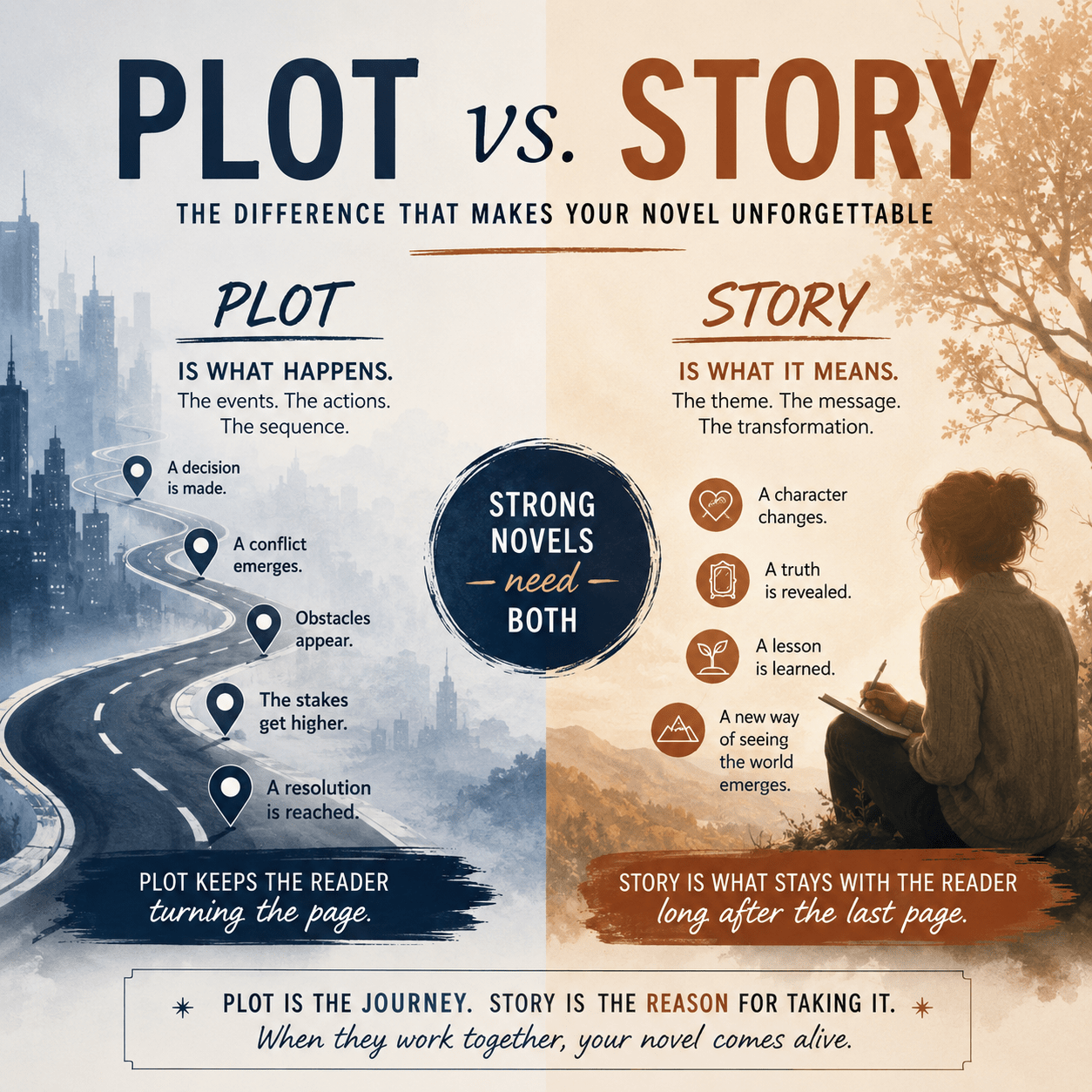
When does a novel become YA—and how much of that decision happens before you even write the first page? This graphic breaks down the key factors writers should consider, from voice and protagonist age to audience and market expectations, and why knowing who you’re writing for shapes every story choice you make.

The truth is that YA is both a category and a marketing designation, and those two things do not always align perfectly. At the most basic level, a Young Adult novel is written for teen readers, generally between the ages of twelve and eighteen. In publishing, though, that definition becomes much more flexible than people expect. A huge percentage of YA readers are adults, and many books with teen protagonists are actually shelved in adult fiction. That’s why YA is not determined by a single factor.

Continue reading “Ask the Author: When does a novel become YA? Before you write it—or after?”
Author Interview

Author interview: William M. Chippich on Beautiful and Terrifying and Nevermore: The Heir, The Witch, and The Fool

In this contributor interview, William M. Chippich—author of the upcoming novel Nevermore: The Heir, The Witch, and The Fool and contributor to Beautiful and Terrifying—shares the literary influences, writing habits, and creative philosophy that shape his character-driven fiction.

William M. Chippich brings a deep love of character-driven storytelling to every page he writes, whether he’s crafting the darkly atmospheric short story “Three or Four Miles, Mostly Flat” for Beautiful and Terrifying:Tales and Visions from the Edge of the Uncanny or building the richly imagined world of his forthcoming novel, Nevermore: The Heir, The Witch, and The Fool. In this interview, he reflects on the writers who first shaped his imagination, the discipline and creativity behind his process, and the themes of love, hope, and the unknown that continue to guide his work. From comic book legends and literary classics to the quiet rituals of everyday writing life, Chippich offers thoughtful insight into what it means to tell stories that truly connect with readers.

William M. Chippich, contributor to Beautiful and Terrifying and author of the upcoming Nevermore: The Heir, The Witch, and The Fool is pictured at Dunnottar Castle in Scotland.

Q: What/who were your early literary influences, and how do you think their writing has shaped you as a storyteller today.
A: My earliest influences were writers like Stan Lee, Chris Claremont and John Byrne of Marvel comics. The great comic book writers of that era are very overlooked. Stan Lee in particular made comic writing and stories legitimate. After that, everything from Mary Shelley to Steinbeck, Hemingway, and too many classics to name. Guys like Stephen King, Dean Koontz, and Christopher Moore are definitely stand outs for me as well. Every one of these great writers build amazing worlds, but I think the real influence on me were their characters. They make fantastic, fictional beings seem real to people. You love them, you hate them, you feel for them. That’s the real magic of these greats.

Continue reading “Author interview: William M. Chippich on Beautiful and Terrifying and Nevermore: The Heir, The Witch, and The Fool”
Writers on Writing

The quiet power of foreshadowing: How great novels prepare readers for what’s coming

The best plot twists in fiction rarely come out of nowhere—they feel surprising and inevitable at the same time. That paradox is usually the result of careful foreshadowing. When done well, foreshadowing prepares readers for events long before they happen, creating the sense that the story’s outcome was always embedded within the narrative. I was thinking about this recently while reading Ruins by Lily Brooks-Dalton. The novel includes a central revelation that attentive readers may begin to suspect early on, yet the author never makes the answer obvious. Instead, she carefully plants clues that guide the reader toward the truth without spoiling the experience. That balance is the essence of effective foreshadowing.

Foreshadowing is the quiet trail of clues that leads readers toward the ending long before they realize it.

What is foreshadowing?

Foreshadowing is a narrative technique in which an author plants subtle hints about events that will occur later in the story. These hints might appear as dialogue, imagery, symbolism, or even small details that initially seem unimportant. The goal isn’t to give the plot away. Instead, foreshadowing creates narrative cohesion. When the key event finally arrives, readers recognize the groundwork that made it possible. The story feels intentional rather than arbitrary.

In Ruins, for example, the opening sections contain small details that feel slightly out of place. The world seems familiar but not entirely so. Certain descriptions, structures, and assumptions about society invite questions. None of these clues explicitly reveal where the story is going, but together they form a pattern that becomes meaningful later. The result is a reading experience that rewards attention without demanding it.

Continue reading “The quiet power of foreshadowing: How great novels prepare readers for what’s coming”
Writers on Writing

What dystopian stories teach us about who controls history: An exploration of cultural narrative in Ruins

While reading Ruins, the latest novel by Lily Brooks-Dalton, I found myself thinking less about the far-future world it imagines and more about the stories civilizations tell about themselves — and why those stories so often begin to unravel the moment someone steps outside their borders. Set in a distant future where American civilization is long gone and no written records survive, Ruins follows an archaeologist who begins to question the official histories preserved by Leadership. In this world, what is accepted as truth has been shaped over thousands of years of retelling, and stability depends on the population’s belief in those narratives.

Civilizations survive through stories — but whose stories get left out? Inspired by Lily Brooks-Dalton’s Ruins, this post explores rules, exceptions, and the hidden structures of society.

It wasn’t just the mystery at the heart of the novel that stayed with me, but the way it mirrors a recurring pattern in literature: civilizations rely on shared stories to create order. Without these stories, cooperation becomes fragile, meaning begins to fray, and identity itself can feel uncertain. But stories, by necessity, simplify. They smooth contradictions, minimize uncertainty, and quietly remove perspectives that do not fit the larger arc. And what disappears is often invisible to those living comfortably within the story.

Continue reading “What dystopian stories teach us about who controls history: An exploration of cultural narrative in Ruins”
Ask the Author

Ask the Author: Are easter eggs in novels just foreshadowing?

If you spend enough time on bookish social media, you’ll eventually see someone point out an “easter egg” in a novel—and there’s a good chance they’re actually talking about something else entirely. This is the topic of today’s Ask the Author.

Dear Mandy,

Question: Are easter eggs in a novel just foreshadowing?

Not every hidden detail in a story is an “easter egg.” Some are clues, some are foreshadowing—and some are just there for readers who like looking a little closer. In today’s Ask the Author, I unpack the difference– and how the internet sometimes gets literary terms hilariously wrong.

Answer: Lately I’ve noticed a lot of readers on social media using the term easter egg when what they really mean is foreshadowing. The two are not the same thing, even though they both involve details hidden in a story.

Foreshadowing is a storytelling technique. It’s when an author plants clues early in the narrative that hint at something that will happen later. A seemingly harmless line of dialogue, an object that appears briefly in chapter two, a character’s odd reaction to something—these details quietly prepare the reader for future events. When the twist or revelation finally arrives, the earlier hints suddenly make sense. Good foreshadowing makes a story feel inevitable rather than random.

Continue reading “Ask the Author: Are easter eggs in novels just foreshadowing?”
Essays

Thankful for stories: how books anchor us during the holidays

As the holidays approach, our lives often feel packed with family obligations, travel, and the endless bustle of preparation. It’s easy to get swept up in the chaos, but there’s a quiet refuge I return to every year: stories. Books have a way of anchoring us, even during the busiest, most stressful times, offering both comfort and connection.

Some of my favorite stories are those I’ve heard around the dinner table with family and friends!

I’m grateful for the ways reading bridges generations—like the book you lent your sister, or the series your grandma read to you as a child, which she also read to your father and that you eventually shared with your own kids. Stories create shared experiences across time, connecting us in ways that linger long after the last page is turned.

Continue reading “Thankful for stories: how books anchor us during the holidays”
Essays

Writing (and reading) through the holiday chaos: finding focus when life gets loud

The holidays are supposed to be a time of joy and connection, but for many of us, they also bring a whirlwind of obligations: family gatherings, travel, shopping, cooking, and endless to-do lists. Amid the chaos, finding time to write, read, or simply pause can feel impossible. Yet even during the busiest season of the year, it’s possible to carve out moments for creativity and reflection—if you approach it with intention and compassion.

Amid the holiday bustle, it’s important to carve out a moment for yourself to write and reflect—even when life around you is loud.
  • Set smaller, achievable goals: When life is hectic, long writing sessions or ambitious reading lists can feel overwhelming. Break your projects into smaller, manageable chunks. Write for twenty minutes in the morning, read a chapter before bed, or jot down ideas in a notebook while sipping your coffee. Small, consistent efforts often add up more than you realize—and they keep your creative momentum alive.
Continue reading “Writing (and reading) through the holiday chaos: finding focus when life gets loud”
Book Reviews, Find Your Next Read

The Trap you won’t see coming: Catherine Ryan Howard’s masterclass in modern crime fiction

Catherine Ryan Howard’s The Trap is a masterfully crafted psychological thriller that deserves far more attention than its underwhelming cover might suggest. Inspired by the real-life disappearances of women in 1990s Ireland, the novel is as unsettling as it is propulsive, offering a chilling and suspenseful exploration of grief, obsession, and the desperate human need for answers.

Get your copy of The Trap from my independent online bookstore today!

The story unfolds through three distinct perspectives: Lucy, a woman determined to catch her sister’s killer after her mysterious disappearance; Angela, a civilian working with the Irish police whose side investigation threatens both the case and her career; and a nameless predator whose terrifying narration will keep your heart pounding. These shifting points of view give the book its pace and emotional heft, and Howard moves between them with expert precision.

Continue reading “The Trap you won’t see coming: Catherine Ryan Howard’s masterclass in modern crime fiction”
Social Commentary

Ancient Technology Freed Humanity—Modern Tech Keeps Us Trapped

Ancient inventions like the wheel and the needle gave humanity the freedom to create art and stories, but modern technology has trapped us in a new kind of survival mode.

Throughout history, technological advancements have transformed the way humans live, work, and think. In ancient times, simple but revolutionary inventions such as the knife, the needle, and the wheel began to free humans from the constant struggle for survival. These tools enabled people to hunt, sew clothing, and transport goods more efficiently, allowing them to devote time and energy to higher-level activities such as storytelling, art, and religion. These pursuits not only enriched individual lives but also fostered the development of complex societies. By freeing humans from the grip of immediate survival, ancient technologies created the foundation for cultural and intellectual progress.

Continue reading “Ancient Technology Freed Humanity—Modern Tech Keeps Us Trapped”