Writers on Writing

DIY High: A young adult novel about resilience, alternative education, and building your own path

DIY High is a young adult novel about a high school student forced to take control of her own education when both her school system and her family fail her. Inspired in part by real-life struggles with bureaucracy, poverty, and addiction, the novel explores what happens when traditional institutions stop working—and what young people can build in their place.
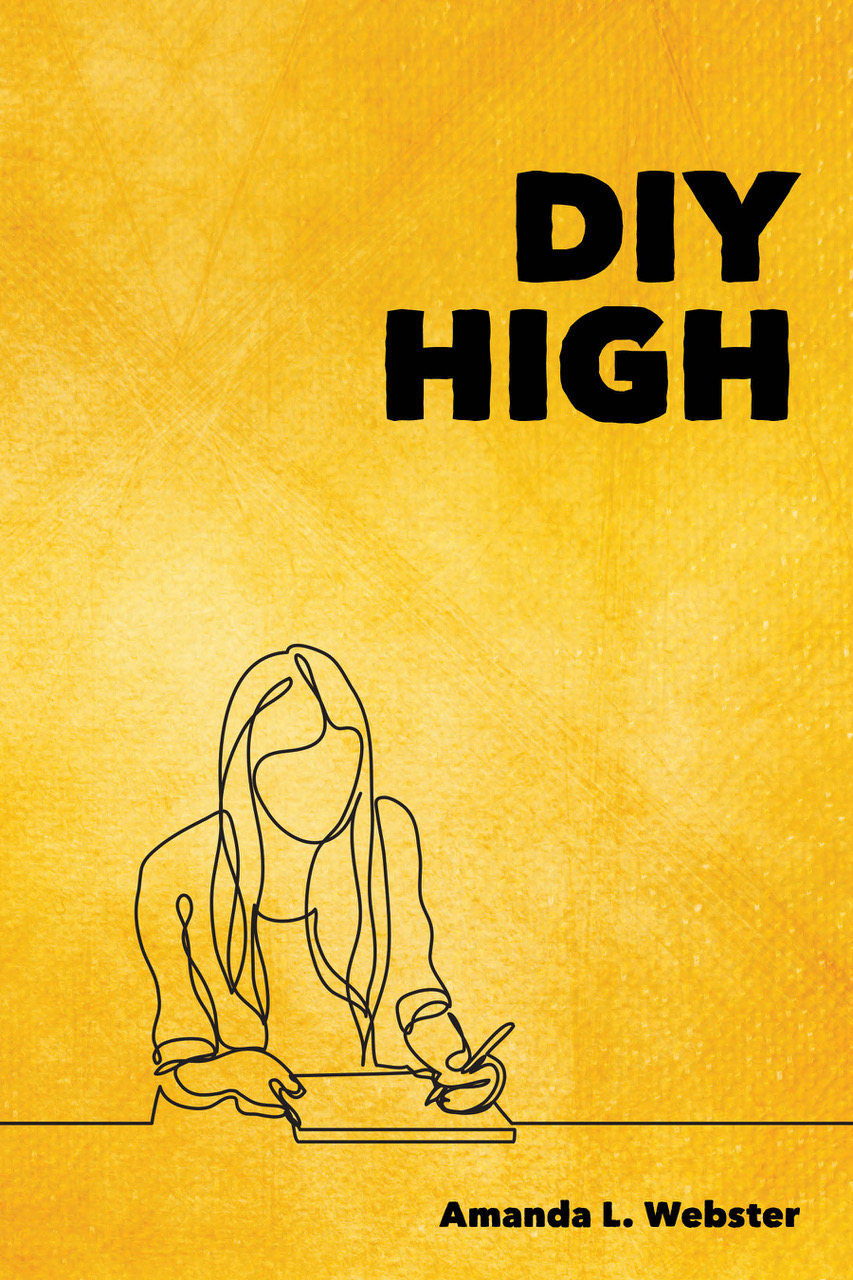
Get your copy of DIY High from my independent online bookstore today!

I wrote this book during one of the hardest seasons of my life. My son was recovering from a traumatic brain injury after being hit by a semi truck while riding his bike. When he returned to school, it felt less like support and more like resistance. Instead of helping him get back on track, the system seemed to work against him. Eventually, when he turned seventeen, I made the decision I never imagined I would make: I let him drop out.

Continue reading “DIY High: A young adult novel about resilience, alternative education, and building your own path”
Education, Essays

Why boys are falling behind in school (and what Malcolm Gladwell’s hockey players can teach us about it)

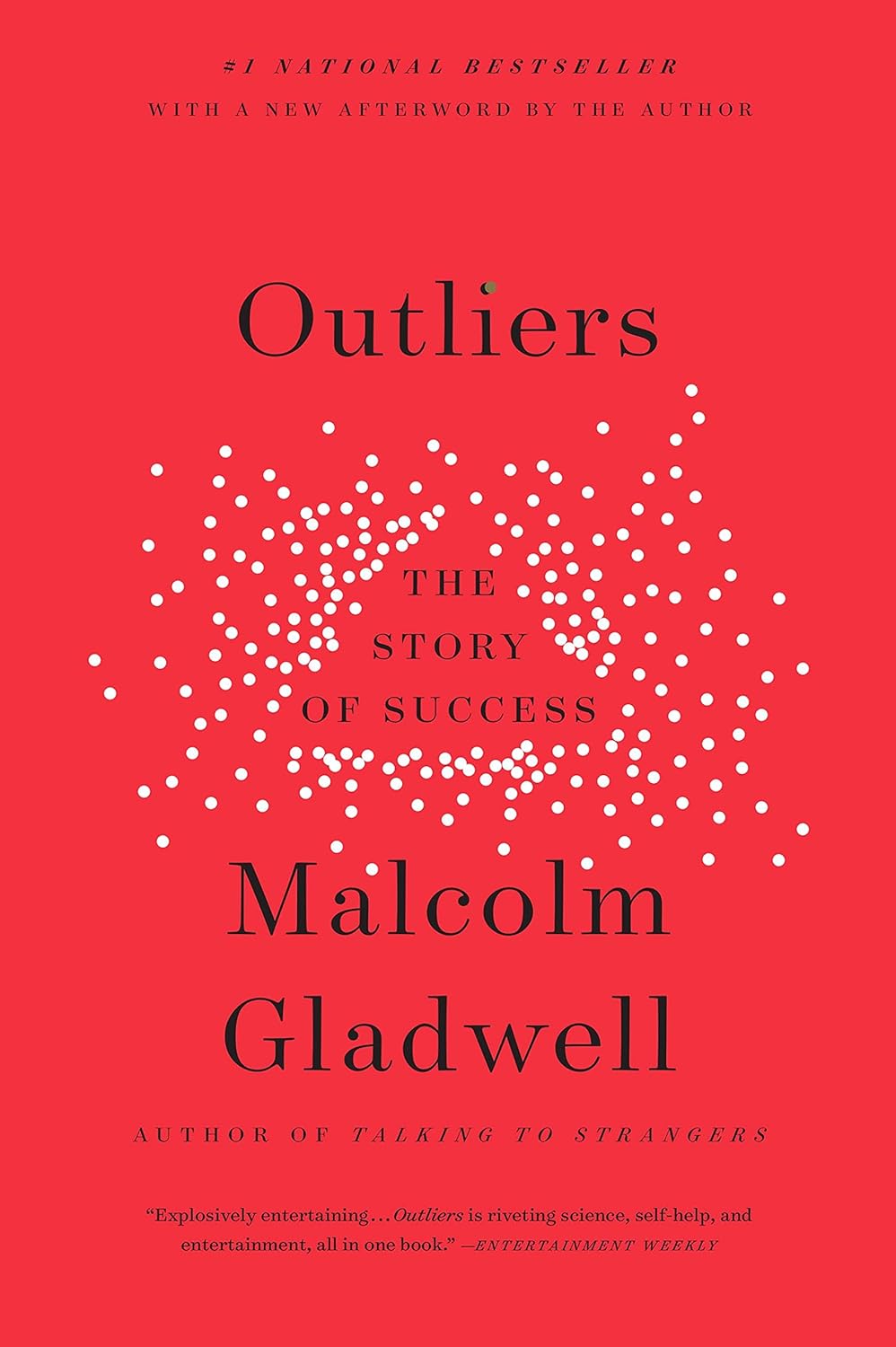
I’ve been mulling over a theory about why boys, as a group, are falling behind in education. It’s not that boys are less intelligent or less capable—it might simply come down to timing. In Outliers, Malcolm Gladwell talks about a fascinating concept called the Relative Age Effect. He uses Canadian hockey players as an example: the best players are disproportionately born in the first few months of the year—January, February, and March. Why? Because the cutoff date for youth hockey leagues in Canada is January 1. That means kids born early in the year are almost a full year older (and therefore more developed) than those born later, like in November or December.

In Outliers: The Story of Success, Malcolm Gladwell explores what sets high achievers apart. Could his theory also explain why boys are falling so far behind?

Gladwell points out that this seemingly small age gap matters a lot when you’re eight or nine years old. The slightly older kids are usually bigger, stronger, and more coordinated. They look like “natural talents” to coaches, who then give them more ice time, more praise, and better training. Over time, those advantages snowball. The kids who were just a few months older end up becoming the elite players—not necessarily because they were born to be great, but because they were given more opportunities to become great.

I think something similar happens in school—especially for boys.

Continue reading “Why boys are falling behind in school (and what Malcolm Gladwell’s hockey players can teach us about it)”
Education

These kids ain’t stupid

TicTok. YouTube. Snapchat. Day in and day out, our children are rotting their brains staring at these stupid-making apps. What is the world coming to? Is it as bad as their grandparents might think? I would argue no.

The other day I was hanging out with my 16-year-old in his bedroom because – well, he’s 16: if I want to spend time with him, I go to him. I don’t wait for him to feel like coming to hang out with me. I would never see him. My son likes to play video games on his tv while simultaneously watching YouTube videos. On this day, I asked him what he was watching. He said, “Oh, it’s just some video about Satan.”

Wut?

Continue reading “These kids ain’t stupid”
Bibliography, Book Reviews

Annotated Bib: Analysis of Eliza Leslie’s 1854 “The Behaviour Book”

English: American author Eliza Leslie
English: American author Eliza Leslie (Photo credit: Wikipedia)

The first article I reviewed for my series on the annotated bibliography was a painful read. However, I very much enjoyed the article that I analyzed for today’s post. So much so, in fact, I had a little extra fun creating memes from quotes that I borrowed from the text!

Annotated Bib Entry

Peary, Alexandria. “Eliza Leslie’s 1854 “The Behaviour Book” and the Conduct of Women’s Writing.” Rhetoric Review 31.3 (2012): 219-35.JSTOR. Taylor & Francis, Ltd. Web. 26 Feb. 2015.

In this article, Alexandria Peary analyzes how 19th century author Eliza Leslie encouraged the development of women’s writing via her 1854 etiquette text, The Behaviour Book. Within this text, Leslie not only instructs would-be writers on how to conduct themselves in their everyday lives (i.e. “how to request writing supplies from a servant” (220)), but she also informs non-writers of her time that female writers should be treated “with due consideration” (221). Continue reading “Annotated Bib: Analysis of Eliza Leslie’s 1854 “The Behaviour Book””

Memoir, Parenting

My son, the writer

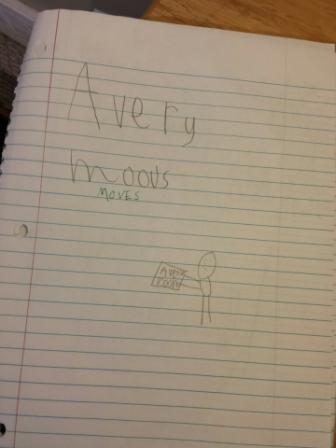
Avery's book project
My son is working on this book project for school. He wants to publish his story when it is done.

My 8-year-old is writing a book for a competition at his school. Yesterday, he brought his notebook to town with him so he could work on his project while we waited for my cracked windshield to be repaired. He likes to use waiting room time constructively and always brings something to read or work on.

At one point, my son stopped to ask me to list all the foods I cook for dinner that “he really really likes a lot” (I could only think of tacos.) You see, he is doing a life writing piece and couldn’t remember what we’d had for dinner on a particular day he was describing, but he could remember it was something he liked a lot.

Since I wasn’t much help, he finally said, “I’ll just use tacos,” and got on with it. He didn’t let himself get hung up on that insignificant detail but instead chose something that acted as a fair representation of the truth. This is an essential concept to keep in mind when writing nonfiction, which many readers consider to be completely “true.” Sometimes obsessing over getting a tiny detail just right is counterproductive. There comes a time when you need to just come up with a fair representation and get on with it. Continue reading “My son, the writer”

Education

When homework makes the whole family cry, there’s a good chance you’re doing it wrong.

one room schoolhouse
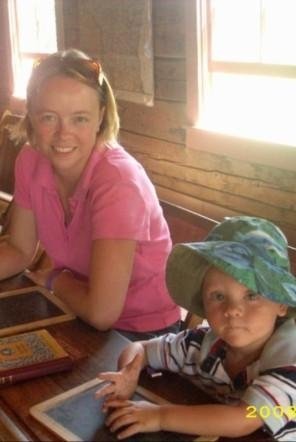
Here’s an OLD picture of my younger son and me visiting a one room schoolhouse located at Old World Wisconsin in Eagle, WI. Look how tiny we both were back then!

As my children have become entrenched in the American public school system over the years, I have become increasingly disillusioned with said system as a whole. I often wonder if American school children are being prepared to survive real life in the real world someday, or if they’re just guinea pigs for a failing experiment that some researcher has been paid too much grant money for to admit that it’s just not working out.

If my Facebook feed is any indication, I am not alone in wondering if my children might be better off if I were to pull them out of the public school system altogether.

Homework has always sucked, but I don’t remember it ever causing so much family strife when I was growing up as it does now. I don’t remember my parents ever crying because they couldn’t understand my homework well enough to be able to help me with it. I don’t remember my parents really helping me with my homework much at all.

Back then, my homework was MY homework. It wasn’t my parents’ homework. They were there for me if I had a question, but otherwise, I was expected to take responsibility for my own work. Even when I did ask the occasional question, my dad’s standard answer was, “I don’t know: let’s look it up.” He would then make me figure out which encyclopedia I needed (wow, am I old!), and then he would watch as I paged through the book looking for the topic I needed. How’s that for teaching me an important life skill that I would actually use someday? (Sans encyclopedia, of course!) Continue reading “When homework makes the whole family cry, there’s a good chance you’re doing it wrong.”

eBooks, Mount Mary College, Publishing

The self-publishing bug is back

English: A Picture of a eBook Español: Foto de...
English: A Picture of a eBook Español: Foto de eBook Беларуская: Фотаздымак электроннай кнігі Русский: Фотография электронной книги (Photo credit: Wikipedia)

Since I published my very first ebook last year, I kind of have the self-publishing bug. I can’t wait to finish my first novel and get it out there where people can read it! The only problem is, each of my novel projects are months (at minimum) from being publishable. I suppose that’s what happens when you allow yourself to start multiple projects rather than finishing one before starting the next.

One of my writing goals for 2014 was to begin to publish at least one ebook every year. My goal for 2015 is to focus on one writing project and finish it so I can publish it in 2016. But that doesn’t help me meet my 2014 goal, does it? I can’t really say I’ve met that goal if I only did it one year in a row, now can I? Continue reading “The self-publishing bug is back”

Education, Employment

Why you probably shouldn’t send your kids to college

Molly with Mike Rowe and UFC CEO, Dana White.
Mike Rowe is probably best known for his role on the Discovery Channel series, Dirty Job.Molly with Mike Rowe and UFC CEO, Dana White. (Photo credit: Wikipedia)

This morning, a friend of mine shared an interesting article on why Mike Rowe thinks most people should not pursue a 4-year college degree. Click here to read the article.

Personally, I think Rowe is absolutely right. In fact, I have been saying this myself for a while. I’ve been teaching at a 2-year technical college for two years now, and for two years, I have watched my students graduate and find jobs right away. Not just any jobs, but good jobs that pay far more than mine does. I keep trying to tell people to stop pushing their kids to go to a 4-year college, and they just look at me like I am crazy.

I think this is part of why our economy is so screwed up. Hordes of Americans are flocking to 4-year colleges to earn degrees for jobs that no longer exist. They are graduating and getting jobs as waitresses and baristas instead of stepping into the high-powered office jobs they thought would be waiting for them once they crossed that legendary stage. Disgusted, many of them are going on to graduate school with the misconception that a Bachelor’s degree just isn’t enough anymore. The Master’s is the new Bachelor’s, right? Continue reading “Why you probably shouldn’t send your kids to college”

Composition I, Essays

Tuesday writing prompt: An illustrative essay

family christmas present opening
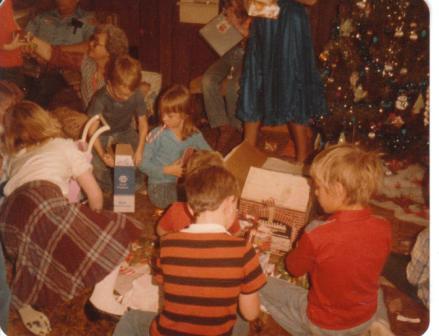
My childhood was full of family. That’s me in the middle with the candy cane hanging out of my mouth.

Today, my English Composition I class is learning about the Illustration pattern of essay development. According to aa-essays.com, “An illustrative essay (or exemplification essay) uses examples to show, explain, or prove a point or argument (the essay thesis). The key to a good illustrative essay is to use enough detailed and specific examples to get the point across.”

Writing Prompt

What was your childhood like? Write one explicit thesis statement that sums up your childhood. Then write an illustrative essay that includes either one long illustrative example or three to five shorter illustrative examples to support your claim. Continue reading “Tuesday writing prompt: An illustrative essay”

Education

Down with homework!

English: Homework
In my opinion, homework = housework. Schoolwork should be completed at school. | English: Homework (Photo credit: Wikipedia)

My 7-year-old started second grade this year. Recently, he brought home his very first list of vocabulary words. The assignment – which is to be repeated every week with a new set of words for the remainder of the school year – was to write down each word with its definition. Which therefore meant looking up definitions for him to write down.

At first, I was tempted to use the Dictionary.com app on my phone to look up each definition and have my son copy the words from there. Then it occurred to me that no child of mine will ever get away with not learning how to use a real-life, hard-copy dictionary. So, I pulled out my mammoth Webster’s New World College Dictionary, and we set to work.

Teaching a 7-year-old how to use a Dictionary is maybe not the easiest task in the world. In fact, like much of my son’s homework that ends up being my homework as well, it’s a little annoying. How can a teacher tell a second grader to write down definitions without first teaching him how to find those definitions? Continue reading “Down with homework!”