
DIY High is a young adult novel about a high school student forced to take control of her own education when both her school system and her family fail her. Inspired in part by real-life struggles with bureaucracy, poverty, and addiction, the novel explores what happens when traditional institutions stop working—and what young people can build in their place.
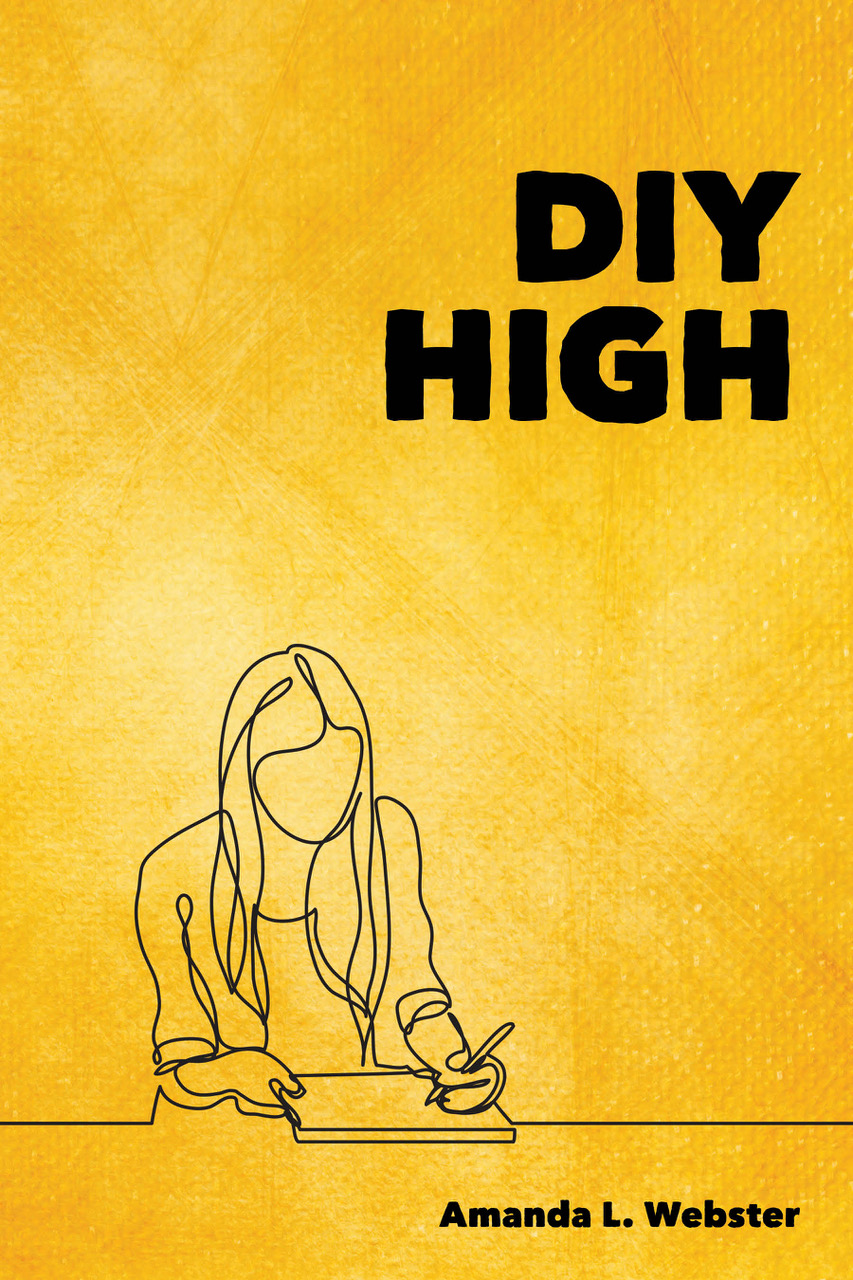
I wrote this book during one of the hardest seasons of my life. My son was recovering from a traumatic brain injury after being hit by a semi truck while riding his bike. When he returned to school, it felt less like support and more like resistance. Instead of helping him get back on track, the system seemed to work against him. Eventually, when he turned seventeen, I made the decision I never imagined I would make: I let him drop out.
It was not a choice made lightly. But in our situation, staying in school was doing more harm than leaving it.
What happened next is something I’m incredibly proud of. My son enrolled in GED classes at our local community college and earned his GED before his former classmates graduated from high school. Today, he’s back at community college in a welding program and thriving.
While that experience informed parts of DIY High, the novel is not my son’s story.
Instead, it follows Gabby, a teenager whose single mother loses her job due to addiction to prescription pain medication. As her family’s already fragile financial situation collapses, Gabby is forced to step up—working, caring for her younger siblings, and trying to stay afloat academically. When traditional high school becomes untenable, Gabby shifts to homeschooling—but quickly realizes that if she wants to graduate, she will have to teach herself.

Soon, she’s running her own Do-It-Yourself high school out of the local library, helping other dropouts find their way back to an education. Gabby becomes a leader, a teacher, and a lifeline for others. The real question is whether she’ll be able to secure her own future—or whether she’ll be pulled permanently into the role of caregiver at home.
Like many of my books, this story draws on lived experience—not only navigating systems that don’t bend easily but also knowing what it feels like to need help and not receive it. I’ve been to church food pantries where you’re required to sit still while someone prays over you before you’re allowed to receive food and then are treated like a thief when you’re finally handed items that are often expired or inedible. Those experiences shape how I write about poverty, dignity, and the invisible barriers many families face.
Readers have called DIY High both compelling and important. One reviewer wrote, “Amazing read! Could not get myself to put it down once I started… It details the struggles of everyday life that a lot of Americans are living.” Another said, “To bring light to so many important public issues in a way that keeps the reader enthralled to the end is such a talent.” Teachers and administrators have reached out to discuss the book, and my youngest sister—who serves on her kids’ PTA—ordered enough copies for an entire class to read.
That kind of response means more to me than I can say.
At its core, DIY High asks a simple but urgent question: What do young people do when the adults and institutions around them fail? And what might happen if they decide to build something better themselves?
If you’ve read DIY High, I’d love to know—did Gabby’s journey change the way you think about education, poverty, or second chances? Share your thoughts in the comments. I truly want to hear them.
This post is part of a series where I pull back the curtain on the novels I’ve written, beginning with Valley of the Bees, a dystopian YA novel about survival, freedom, and growing up in a near-future world where girls have little control over their own lives. Each post looks at how a story took shape and what it taught me about finishing the work I start.
Now available in print and on Kindle!

Check out my latest novel, It Had to Happen, now available in print and on Kindle!
Book Summary
When Jack Utley loses his daughter just as his business is about to soar, it seems he’s traded financial gain for Callie’s life. After an encounter with a mysterious woman on the eve of Callie’s funeral, Jack wakes up to find that time has somehow rewound to the morning of Callie’s accident. Jack gets an opportunity that most grieving parents can only dream of – he saves his daughter’s life.
Now that Jack has been forced to reflect on everything he has to lose, he resolves to do better. He’s determined to spend more time at home with his family and repair the relationships that have suffered over the years while he’s been so focused on work. But as Callie’s behavior becomes increasingly bizarre, Jack realizes he has a lot more room to improve than he realized – and it might be too late to save his daughter after all.
For fans of We Need to Talk About Kevin, The Push, and Baby Teeth.
Are you enjoying this content? Please consider leaving a tip! You can buy me a cup of coffee or donate a larger amount to help me “make a living” writing so I can quit my day job!
Become a regular patron of my art by signing up to contribute a set monthly dollar amount to help me make a living with my writing!
You can also make an annual contribution to my writing. Select an amount below!
Choose an amount
Or enter a custom amount
Your contribution is appreciated.
Your contribution is appreciated.
Your contribution is appreciated.
