Author Interview

Anya Achtenberg on poetry, family trauma, and Mother Monster, Father Fiend

In today’s author interview, we hear from poet Anya Achtenberg, whose poem “Bench” appears in the anthology Mother Monster, Father Fiend: An Anthology of the Monsters Who Raised Us. In this brief but powerful poem, Achtenberg explores the complicated inheritance of family pain and the ways personal trauma intertwines with the weight of history. Through the image of a mother sitting between two empty seats in a synagogue, she evokes generations of loss, displacement, and suffering that shape a family even when their origins remain unspoken or forgotten. Achtenberg discusses how the poem emerged from an older work about her mother, how revision revealed the powerful forces surrounding that relationship, and how the histories we inherit shape our identities and creative lives. She also shares insights into her writing process and offers a glimpse of her forthcoming poetry collection and novel.
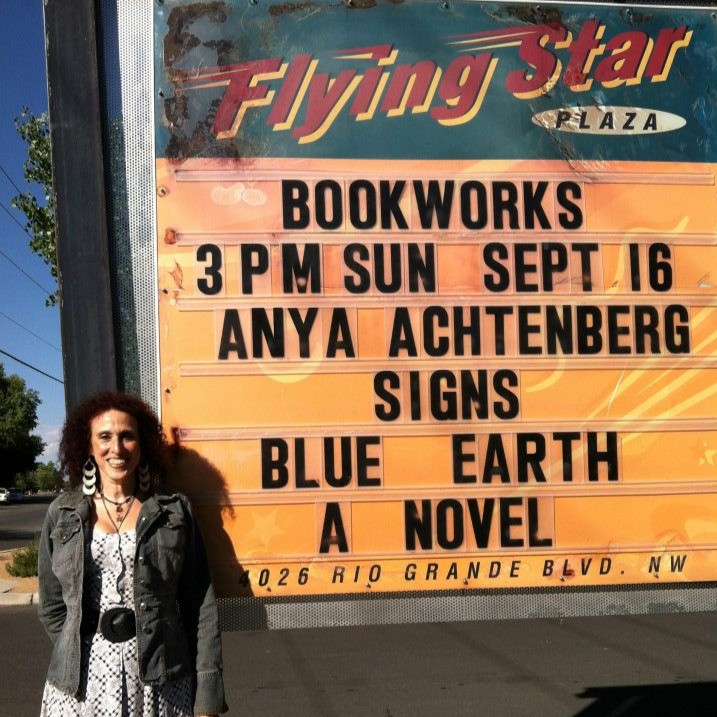
Poet and novelist Anya Achtenberg stands in front of a sign announcing a reading of her novel Blue Earth.
Poet Anya Achtenberg, whose poem “Bench” appears in Mother Monster, Father Fiend, is also the author of the novel Blue Earth. In today’s author interview, she discusses the creative process behind “Bench,” family inheritance, and her current writing projects.

Q: “Bench” is a very short poem, but it creates an entire emotional world around a mother sitting in a synagogue. What was the starting point for this poem? Was there a particular image, memory, or idea that brought it to you?
A: This a poem distilled and transformed from a longer poem written many years ago. In some thorough but I think random way, the original made inventory in figurative language of many aspects of my mother, about whom I wrote much in the long ago past, including in The Stories of Devil-Girl—a wild and, I’m told, poetic novella—autobiographical fiction with mythical elements. I used to have a sister who became a poet, and obsessively wrote and writes about our mentally ill mother. As I said, I left that years ago as subject, though not necessarily as deep pain, and was finally reunited with the original version of the poem in a storage room I had not entered for some years.
Continue reading “Anya Achtenberg on poetry, family trauma, and Mother Monster, Father Fiend” →
Author Interview

Behind Sin of the Fathers: William J Cagle on blending classical myth with family drama

What happens when you transplant ancient Greek mythology—replete with patricide, divine power struggles, and generational curses—to a grand plantation estate in the 20th-century American South? In his short story “Sin of the Fathers,” featured in the anthology Mother Monster, Father Fiend: An Anthology of the Monsters Who Raised Us, author William J Cagle blends classical themes with dark sitcom wit and Gabriel García Márquez-inspired magical realism. Here, William offers insight into his literary influences (from Angela Carter to Shakespeare), the hypocrisies of divine authority, writing dark humor as a release valve for tension, and how family dysfunction can spark a full-blown revolution.

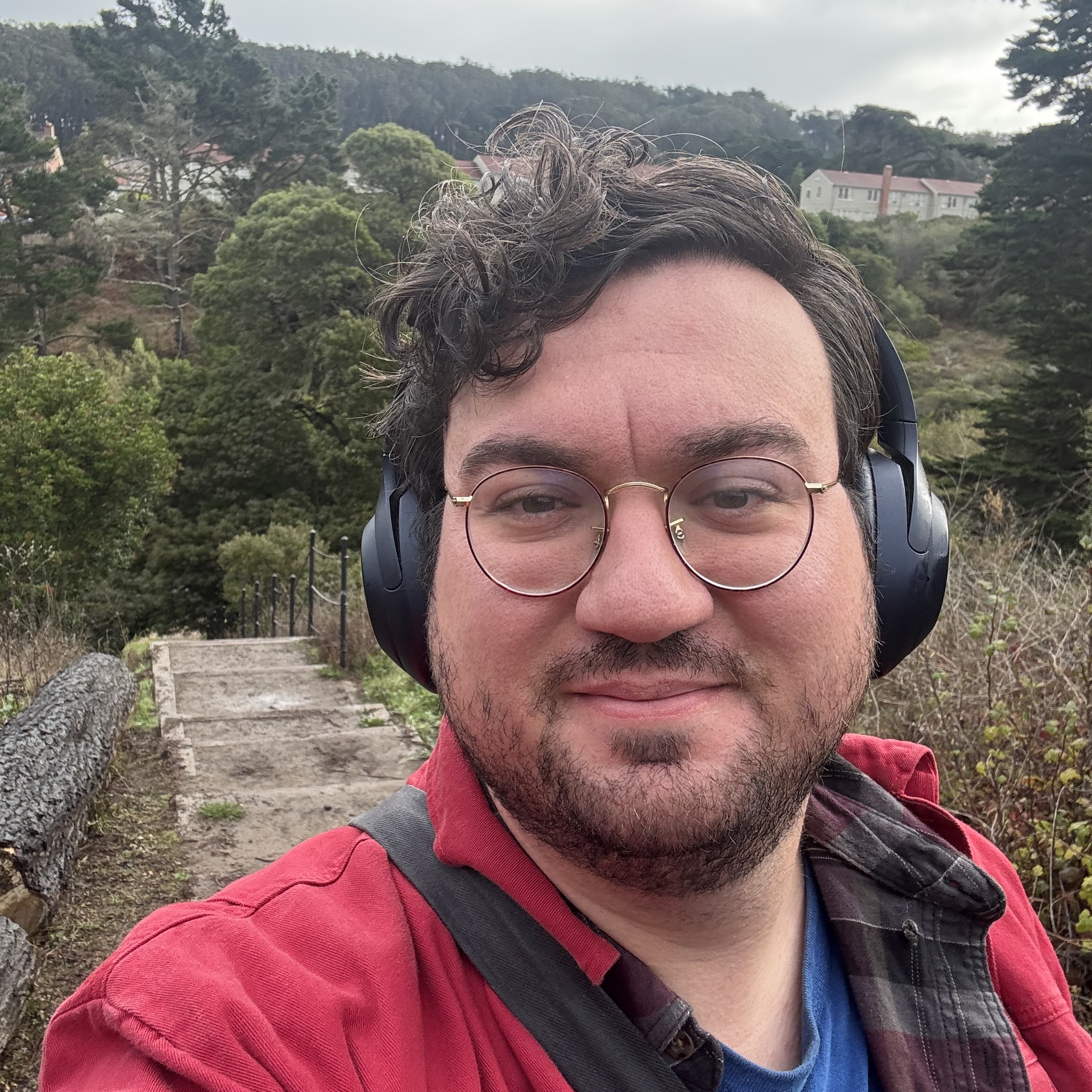
A headshot of author William J Cagle smiling outdoors in a natural landscape.
Cagle’s short story, Sin of the Fathers, appears in Mother Monster, Father Fiend: An Anthology of the Monsters Who Raised Us.

Q: “Sin of the Fathers” takes some very old ideas—patricide, sibling rivalry, family curses, revenge—and drops them into a very dysfunctional family that feels almost modern. What made you want to bring these mythological themes into a more contemporary setting?
A: One of the original influences for this story was the work of Angela Carter, one of my favorite authors of short fiction (Who I later learned taught Rick Moody who taught David Hollander who was a mentor and teacher of mine at Sarah Lawrence College). Carter takes a similar approach of taking very old ideas and bringing them forward to a more contemporary setting, only with fairy tales, setting some of her stories in The Bloody Chamber in a kind of gothic 20th century world that reframes the stories and amplifies their themes and their horror, all while centering the female characters and their experiences.

Continue reading “Behind Sin of the Fathers: William J Cagle on blending classical myth with family drama” →
Call for Submissions

Call for Submissions: What Should Remain Hidden

Elderfly Press is seeking submissions for a new anthology about secrets, discoveries, and the things that were never meant to be found.

Submissions for What Should Remain Hidden are open through March 15, 2027.

Maybe you find something tucked into the pocket of your grandmother’s old cardigan after she dies. Maybe there’s a locked room in the house you’ve just inherited. Maybe an old photograph reveals a person who was never mentioned. Maybe you discover something buried in your backyard, hidden in an attic, sealed behind a wall, or tucked away in a box no one has opened in decades.

Continue reading “Call for Submissions: What Should Remain Hidden” →
Author Interview

R.G. Evans on family, trauma, and poetry in Mother Monster, Father Fiend

In Mother Monster, Father Fiend: An Anthology of the Monsters Who Raised Us, poet R.G. Evans explores the complicated legacy of childhood, family relationships, and the wounds we carry into adulthood. His four poems in the anthology—“Retort,” “Correction,” “Belief,” and “MATCH FLARE, 3 AM”—look at difficult relationships with parents while also considering the possibility of breaking cycles of violence and choosing what we pass on to the next generation. In this interview, Evans discusses where his poems come from, the power of language to uncover what we leave unsaid, and why writing about trauma does not necessarily mean portraying an entirely traumatic childhood. He also shares what he’s working on now, including a chapbook inspired by the recovery process and the stories of Genesis.

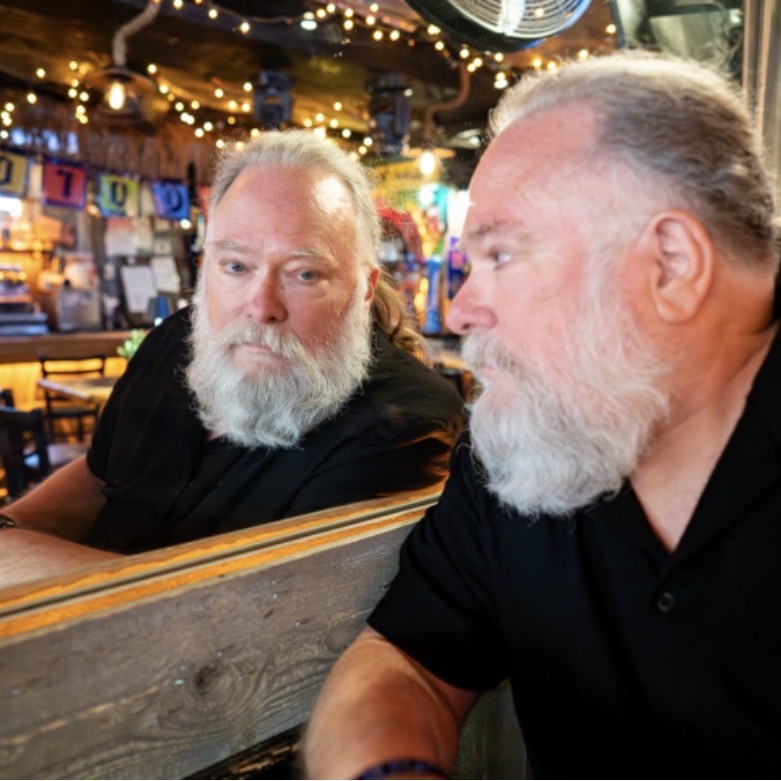
Poet R.G. Evans reflects in the mirror of a pub
The multi-talented R.G. Evans’ poems appear in Mother Monster, Father Fiend: An Anthology of the Monsters Who Raised Us.

Q: Your four poems in Mother Monster, Father Fiend—“Retort,” “Correction,” “Belief,” and “MATCH FLARE, 3 AM”—deal with difficult and complicated family relationships. What made you want to explore these particular ideas through poetry?
A: My daily morning practice is to read a few published poems, paying what William Stafford called “a certain kind of attention.” Most days, inspiration arises organically from the reading, so when it comes time for me to write, what I write about on any given day is a surprise to me. “Retort,” for instance, originated from my encountering the name of the furnace used for cremation. “Belief,” I’m pretty sure, arose from reading a poem about folk beliefs and superstitions. So what made me want to explore these ideas was really the luck of the draw depending on what I may have been reading that day.

Continue reading “R.G. Evans on family, trauma, and poetry in Mother Monster, Father Fiend” →
Elderfly Press

Introducing Mother Monster, Father Fiend: An Anthology of the Monsters Who Raised Us

Some monsters live under the bed. Others tuck you in at night.

I’m excited to announce the publication of my newest anthology, Mother Monster, Father Fiend: An Anthology of the Monsters Who Raised Us, edited by me and published by Elderfly Press. This collection has been a particularly meaningful project because it explores something that can be difficult to talk about: the ways the people who raise us can also hurt us.

We tend to think of childhood as a time of safety and parents as the people who are supposed to provide that safety. But families are complicated, and not every child grows up in a home where love is unconditional or protection is guaranteed. Sometimes the people who are supposed to nurture us become the source of our deepest wounds. Sometimes those wounds follow us into adulthood. And sometimes breaking the cycle means confronting what happened and refusing to let it define what comes next.

Continue reading “Introducing Mother Monster, Father Fiend: An Anthology of the Monsters Who Raised Us” →
Call for Submissions

Call for Submissions: What Will Become of Us?

Elderfly Press is seeking submissions for a new anthology of stories and poetry exploring an unsettling question: What will become of us?

Submissions for What Will We Become of Us? are open through December 15, 2026.

We are living through a period of enormous uncertainty. The world around us is changing rapidly, and the future can sometimes feel impossible to predict. The institutions we rely on are shifting. Technology is transforming how we work and communicate. Economic pressures affect where and how we live. The environment is changing. Political and social divisions seem increasingly difficult to bridge. At the same time, individuals are constantly navigating their own smaller transformations: growing older, falling in love, losing someone, starting over, becoming parents, leaving home, changing careers, discovering who they are, or realizing that the person they thought they would become is no longer who they are.

So, we want to ask the question: What will become of us?

Continue reading “Call for Submissions: What Will Become of Us?” →
Author Interview

Author interview: Kathy Hess on Beautiful and Terrifying, “First Drink,” and writing across fiction and poetry

In this contributor interview, Kathy Hess discusses her short story “First Drink” and her poetry featured in Beautiful and Terrifying: Tales and Visions from the Edge of the Uncanny, along with the influences and writing practices that shape her work.

Kathy Hess writes with a sense of devotion to both story and craft, weaving together fiction and poetry that linger in memory long after they’re read. Her short story “First Drink” and three accompanying poems in Beautiful and Terrifying reflect her fascination with the supernatural, the emotional depth of relationships, and the quiet rituals that shape a creative life. In this interview, she shares the literary works that first sparked her imagination, the discipline behind her daily writing practice, and the ways in which memory, family, and imagination continue to guide her work across forms.

Kathy Hess is the author of “First Drink” and three poems featured in Beautiful and Terrifying. Her work blends the supernatural with deeply human moments.

Q: What/who were your early literary influences, and how do you think their writing has shaped you as a storyteller today?
A: One early literary influence that has stuck with me was when I read Les Misérables in high school. It was the summer project, and I loved it. I bought a copy myself and read it so much the following years that the cover broke off and the binding split in half. I would keep the two halves of the book tied up with a ribbon. I have other copies of the book now, but I still have the crumpled, warped, coverless version with the pink ribbon holding it together.

Continue reading “Author interview: Kathy Hess on Beautiful and Terrifying, “First Drink,” and writing across fiction and poetry” →
Author Interview

Author interview: Emily Persichetti Schuster on Beautiful and Terrifying, poetry, and writing through grief

In this contributor interview, poet Emily Persichetti Schuster discusses her work in Beautiful and Terrifying, the themes of grief and memory that shape her writing, and the creative process behind her deeply personal poetry.

Emily Persichetti Schuster writes with a quiet intensity, exploring grief, memory, and the fragile threads that connect identity, family, and place. Her work in Beautiful and Terrifying: Tales and Visions from the Edge of the Uncanny reflects a deep attentiveness to both the emotional and the everyday, drawing inspiration from poets like Marie Howe and Mary Oliver while carving out a voice distinctly her own. In this interview, she shares how early reading shaped her imagination, how she balances writing with the demands of daily life, and why poetry remains a powerful way to hold both individual moments and larger, unfolding stories.

Emily Persichetti Schuster, is a contributor to Beautiful and Terrifying.

Q: What’s a memory of a story or book that made you realize you wanted to be a writer?
A: Roald Dahl’s The BFG is the first book I remember reading completely on my own, when I was in early elementary school. I loved all Roald Dahl’s books when I was a kid, and I love reading them to my kids now. Through all the creepy, uncanny, and seemingly hopeless events of his books, the heroes always prevail because they’re never willing to give up. His books taught me to face my own fears and build resilience in the face of adversity.

Continue reading “Author interview: Emily Persichetti Schuster on Beautiful and Terrifying, poetry, and writing through grief” →
Elderfly Press

Beautiful and Terrifying releases today: Step into the uncanny!

It’s here—and it’s been a long time coming. Beautiful and Terrifying: Tales and Visions from the Edge of the Uncanny officially releases today, and I couldn’t be more excited (or a little unsettled) to finally share it with you.

This anthology brings together a collection of short fiction, poetry, and black-and-white art that all live in that uneasy space where beauty and horror overlap. These are stories that don’t just aim to scare—they linger. They follow you. They ask you to look a little closer than you’re comfortable with.

Continue reading “Beautiful and Terrifying releases today: Step into the uncanny!” →
Call for Submissions

Beautiful and Terrifying releases April 23, 2026: A new anthology from the edge of the uncanny

Beautiful and Terrifying: Tales and Visions from the Edge of the Uncanny, the newest anthology from Elderfly Press, will be released on April 23, 2026, bringing together haunting fiction, poetry, and black-and-white artwork that explore the strange space where beauty and fear collide.

The cover of Beautiful and Terrifying: Tales and Visions from the Edge of the Uncanny, Elderfly Press’s upcoming anthology of eerie fiction, dark poetry, and black-and-white art, releasing April 23, 2026.

I’m thrilled to finally share the release date for this collection, which has been such a meaningful project to bring into the world. From eerie woods and submerged cities to folklore retellings, grief-soaked landscapes, and intimate encounters with the supernatural, this anthology embraces the unsettling and the sublime in equal measure.

Continue reading “Beautiful and Terrifying releases April 23, 2026: A new anthology from the edge of the uncanny” →