Essays

The numbers say inflation is 3.3%. That’s not the real story—and it never was.

Just a few months ago, inflation was reported at 2.4%, and we were told that meant things were stabilizing. The messaging was clear: the worst was behind us, the economy was settling down, and wages were starting to catch up. But for a lot of people, that didn’t match reality. Rent was still climbing. Grocery bills were still painful. Insurance premiums kept inching higher. The numbers said “progress,” but everyday life said something else entirely.
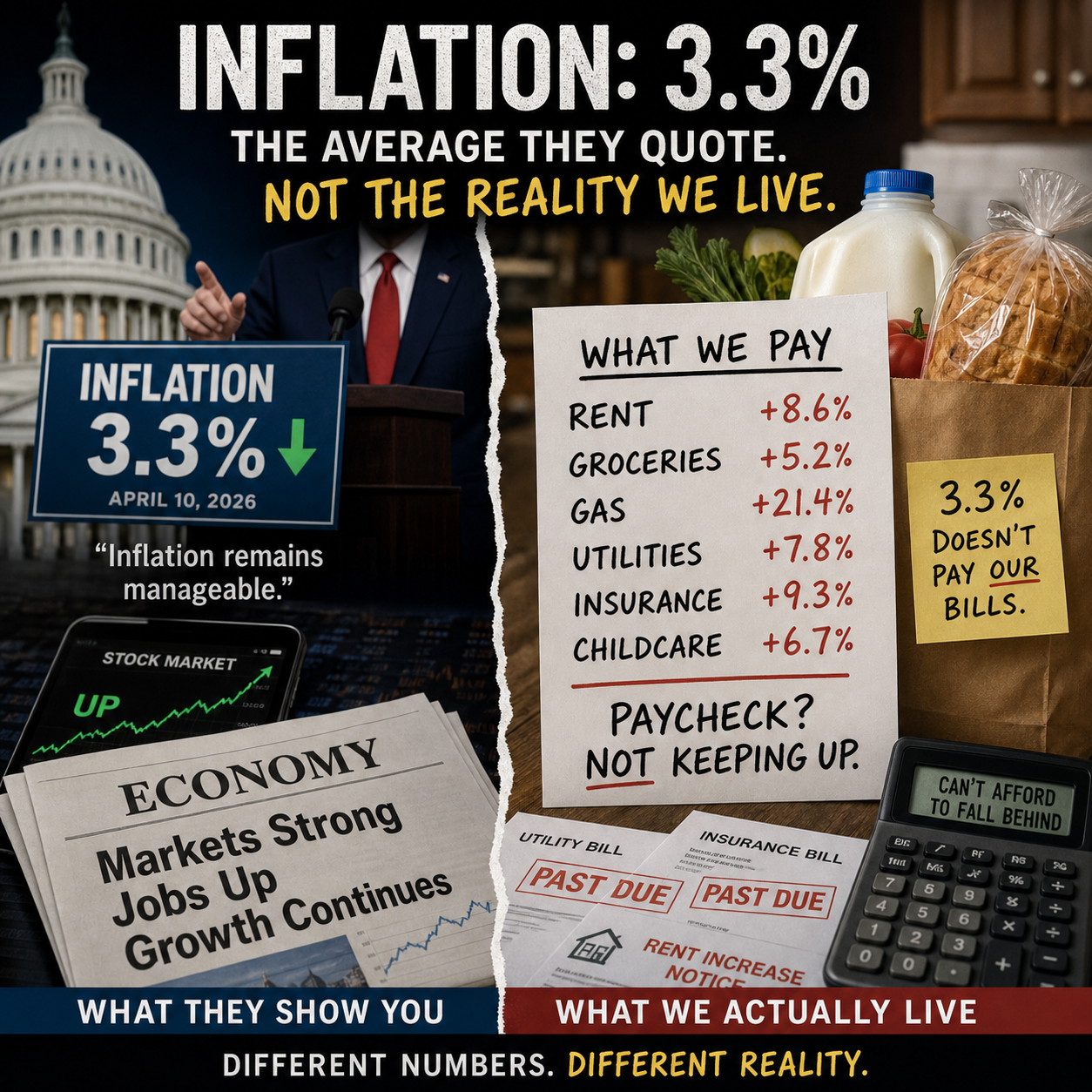
Split infographic contrasting official inflation with real living costs. Left side shows a politician at a podium in front of the U.S. Capitol with “Inflation: 3.3%” and positive economic headlines. Right side shows groceries, bills marked “past due,” and a handwritten list of rising expenses like rent, gas, and utilities, alongside the message “Paycheck? Not keeping up.”
When inflation is reduced to a single number, it hides the reality people actually live with—rising rent, higher grocery bills, and paychecks that can’t keep pace.

Now inflation has climbed to 3.3%, and suddenly the tone has shifted. What was once framed as “under control” is now something to watch more closely, something to explain, something to blame on global conflict and rising energy prices. But here’s the uncomfortable truth: the difference between 2.4% and 3.3% doesn’t actually explain why people feel like they’re falling behind. Because the problem was already there.

Continue reading “The numbers say inflation is 3.3%. That’s not the real story—and it never was.”
Essays

Why the government shouldn’t control marriage (and why marriage should be a contract)

For something people describe as sacred, romantic, and eternal, marriage in the United States is surprisingly bureaucratic. Before two people can be “married,” they need a government-issued license. A clerk records the paperwork. A legal framework determines how assets will be divided if the relationship ends. And in many cases, the couple signs the same basic legal agreement that millions of other couples sign, whether it suits their lives or not. In other words, marriage—at least in the eyes of the state—is already a contract. We just pretend it isn’t.

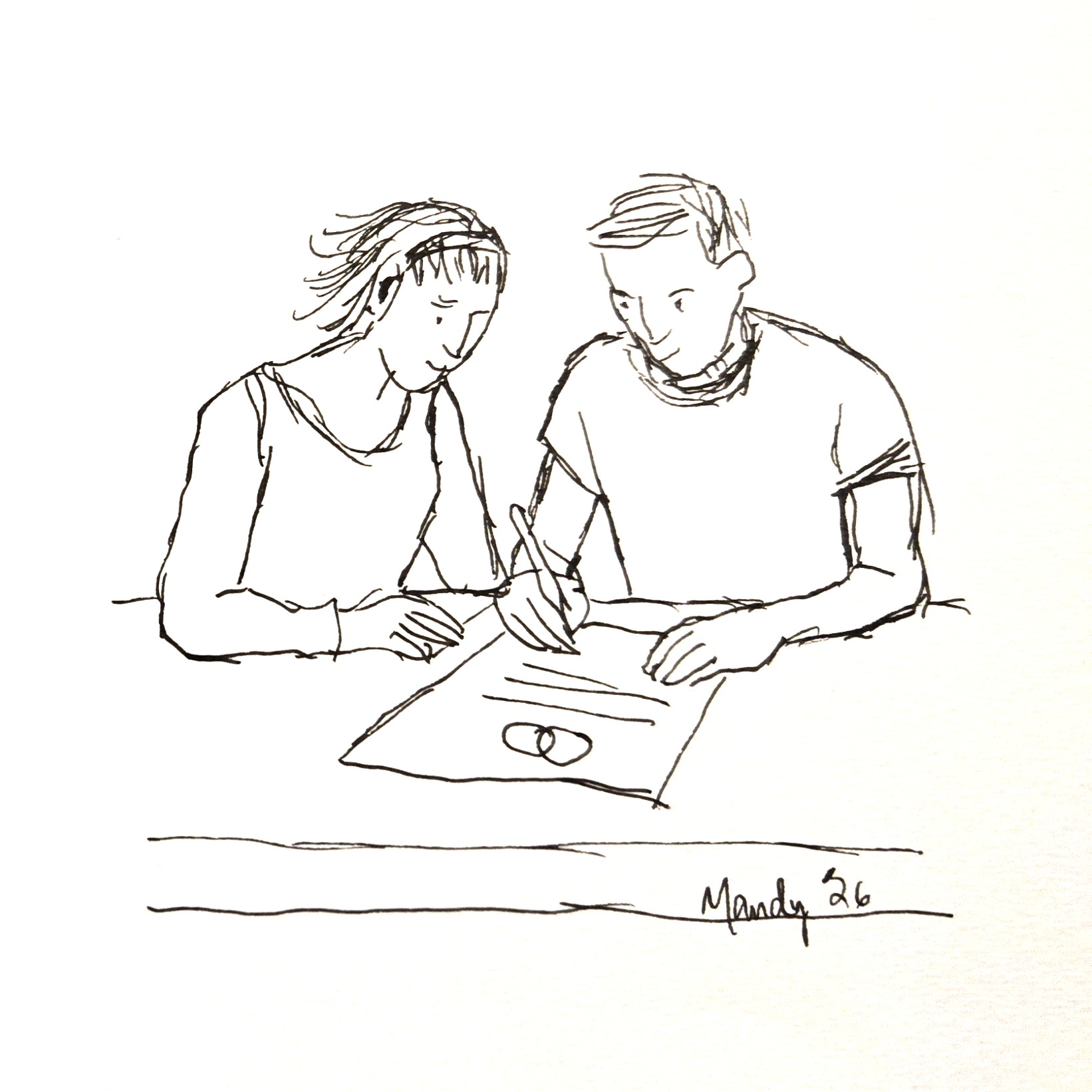
Two ways to say “I do”: one sacred, one legal—both important, both separate.

The confusion comes from the fact that in modern culture, two completely different institutions are treated as though they are the same thing: religious marriage and legal marriage. They are not.

Continue reading “Why the government shouldn’t control marriage (and why marriage should be a contract)”
Writers on Writing

The quiet power of foreshadowing: How great novels prepare readers for what’s coming

The best plot twists in fiction rarely come out of nowhere—they feel surprising and inevitable at the same time. That paradox is usually the result of careful foreshadowing. When done well, foreshadowing prepares readers for events long before they happen, creating the sense that the story’s outcome was always embedded within the narrative. I was thinking about this recently while reading Ruins by Lily Brooks-Dalton. The novel includes a central revelation that attentive readers may begin to suspect early on, yet the author never makes the answer obvious. Instead, she carefully plants clues that guide the reader toward the truth without spoiling the experience. That balance is the essence of effective foreshadowing.

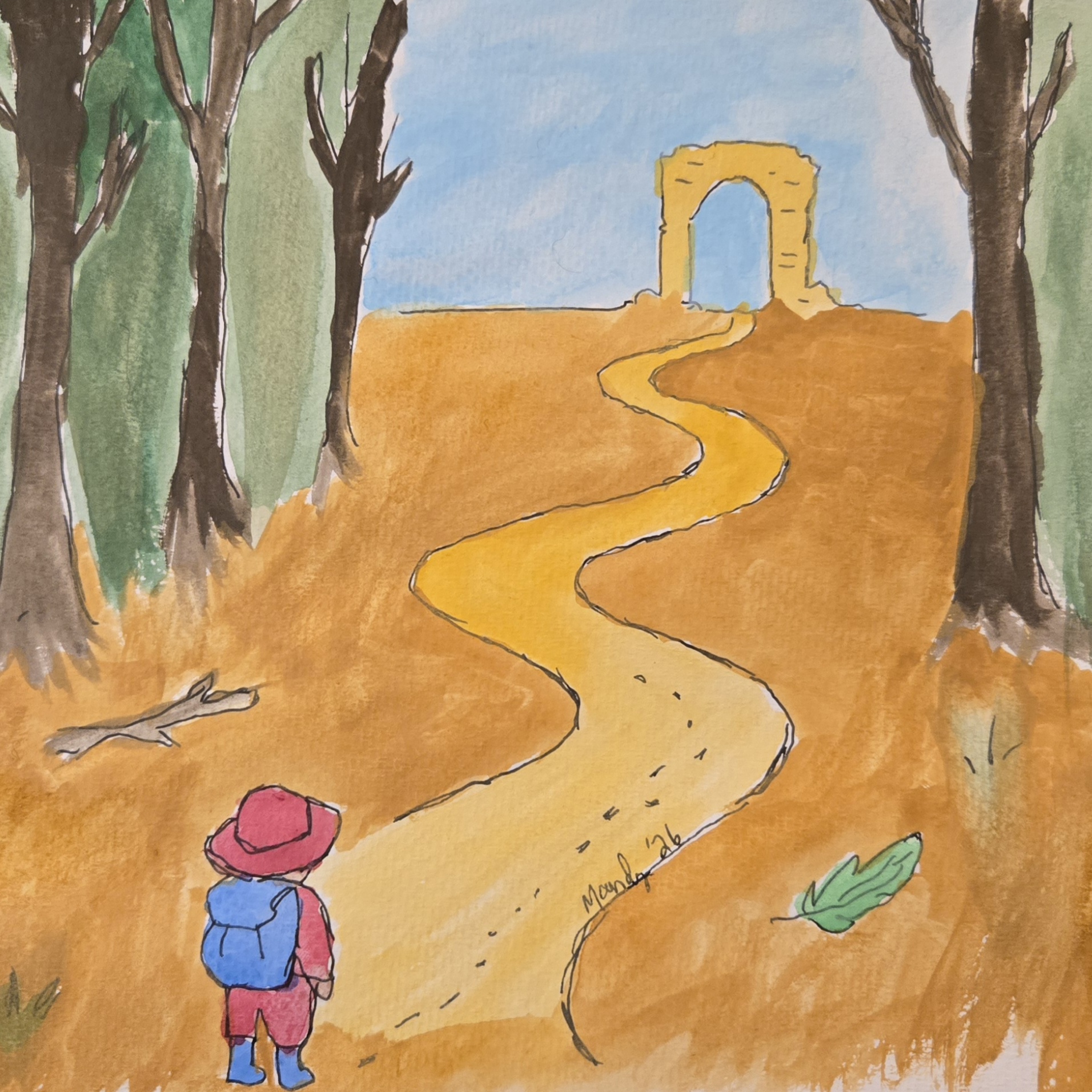
Foreshadowing is the quiet trail of clues that leads readers toward the ending long before they realize it.

What is foreshadowing?

Foreshadowing is a narrative technique in which an author plants subtle hints about events that will occur later in the story. These hints might appear as dialogue, imagery, symbolism, or even small details that initially seem unimportant. The goal isn’t to give the plot away. Instead, foreshadowing creates narrative cohesion. When the key event finally arrives, readers recognize the groundwork that made it possible. The story feels intentional rather than arbitrary.

In Ruins, for example, the opening sections contain small details that feel slightly out of place. The world seems familiar but not entirely so. Certain descriptions, structures, and assumptions about society invite questions. None of these clues explicitly reveal where the story is going, but together they form a pattern that becomes meaningful later. The result is a reading experience that rewards attention without demanding it.

Continue reading “The quiet power of foreshadowing: How great novels prepare readers for what’s coming”
Writers on Writing

What dystopian stories teach us about who controls history: An exploration of cultural narrative in Ruins

While reading Ruins, the latest novel by Lily Brooks-Dalton, I found myself thinking less about the far-future world it imagines and more about the stories civilizations tell about themselves — and why those stories so often begin to unravel the moment someone steps outside their borders. Set in a distant future where American civilization is long gone and no written records survive, Ruins follows an archaeologist who begins to question the official histories preserved by Leadership. In this world, what is accepted as truth has been shaped over thousands of years of retelling, and stability depends on the population’s belief in those narratives.

Civilizations survive through stories — but whose stories get left out? Inspired by Lily Brooks-Dalton’s Ruins, this post explores rules, exceptions, and the hidden structures of society.

It wasn’t just the mystery at the heart of the novel that stayed with me, but the way it mirrors a recurring pattern in literature: civilizations rely on shared stories to create order. Without these stories, cooperation becomes fragile, meaning begins to fray, and identity itself can feel uncertain. But stories, by necessity, simplify. They smooth contradictions, minimize uncertainty, and quietly remove perspectives that do not fit the larger arc. And what disappears is often invisible to those living comfortably within the story.

Continue reading “What dystopian stories teach us about who controls history: An exploration of cultural narrative in Ruins”
Essays

Journalism: It’s not about “both sides”—it’s about what’s actually true

When one person says it’s raining and another insists it’s not, a journalist’s job isn’t to quote them both and call it a day. The job is to go outside, look up, and report what’s actually happening. That basic principle—verification over balance—feels increasingly absent from modern journalism, especially at the local level.

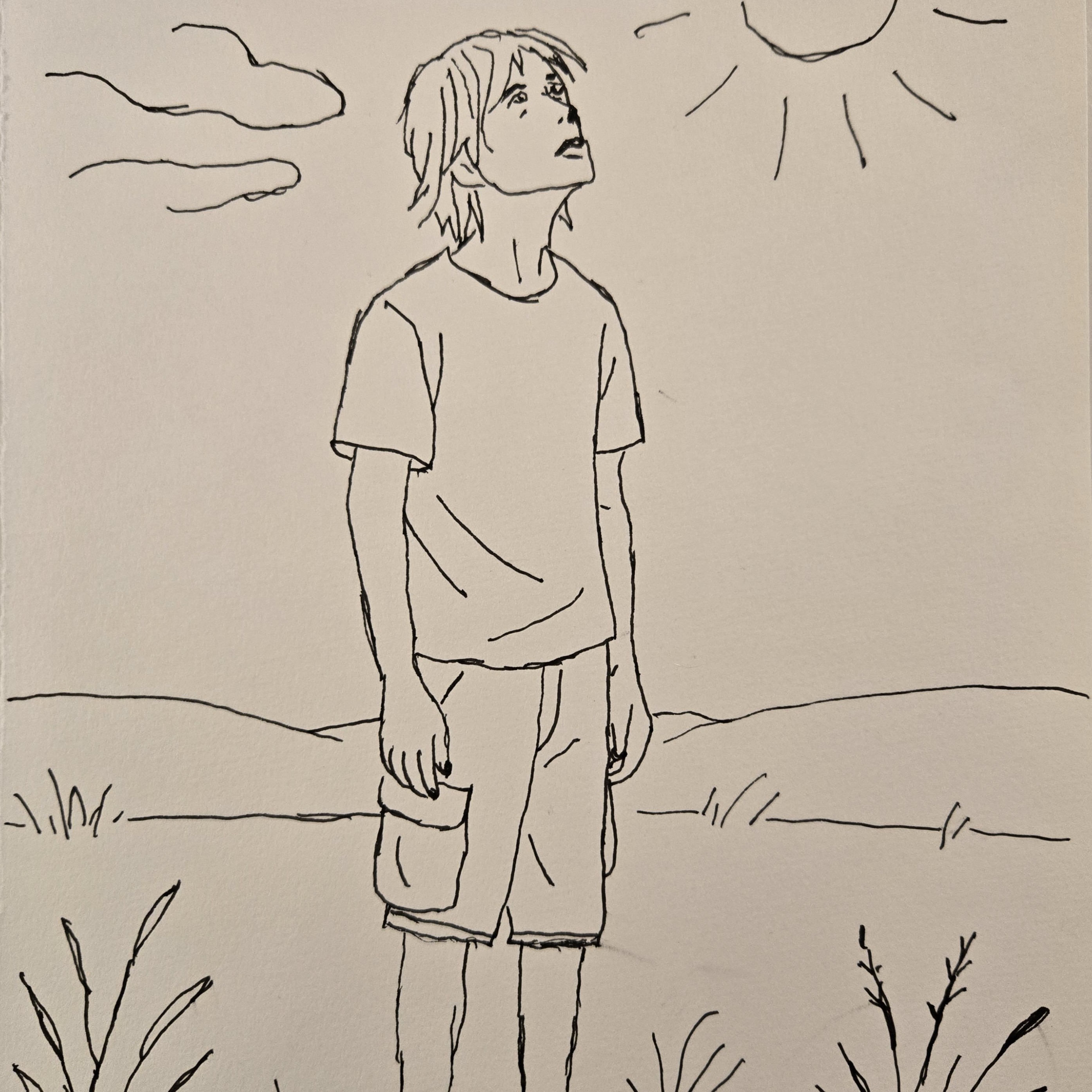
Line drawing of a man standing in an open field looking up at the sky
A young man scans a cloudless sky, caught between what he’s told and what he can plainly see—reminding us that truth isn’t found in competing claims, but in the courage to look for ourselves.

I’ve seen this play out firsthand in the ongoing political arguments over property taxes here in Illinois. Republicans often argue that high property taxes are the governor’s fault. Democrats push back, saying the governor has no control over property taxes at all. And what does much of the local media do? Instead of investigating the claim and explaining how property taxes actually work, they hand each side a microphone and let the audience “decide.” But that’s not journalism. That’s outsourcing the truth.

Continue reading “Journalism: It’s not about “both sides”—it’s about what’s actually true”
Writers on Writing

How to generate content efficiently when you already have a full-time job

If you want to build an audience for your books—or grow a platform that actually sustains interest—you can’t post once in a while and hope for the best; consistency is the engine, and efficiency is the fuel. The problem, of course, is time.

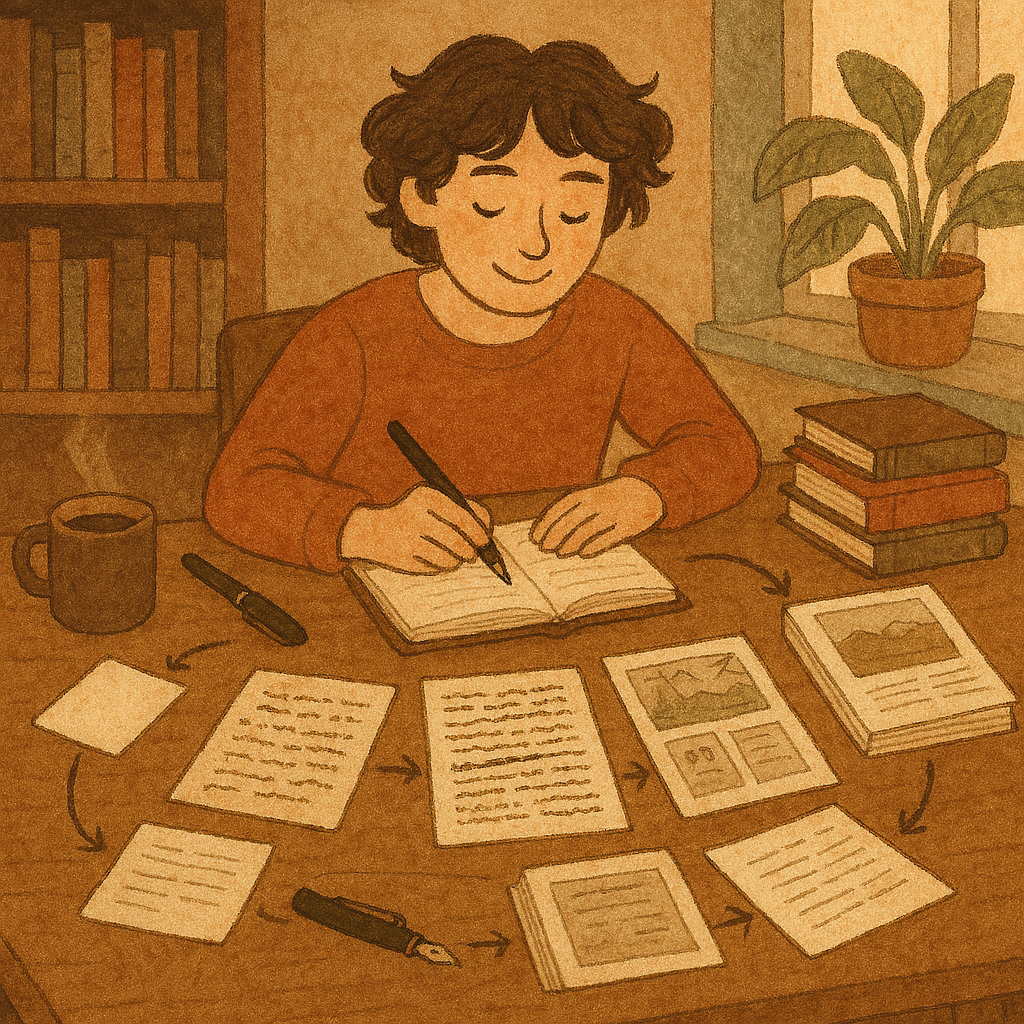
Breaking the work into parts doesn’t cheapen it. It makes it possible.

If you’re like me, you work a full-time job. You have family obligations, errands, laundry, dishes, and a life you’d like to live outside of your laptop. And yet, I typically update my blog five days a week. That doesn’t happen by accident. It happens because I treat content creation less like a burst of inspiration and more like an assembly line.

Continue reading “How to generate content efficiently when you already have a full-time job”
Essays

State governments as change-makers: Raising standards when Washington won’t

Many Americans talk about states’ rights as if it’s a shield for inaction, but the truth is that with states’ rights come states’ responsibilities. The federal government sets minimum standards for the country, but it’s up to each state to decide when those standards don’t go far enough. States have the authority—and the obligation—to raise the bar if they believe it’s the right thing for their residents. A higher minimum wage, stronger environmental protections, or expanded healthcare access can all start at the state level before ever being considered federally.

When states take the lead, change becomes possible. Highlighting the power of local action to set higher standards and drive national progress.

It’s easy to forget the sheer size and diversity of the United States. With so many people spread across vast distances and different cultures, making nationwide change is incredibly difficult, sometimes impossible, without groundwork laid by states first. Many social issues, including marriage equality, have followed this path. By June 2015, 36 states plus Washington, D.C., had already legalized same-sex marriage—proving that federal progress often relies on state-level experimentation and leadership. States shouldn’t see this as a hindrance—they should see it as an opportunity to lead national change from their own communities.

Continue reading “State governments as change-makers: Raising standards when Washington won’t”
Bibliography, Book Reviews, Writing Prompts

An analysis of “Plaintext” by Nancy Mairs

The silhouette of a large saguaro stands at su...
This image has nothing to do with my post. I just think it’s pretty. And soothing. It’s my blog and I’ll do what I want. | The silhouette of a large saguaro stands at sunset in Saguaro National Park on the east side of Tucson, Arizona. (Photo credit: Wikipedia)

The following is my third course autobiography for the course I am taking on women’s writing. I just have to write one more of these and then a 20-page final paper, and my homework will be done for the semester! In this piece, I wrote about how I would use this text to create a framework for a creative nonfiction essay assignment. I think this would also make an excellent writing prompt!

The Embodiment of Labels

In Plaintext, Nancy Mairs explores how individuals embody the labels that are placed on them by society. In her essay, “On Being a Cripple,” Mairs chooses to define herself as a “cripple” regardless of the fact that others may wince at the word. She says, “Perhaps I want them to wince. I want them to see me as a tough customer, one to whom the fates/gods/viruses have not been kind, but who can face the brutal truth of her existence squarely. As a cripple, I swagger” (9). She challenges the politically correct euphemisms that others use and would have her use to describe herself. In many ways, she refuses to meet society’s expectations of her as a cripple, even seeking to change the meaning of the word. I would like to teach this text in a writing course where I could ask students to examine their own labels, how they embody their labels, and how societal expectations based on these labels impact the individual, as well as how the individual can impact society by either meeting or shattering those expectations. Continue reading “An analysis of “Plaintext” by Nancy Mairs”