
If you want to build an audience for your books—or grow a platform that actually sustains interest—you can’t post once in a while and hope for the best; consistency is the engine, and efficiency is the fuel. The problem, of course, is time.
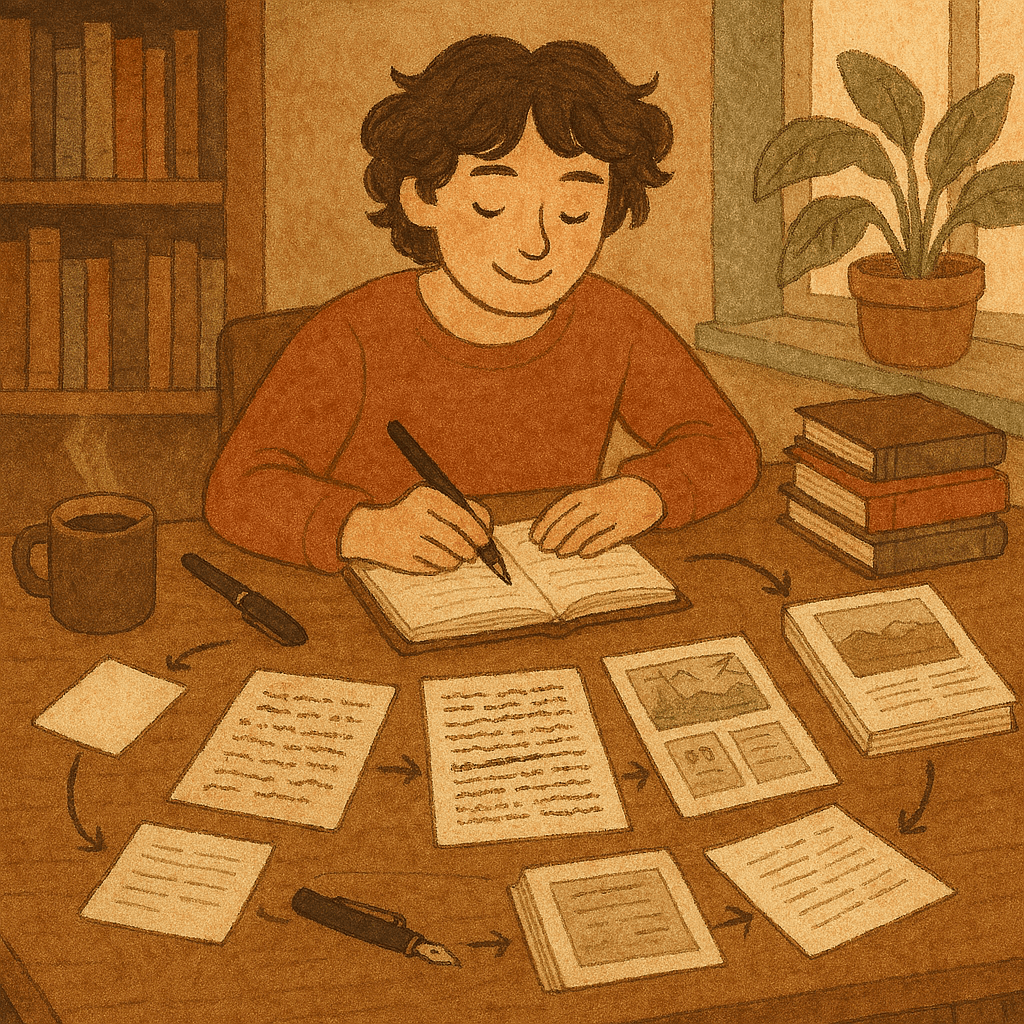
If you’re like me, you work a full-time job. You have family obligations, errands, laundry, dishes, and a life you’d like to live outside of your laptop. And yet, I typically update my blog five days a week. That doesn’t happen by accident. It happens because I treat content creation less like a burst of inspiration and more like an assembly line.
Yes, I’m borrowing the concept popularized by Henry Ford. Say what you will about Ford, but the man understood efficiency. The assembly line revolutionized manufacturing by breaking a massive project into small, repeatable tasks. One person didn’t build an entire car. Each person handled a specific piece—over and over—until the car was complete. You can apply that same concept to content creation.
Content can mean anything: blog posts, TikTok videos, Instagram captions, newsletters. My specialty is blog posts, so I’ll use my own system as an example. But most of these strategies are flexible enough to work across platforms.
Step one: Build and use templates
Templates are the backbone of efficiency. I use a book review template for every single review I write. Any recurring language—like my NetGalley disclosure—is already in place. I’m not retyping it. I’m not hunting it down in another document. It lives in the template.
More importantly, the template includes structural reminders. Headings prompt me to include:
- The full review
- SEO keywords
- Internal links to related blog posts
- A social media blurb
- A condensed version of the book review for NetGalley and Goodreads (with a link back to my blog)
Instead of staring at a blank page wondering what to include, I open a document that already tells me what to do. That eliminates decision fatigue before I even begin writing.

Step two: Break the process into repeatable tasks
I don’t create one blog post from start to finish in a single sitting. Instead, I batch the early steps for multiple posts at once. Typically, I plan about a week’s worth of content at a time. Sometimes more, if I know life is about to get chaotic.
Here’s what that looks like in practice:
- Select five or six novels to read next.
- Create a folder on my laptop for each novel.
- Copy my book review template into each folder.
- Paste the book’s summary into the template so I can reference it later.
- Download the cover image into the folder.
- Add affiliate links directly into the template.
- Find related blog posts to link internally for SEO and add those links in advance.
When those steps are done, I have a fully prepped planning document for each upcoming review. That upfront organization saves me a massive amount of time later. When I finish a book, I’m not scrambling to gather materials. Everything is already there. I just write.
Step three: Create in small pockets of time
Reading is the most time-consuming part of my process. There’s no shortcut around that. But I build reading into my life. I read on breaks at work. I read in waiting rooms. I read while standing in line. I read in the evening instead of watching television.
As I read, I take notes and draft portions of the review. By the time I finish the novel, I already have the bones of the post in place. Then I write a quick draft and move on to the next book. These are tasks I can squeeze into spare minutes. I don’t need three uninterrupted hours. I just need momentum.
Luckily, I love to read. And this part matters: you have to actually love what you’re creating. If you don’t love it, you won’t sustain this pace. Efficiency won’t save you from burnout if the work itself feels like punishment.
Step four: Schedule everything
Here’s one of the most valuable efficiency tips I can offer: schedule your content. If you rely on remembering to post every day, you will eventually miss days. Or drive yourself crazy trying not to.
Getting content online—formatting, uploading images, inserting links, optimizing for SEO—is often the most tedious part. So I batch that, too. I set aside one long block of time each week, usually on Saturday morning.
Lately, I’ve been taking myself to a café. Good coffee. A scone. No laundry staring at me from across the room. By then, all of my writing and prep work is done. I’m simply transferring everything into WordPress.
And again: templates. Instead of building each blog post from scratch, I duplicate a previous one and swap out the content. Headings are already formatted. Recurring elements—like support links for my work or ads for my latest novel—are already in place.
I plug in the new content, assign the correct publication date according to my editorial calendar, and schedule it. Once it’s scheduled, it’s off my mental load.
Step five: Choose a primary platform and automate the rest
Another major efficiency gain comes from choosing one primary platform and letting it distribute your content elsewhere. For me, that’s WordPress. Each blog post includes a ready-made social media blurb. My accounts are connected so that when the post goes live, it automatically shares to my social platforms with that blurb attached.
I don’t log in separately to post everywhere. I don’t copy and paste across five apps. It happens automatically. While I’m getting ready for work at my day job, a new book review is quietly going live across the internet. That’s the goal.
The real secret to efficient content creation
Efficiency isn’t about working faster. It’s about removing friction.
- Templates remove decision-making.
- Batching removes repetition.
- Scheduling removes stress.
- Automation removes manual duplication.
When you stack those systems together, consistency becomes manageable—even with a full-time job. And if you happen to love what you create, the system doesn’t feel like a grind. It feels like momentum.
Now I’m curious—what systems do you use to stay consistent with your content? Share your best efficiency tips in the comments.
Now available in print and on Kindle!

Check out my latest novel, It Had to Happen, now available in print and on Kindle!
Book Summary
When Jack Utley loses his daughter just as his business is about to soar, it seems he’s traded financial gain for Callie’s life. After an encounter with a mysterious woman on the eve of Callie’s funeral, Jack wakes up to find that time has somehow rewound to the morning of Callie’s accident. Jack gets an opportunity that most grieving parents can only dream of – he saves his daughter’s life.
Now that Jack has been forced to reflect on everything he has to lose, he resolves to do better. He’s determined to spend more time at home with his family and repair the relationships that have suffered over the years while he’s been so focused on work. But as Callie’s behavior becomes increasingly bizarre, Jack realizes he has a lot more room to improve than he realized – and it might be too late to save his daughter after all.
For fans of We Need to Talk About Kevin, The Push, and Baby Teeth.
Are you enjoying this content? Please consider leaving a tip! You can buy me a cup of coffee or donate a larger amount to help me “make a living” writing so I can quit my day job!
Become a regular patron of my art by signing up to contribute a set monthly dollar amount to help me make a living with my writing!
You can also make an annual contribution to my writing. Select an amount below!
Choose an amount
Or enter a custom amount
Your contribution is appreciated.
Your contribution is appreciated.
Your contribution is appreciated.
