Finish Writing Your Novel Now!

Understanding beats in novel writing: How small moments make a big difference

In the world of novel writing, the term “beats” might sound technical, but it actually describes something fundamental to storytelling. Beats are the subtle pauses, actions, gestures, and shifts in tone that bring scenes to life and give your narrative a natural rhythm. They’re the small but essential moments that help convey emotion, add depth, and keep readers hooked. Let’s dive into what beats are, why they’re important, and how to use them effectively to make your writing more dynamic.

A beat could be something as simple as having one character pause to glance over the top of their glasses at another: She lowered her glasses and gave him a side eye.

In creative writing, a “beat” is a term used to describe a small action or movement that a character makes during a scene. Beats can be used to convey a character’s emotions, thoughts, or intentions, and they can also be used to break up long passages of dialogue or description. In the simplest terms, beats are the little moments that create texture in a scene. Think of them as the breaths in your story—the pauses between dialogue, the glance a character gives before speaking, the way they fidget when they’re nervous. Beats can be:

Continue reading “Understanding beats in novel writing: How small moments make a big difference”
Finish Writing Your Novel Now!

How to write effective interior monologue in your novel

In novel writing, interior monologue is the narrative technique used to reveal a character’s inner thoughts, feelings, and reflections. It’s a way to give readers direct access to what a character is thinking without the character saying those thoughts out loud. This technique can deepen character development, help readers understand motivations, and create a more intimate connection between the character and the reader.

The purpose of interior monologue is to reveal a character’s inner thoughts, feelings, and reflections.

Getting interior monologue right is key in novel writing because it deepens character development by revealing a character’s private thoughts and emotions, giving readers access to their inner lives. It helps readers form a stronger emotional connection, even with flawed or conflicted characters, making them more relatable.

Continue reading “How to write effective interior monologue in your novel”
Finish Writing Your Novel Now!

What is proportion in novel writing?

In novel writing, proportion refers to the balance of different elements within the story—such as plot, character development, setting, and theme—to create a cohesive, engaging narrative. Proportion affects how much time and space are given to each element, helping to shape the reader’s experience and guide their focus. When proportion is well-balanced, readers feel drawn into the story without feeling overwhelmed by too much detail or frustrated by too little.

Proportion in novel writing is about giving each element the right amount of space to contribute to the whole story without overloading or neglecting any part.

Here are some key aspects of proportion in novel writing:

Continue reading “What is proportion in novel writing?”
Finish Writing Your Novel Now!

How to Create a Style Guide for Your Novel Manuscript

A style guide is an essential tool for any novelist who wants to stay organized and ensure consistency throughout their manuscript. Whether you’re managing character descriptions, tracking worldbuilding details, or simply making sure certain words are used the same way, a style guide helps you maintain accuracy and clarity in your story. By creating a reference document tailored to your novel, you make it easier to avoid inconsistencies and approach your work with a critical eye for detail. Here’s a step-by-step guide on how to create a style guide for your manuscript.

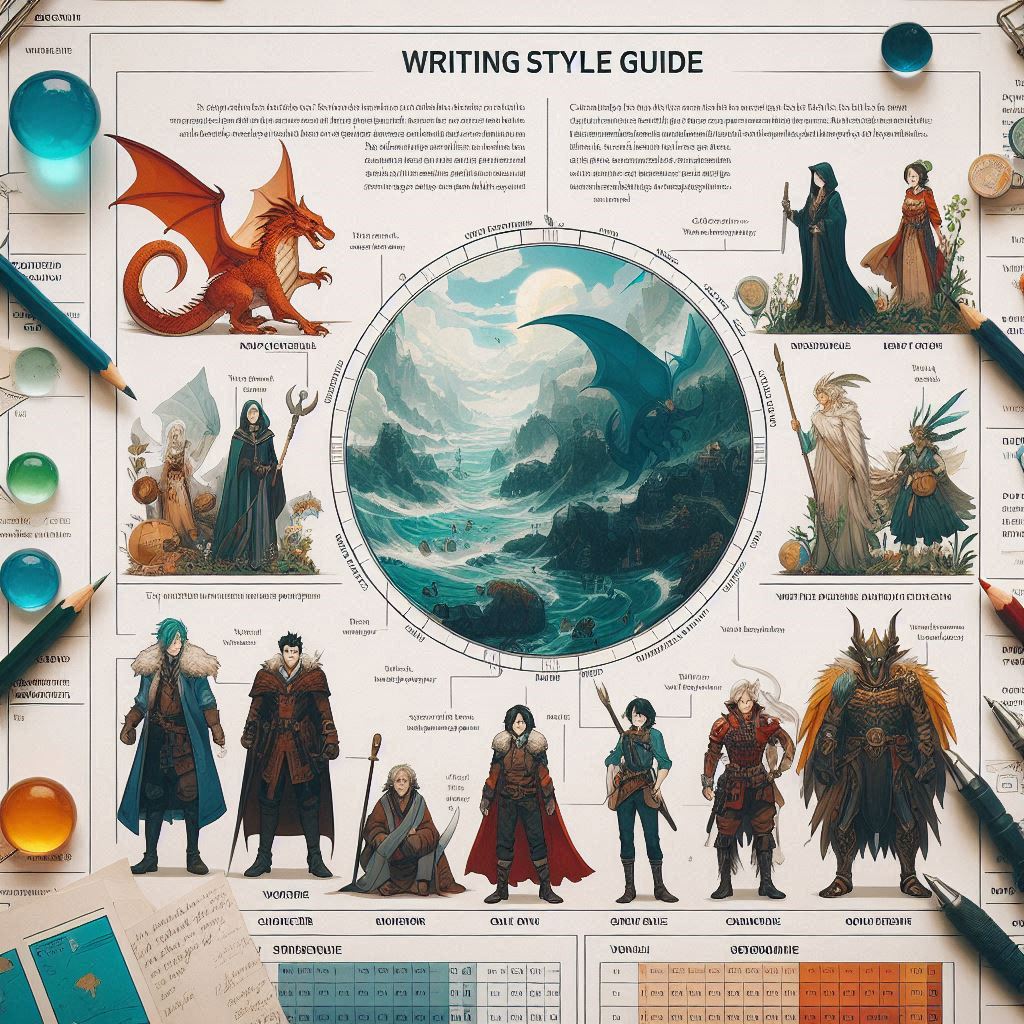
Your writing style guide doesn’t need to be quite this fancy. It could be as simple as an Excel spreadsheet, a Word document, or even handwritten note cards.

Start with Character Profiles

Character profiles are crucial for keeping track of your main and supporting characters. In this section, include essential information for each character, such as physical description, age, background, personality traits, and key relationships. If your character has specific speech patterns, catchphrases, or unique mannerisms, make note of these to ensure consistency.

Continue reading “How to Create a Style Guide for Your Novel Manuscript”
Uncategorized, Writing Basics

The importance of style in college writing

Once upon a time, a young high school graduate signed up for two courses at her local community college extension center. She was eager to be the first person in her family to go to college, while also not wanting to commit too fully to something she wasn’t quite sure she wanted to do. She also wasn’t quite sure it was something she was even capable of finishing.

Typewriter image made using Sandbox app in Android.

So, the young woman took a computer class, which she enjoyed, where she learned all about a new phenomenon called the internet, and chat rooms, and all manner of exciting new things. And she also took an English class, which she thought she would enjoy because she loved to write, but instead she ended up in an unwinnable argument with an ignorant instructor and soon dropped out of college altogether. Continue reading “The importance of style in college writing”

Composition I, Education, Writers on Writing

What’s your writing style? Do you have one?

Timberlake performing at St. Paul, Minnesota, ...
Are you the Justin Timberlake of writing? | Timberlake performing at St. Paul, Minnesota, one of the venues of his first worldwide tour, FutureSex/LoveShow (Photo credit: Wikipedia)

Style is an essential element of writing that can take decades to master. Writing students are often confused about what constitutes their style. Sometimes it is helpful to discuss style in an alternate medium, such as fashion, to draw an analogy that students can understand.

Consider this. I have two sons, aged 7 and 14. They are both sloppy dressers. My 7-year-old doesn’t really think about his “style.” Sure, he has a couple of favorite shirts that he would wear every single day if I would allow it. He prefers elastic-waist athletic pants over denim jeans because they are more comfortable. However, his clothing choices consist mostly of wearing the first item of clothing he can get his hands on when he reaches into his closet. The only reason he wears matching socks is because I match them up for him when I do the laundry. The result is often sloppy, but he doesn’t look sloppy on purpose. He just doesn’t know any better.

At this point, I am not too concerned with my younger son’s wardrobe choices as long as I can get him to dress appropriately for the weather. We live in Wisconsin, and we’re heading into the final days of October. The time for wearing shorts has passed. Now, my main concern regarding his daily dress is that he makes it out of the house each morning wearing long pants, socks, appropriate footwear, a sweatshirt, and a jacket. He is still learning the basic rules of dressing himself. There’s no room for worrying about style at this point. Continue reading “What’s your writing style? Do you have one?”