Writers on Writing

Demons of the Night: A horror novel about good, evil, and finding your own path

Demons of the Night is a horror novel that asks: who gets to decide what is good and what is evil? It follows Docia, a young woman whose parents have gone to great lengths to hide the truth about who she really is. They want her to be a “good Christian woman” and believe secrecy is the only way to protect her. But their plan is about to backfire.

The cover of Demons of the Night was designed by my friend, author and artist Lance Savage, who created a fictionalized version of Holy Hill to reflect the novel’s dark atmosphere. Visit Lance’s website to see more of his work.

Docia longs for independence, for a life beyond her family’s overprotection. She wants normal experiences—friendships, romance, freedom. When Blane appears at a church lecture on demons, Docia is intrigued. But he’s there for the wrong reasons, and she quickly realizes that the life she desires may require confronting truths her parents have worked so hard to conceal. As the story unfolds, Docia must grapple with her identity, her morality, and the question of whether she can define herself outside the rigid framework her family imposes.

Continue reading “Demons of the Night: A horror novel about good, evil, and finding your own path”
Finish Writing Your Novel Now!

How to Create a Style Guide for Your Novel Manuscript

A style guide is an essential tool for any novelist who wants to stay organized and ensure consistency throughout their manuscript. Whether you’re managing character descriptions, tracking worldbuilding details, or simply making sure certain words are used the same way, a style guide helps you maintain accuracy and clarity in your story. By creating a reference document tailored to your novel, you make it easier to avoid inconsistencies and approach your work with a critical eye for detail. Here’s a step-by-step guide on how to create a style guide for your manuscript.

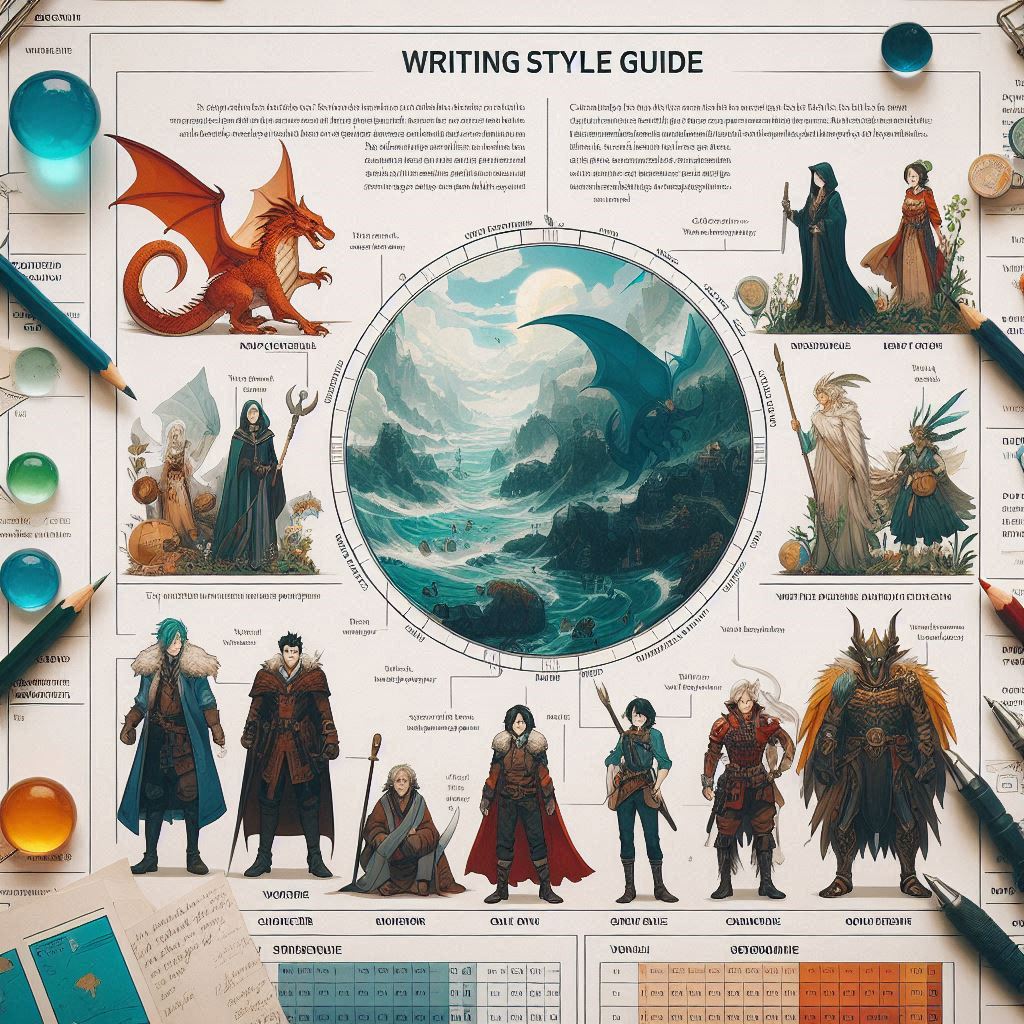
Your writing style guide doesn’t need to be quite this fancy. It could be as simple as an Excel spreadsheet, a Word document, or even handwritten note cards.

Start with Character Profiles

Character profiles are crucial for keeping track of your main and supporting characters. In this section, include essential information for each character, such as physical description, age, background, personality traits, and key relationships. If your character has specific speech patterns, catchphrases, or unique mannerisms, make note of these to ensure consistency.

Continue reading “How to Create a Style Guide for Your Novel Manuscript”
Finish Writing Your Novel Now!

How to ensure the first chapter of your novel sets expectations for the rest of your story

The first chapter of a novel is crucial in establishing the groundwork for the entire story, as it introduces readers to the world they’re entering and signals what they can expect in terms of tone, genre, and pacing. A strong opening chapter does more than just hook the reader—it serves as a promise, subtly hinting at the main themes, character journeys, and conflicts that will shape the narrative.

Regardless of what is happening in your story, the first chapter should provide readers with a solid idea of where the novel is going to take them.

Writers must carefully consider what to reveal and how to convey the essence of the story from the start, crafting an introduction that not only captivates but also lays the framework for what lies ahead. By thoughtfully setting these expectations, the first chapter can draw readers in and keep them eagerly turning pages, primed for the twists, growth, and resolution that will come.

Continue reading “How to ensure the first chapter of your novel sets expectations for the rest of your story”
Finish Writing Your Novel Now!

How to successfully break chapter one promises

In novel writing, the first chapter serves as a foundation for the reader, setting up initial expectations about plot, tone, and character arcs. However, successful storytelling often involves deviating from these initial promises in a way that adds depth and intrigue to the narrative. Breaking “chapter one promises” requires a careful balance: if done skillfully, it can surprise and engage readers, adding layers of complexity and unexpected turns to the story.

Some promises are made to be broken.

When handled poorly, however, it risks confusing or disappointing the audience. Understanding how to effectively subvert early expectations—whether through plot twists, character development, or shifts in tone—allows a writer to create a dynamic and memorable reading experience that keeps audiences invested and eager to see where the story leads.

Here are some strategies for successfully breaking your chapter one promises without breaking your novel:

Continue reading “How to successfully break chapter one promises”
Finish Writing Your Novel Now!

The pros and cons of breaking Chapter One promises

In storytelling, the opening chapter of a novel serves as a promise to the reader, establishing tone, genre, character dynamics, and key themes that shape their expectations for the rest of the narrative. Breaking these promises can occur when the story later diverges significantly from what was initially implied, often leading to confusion or disappointment. However, when done skillfully, breaking these early promises can also serve as a powerful tool for subverting reader expectations, adding layers of depth, or creating surprise twists that enhance the overall impact of the novel. The challenge lies in balancing misdirection with satisfying storytelling.

You should always carefully weigh the pros and cons before decide to break your chapter one promises.

Breaking chapter one promises in a novel can be a bold and creative storytelling technique that keeps readers engaged and surprised. By deviating from the initial expectations set in the first chapter, authors can introduce plot twists, deeper character developments, or genre shifts that challenge assumptions and create a more dynamic narrative. This unexpected shift can enhance the story’s complexity, making it more memorable and impactful.

Continue reading “The pros and cons of breaking Chapter One promises”
Finish Writing Your Novel Now!

Does the first chapter of your novel make promises it can’t keep?

Chapter One: it’s where every story begins. It sets the reader’s expectations of what they are about to read and often makes promises that it must keep in order to satisfy the reader. It’s a big job, and not every chapter is cut out to do it. It’s common in the revise and refine stage of the novel writing process to realize that the chapter you thought would come first just isn’t ready to do all that heavy lifting. You might evaluate your novel manuscript and find yourself asking, “Where does this story actually begin?” Does your story begin with your current chapter one? Or do you need to write a whole new first chapter?

Be very careful of breaking your chapter one promises if you don’t want to break the hearts of these creepy A.I. twins!

The first chapter of a novel makes a number of promises to its readers, setting up expectations for the rest of the story. These promises may include:

Continue reading “Does the first chapter of your novel make promises it can’t keep?”
Finish Writing Your Novel Now!

Mastering Flashbacks: A Guide to Enhancing Your Fiction

Flashbacks can be a powerful tool in fiction writing, allowing authors to deepen character development, enrich plot lines, and create emotional resonance. However, using them effectively requires careful consideration.

Incorporating flashbacks in your novel is like using a time machine to show your readers what happened in the past.

Potential drawbacks of incorporating flashbacks in your novel include disrupting the pacing of the story, confusing and tiring your readers, and shifting the novel’s focus away from the story’s “present time.” If not handled delicately, flashbacks can feel like emotional manipulation. Readers may sense when an author is trying too hard to elicit a particular response, which can undermine the authenticity of the moment. Here’s how to master the art of flashbacks in your writing:

Continue reading “Mastering Flashbacks: A Guide to Enhancing Your Fiction”
Finish Writing Your Novel Now!

How to write backstory without infodumping

Infodumping in novel writing refers to the excessive and often clumsy presentation of background information, context, or details all at once, usually in a way that disrupts the narrative flow. This can happen when an author tries to convey too much information in one go, often through long passages of exposition or dialogue, making it feel overwhelming or tedious for the reader.

Imagine how overwhelming it would be to have all this information dumped on you at once!

Writing backstory without resorting to infodumping involves weaving the information seamlessly into the narrative. Here are some techniques to help you do that:

Continue reading “How to write backstory without infodumping”
Finish Writing Your Novel Now!

What is backstory in novel writing?

Backstory in novel writing refers to the history and events that shape the characters, settings, and plot before the main narrative begins. It provides context and depth to the characters and can help explain their motivations, conflicts, and relationships.

Effective backstory is blended into the flow of the narrative, keeping the reader engaged while providing necessary context.

Here are some key aspects of backstory:

Continue reading “What is backstory in novel writing?”
Finish Writing Your Novel Now!

What is exposition in fiction writing? Is it the same as “telling?”

In fiction writing, “telling” and “exposition” are related but not exactly the same thing. Telling refers to the technique of stating facts or emotions directly, rather than letting the reader infer them through actions, dialogue, or sensory details. For example, saying, “She was angry,” is telling, whereas showing might involve describing her clenched fists or sharp tone. Exposition, on the other hand, is the presentation of background information, context, or explanation necessary for the story, such as the history of a world, character backstory, or details about a situation.

Exposition can be used to describe a novel’s setting. How would you describe this setting?

Exposition can be done through either telling or showing. In short, telling is a technique, while exposition is a type of content. Exposition can sometimes involve “telling” when the writer needs to explain things quickly, but it can also be shown through more gradual revelations or interactions within the narrative.

Continue reading “What is exposition in fiction writing? Is it the same as “telling?””