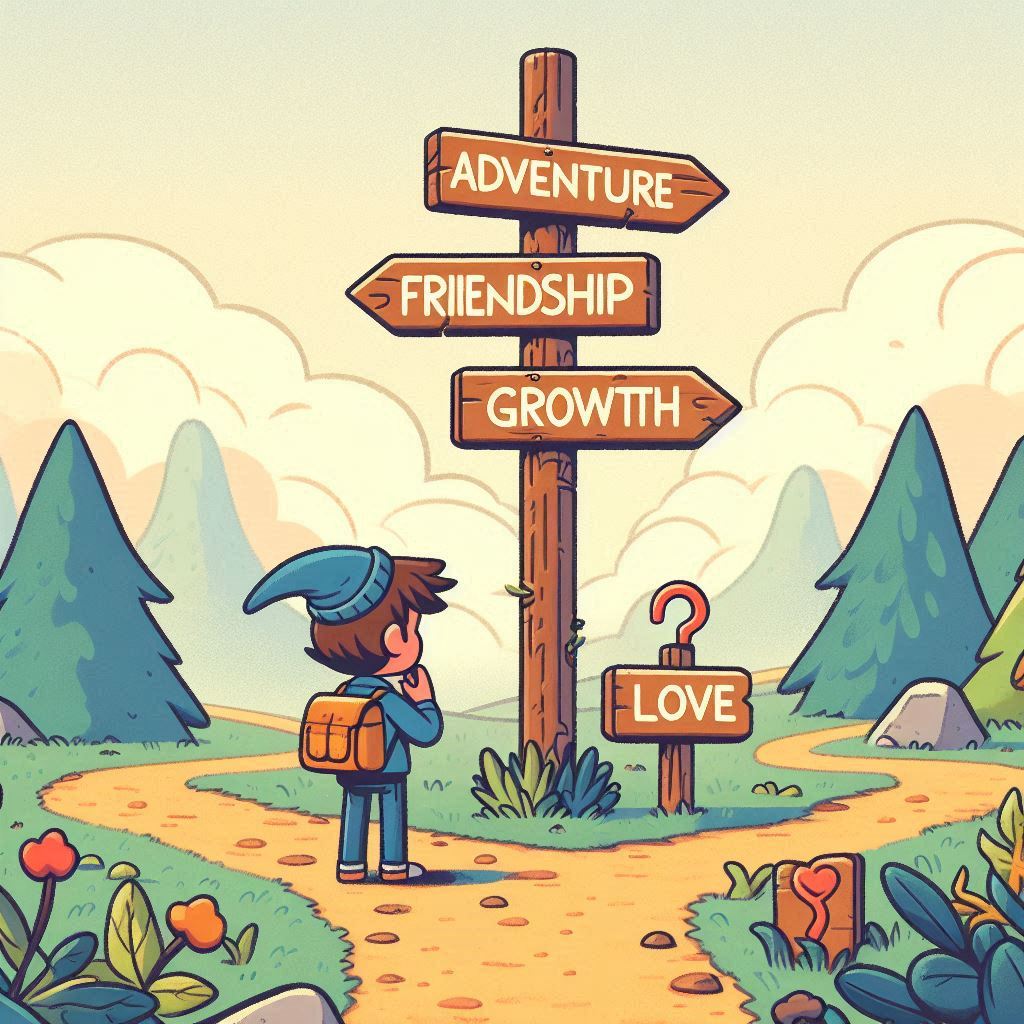
Why don’t readers like strong female leads? Why do they only want innocent and dumb female leads in their books?
From timid beginnings to unstoppable confidence—every strong female lead starts somewhere. Follow the journey from innocence to empowerment, both on the page and in life.
Dear Reader,
To properly answer this question, we first need to clarify which readers we’re talking about—because I can assure you, not all readers want innocent or naïve female leads. In fact, I’d argue that many middle-aged women (myself included) gravitate toward books firmly planted in the strong women serving up justice to bad men genre. Those female leads are confident, capable, and unapologetically badass—and that’s exactly what this reader wants.
Inconsistent character arcs are an essential big-picture issue that should be addressed early in the revise and refine stage of the novel writing process. A character arc is the transformation or development of a character over the course of the story. It’s the emotional or psychological journey that a character goes through as they face and overcome challenges or obstacles and change as a result.
The characters in your stories may have different types of character arcs– the important thing is that they evolve along with your story rather than remaining stagnant from start to finish.
To address these issues during the revise and refine stage of the novel writing process, it is important to first determine which of your characters are important enough for them to experience a defined character arc over the course of your story. This will often include both your protagonist and antagonist as well as any other characters who are essential to the plot of your story.
In a recent blog post on writing villains, The Write Practice’s Joe Bunting says that in every story, “there is always only one internal villain… whether it is fear, lust for power, or control.” This, of course, got me to thinking about my own protagonist in one of my current works in progress. I decided to do a freewrite on this topic and share it with you.
She just wants to go somewhere and lead an adventure. She doesn’t seem to care where she goes, which allows her to be led by evil people to places that she doesn’t want to be. She is so afraid of being ordinary and being stuck where she is that she jumps at any opportunity to be someplace and someone different.
My protagonist could use a little Katy Perry in her.
One of the problems that I seem to be having with my protagonists in this and with Valley of the Bees is the fact that neither of them seem to have any agency. They both allow themselves to be victims of plot. I can’t decide if this is good or bad. I feel like it’s something that my protagonists need to overcome. But at the same time, I’ve been taught that characters who just allow themselves to be carried along by the plot are the weak superheroes of weak stories. Am I writing weak stories? Continue reading “Freewriting practice: Name your protagonist’s internal villain”→
Yesterday we had some fun with our trashy romance novel characters. Today we will get to know them on a somewhat deeper level (okay, maybe not too deep. Just one level deeper than yesterday.)
So, you have figured out what your two main characters don’t like about each other on first impression. Now let’s think about how you can develop these two opposing characters into people who might believably come to like one another later in the novel. Maybe the slick lawyer secretly loves dogs and has a pregnant pooch back home in NYC that she’s worried sick about. Perhaps the grumpy cowboy is secretly writing a business plan that will turn his failing family ranch into an organic vegetable farm that will supply several high-brow restaurants in the nearest big city. Continue reading “Get to know your characters a little better”→
Saved by the mouse. No, not that kind of mouse. | English: A variety of computer mice built from 1986 to 2007. (Photo credit: Wikipedia)
The other day, I wrote a terrible chapter. I had reached the “All hope is lost lull” in the final quarter of my current project. It was time to write a chapter in which my protagonist loses all hope of escaping her hopeless situation. She was trapped in a cellar, with no way out. I wrote a couple of pages of her chasing a mouse around the cellar and counting her food supply. But it was really boring. Nothing was happening.
I pushed through it. I had shown my protagonist losing hope, but I couldn’t shake the feeling that absolutely nothing had “happened” in the chapter. It was about as crappy as a chapter can get. But I didn’t know what else to do with it, so I let it stand and went about my business. Continue reading “It’s okay to write a crappy chapter once in a while”→
How do you decide which shelf your book will finally end up on at your local book store? | Novels in a Polish bookstore (Photo credit: Wikipedia)
Since I began writing my current novel almost one full year ago, I have often struggled with determining which genre my story falls into. My thesis adviser pushed me (a lot!) in the direction of Young Adult (YA,) but it just never felt right to me. Although my protagonist is seventeen years old at the outset of the novel, the story will unfold over the course of several years and will include a failed marriage and other “adult” themes that rule out the possibility of selling this novel to a YA audience.
Another element I am struggling with is my time line. Exactly how many years should my protagonist be married to her jerk husband before she escapes? I need her to stick it out for at least a few years. But then, how do I write her through those years and get to the next big event without boring my reader?
This is one of two memory books I am filling out for my sons. Each books asks tons of questions about the mother’s life.
I’ve always been obsessed with these memory books that are designed for parents and grandparents to fill out and leave for their progeny to remember them by. When I was a teen, I bought grandmother versions for each of my grandmas. Both of my grandmas totally filled their books out and left me all sorts of memories of them that I will treasure forever. I am lucky enough to still have my maternal grandmother, but my paternal grandmother has been gone for seven years now. I feel so close to her when I can open her book and read her handwriting.
My tragic story arc is based on the stages outlined by Liz Bureman in a recent blog post titled, “The 7 Basic Plots: Tragedy.”
I am still pretty much stuck on my novel at the moment, so I decided it was time to try some writing exercises. For today’s exercise, I wrote a tragedy arc for one of my main antagonists, King Mentor Drak. This arc is based on a recent blog post by Liz Bureman over at The Write Practice.
Drak’s story begins long before the start of my current novel and will eventually be covered in the prequel I am planning to write next. (M’s grandmothers, Elde and Fayne, will be the protagonists in the prequel.) Here’s a bit of Drak’s story as I have laid it out using Bureman’s tragedy arc.
Anticipation Stage
“The tragic hero gets it into his or her head that something is missing, and they want it. This might be power, fame, a specific love interest, or something else, but the protagonist has their motivation for the disaster dominoes that are about to fall.” Continue reading “The stages of tragedy: Drak’s story”→
Life seems so simple when you’re a 6-year-old and a cat.
My six-year-old paid me a visit this morning as I lay in bed considering which part of my creative thesis I should focus my efforts on today.
Do I work on the POV shifts I don’t completely understand and try to muddle my way through filtering my entire story strictly through my protagonist’s POV?