Essays

Writing action scenes in novels: Why sequence and clarity matter

Nothing kills the momentum of an action scene faster than confusing choreography. Readers will forgive a lot in a fast-paced sequence. They’ll forgive impossible odds, dramatic coincidences, even a hero surviving injuries they probably shouldn’t. What they won’t forgive is not understanding where everyone is standing. One of the most common mistakes writers make in action scenes is putting events on the page out of sequence.
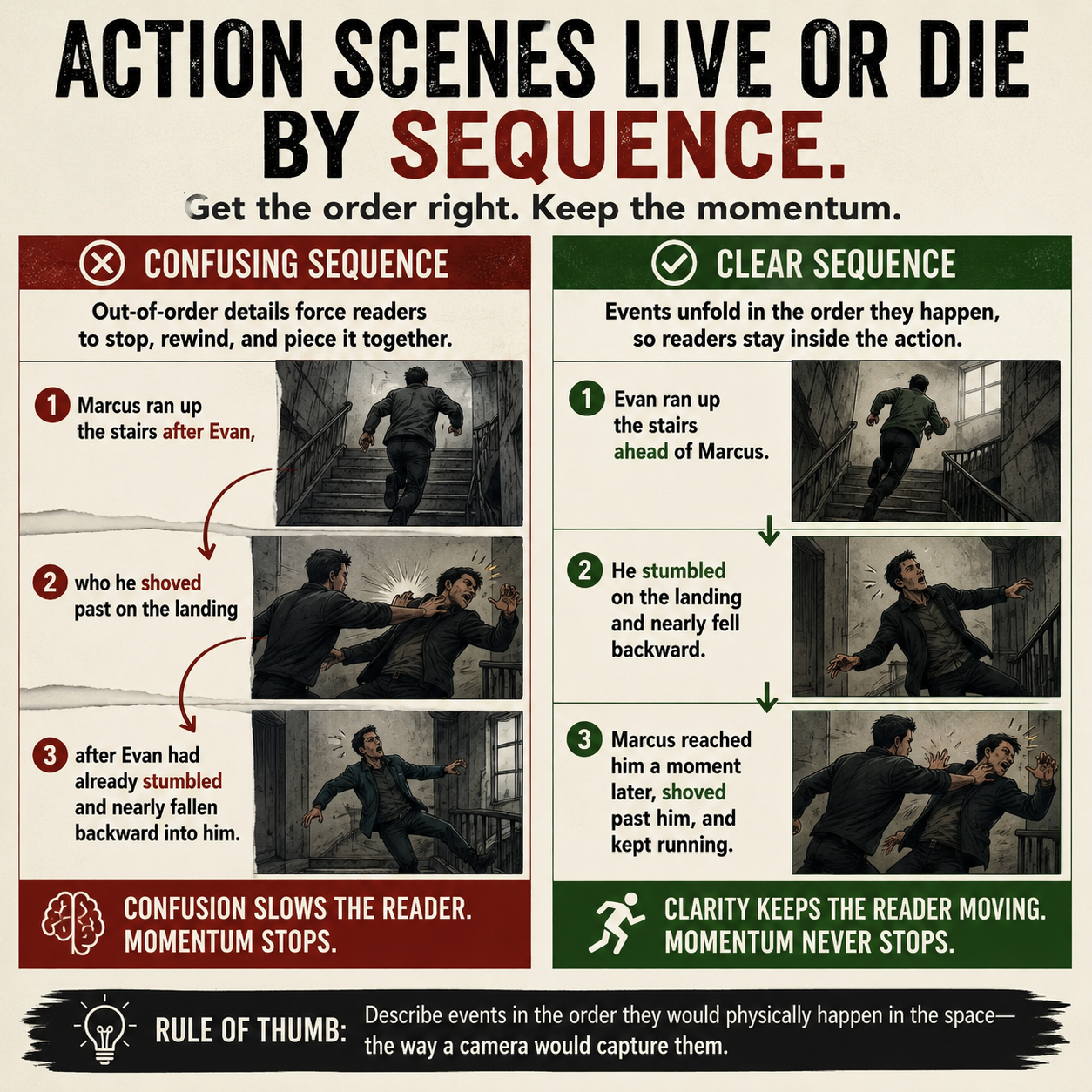
When action scenes lose their sequence, readers lose the thread. Clear choreography keeps readers inside the movement instead of forcing them to stop and untangle what happened.

The problem is usually small at the sentence level, but the effect on the reader is enormous because it forces them to stop, mentally rewind the scene, and reconstruct what actually happened. They’re no longer experiencing movement in real time—they’re translating it. And that translation breaks momentum.

The issue usually isn’t that the writing is unclear in isolation. Each sentence might make sense on its own. The problem is that the order of information doesn’t match the order of events as they happen in the scene. Readers don’t want to assemble a timeline. They want to experience it.

Continue reading “Writing action scenes in novels: Why sequence and clarity matter”
Ask the Author

Ask the Author: When does a novel become YA? Before you write it—or after?

Dear Mandy,

When do you decide if your novel is YA? Do you decide before you start writing or after you are done?

Answer: One of the questions writers ask constantly is whether a novel “counts” as Young Adult fiction. Sometimes the answer is obvious from page one. Other times, writers finish an entire manuscript before realizing they may have written for a different audience than they originally intended.

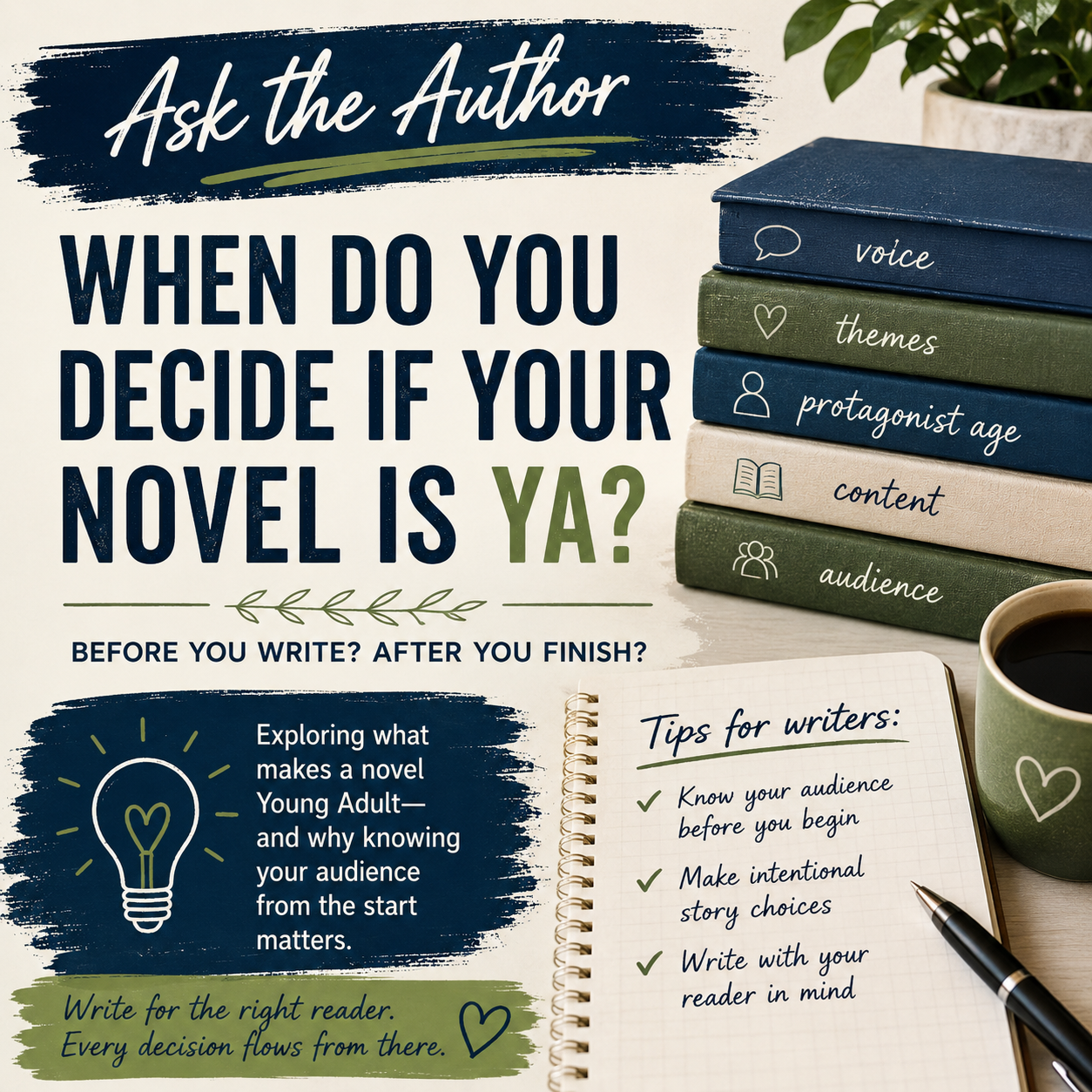
When does a novel become YA—and how much of that decision happens before you even write the first page? This graphic breaks down the key factors writers should consider, from voice and protagonist age to audience and market expectations, and why knowing who you’re writing for shapes every story choice you make.

The truth is that YA is both a category and a marketing designation, and those two things do not always align perfectly. At the most basic level, a Young Adult novel is written for teen readers, generally between the ages of twelve and eighteen. In publishing, though, that definition becomes much more flexible than people expect. A huge percentage of YA readers are adults, and many books with teen protagonists are actually shelved in adult fiction. That’s why YA is not determined by a single factor.

Continue reading “Ask the Author: When does a novel become YA? Before you write it—or after?”
Essays

Choosing a writing style guide for independent writing: How to build consistency on your own terms

One of the underrated freedoms of being an independent writer is that no one is standing over your shoulder enforcing a style guide. You don’t have to follow a publisher’s house rules or argue with an editor about commas or capitalization conventions. You get to decide what your writing looks like. That freedom is also where things can quietly get messy.

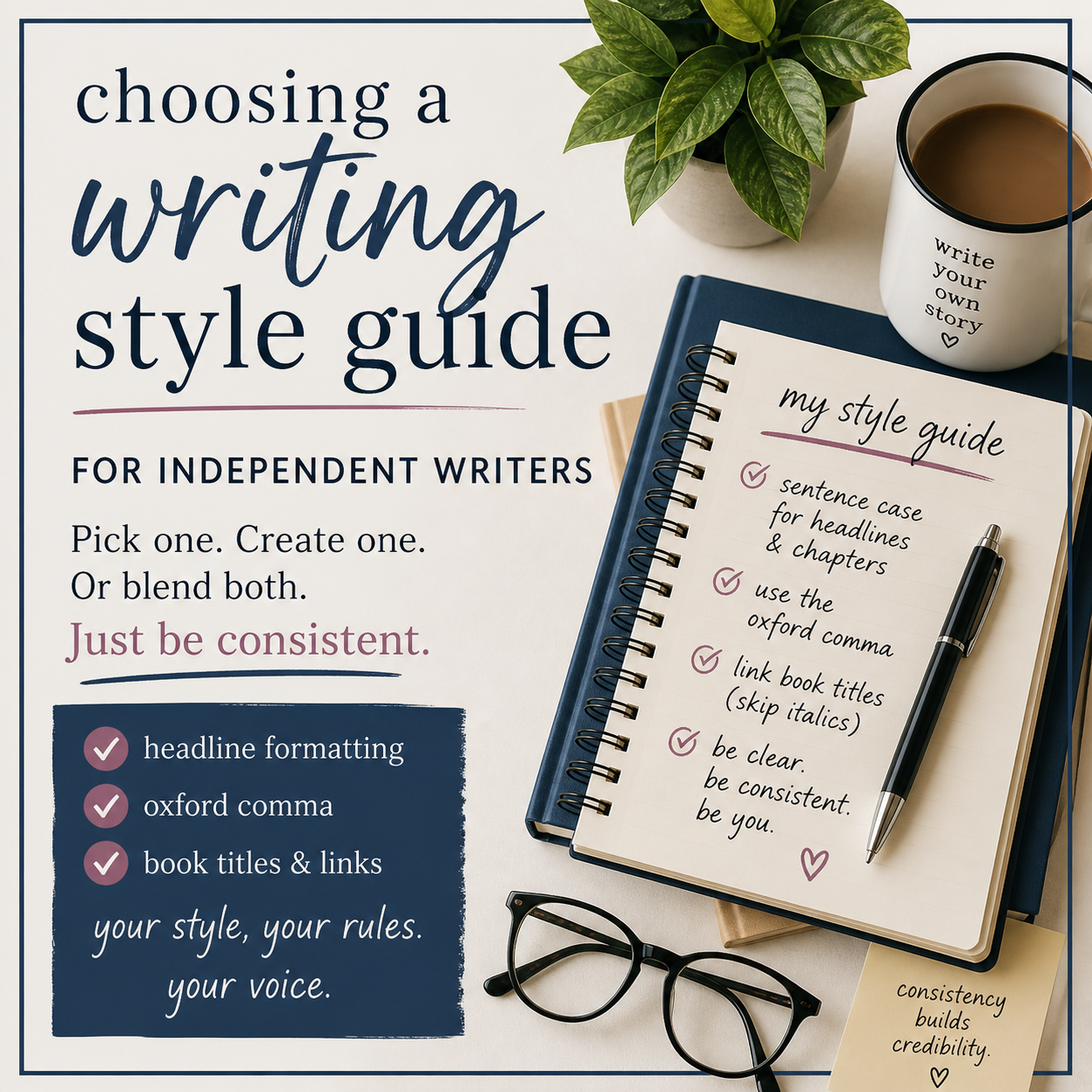
Square graphic about choosing a writing style guide for independent writers, showing a notebook, pen, coffee, and desk setup alongside text about sentence case, the Oxford comma, and formatting book titles, emphasizing consistency and personal style choices in writing.
Choosing a writing style guide for independent writers: a reminder that consistency matters more than rigid rules, and every writer gets to define their own system.

Once you’re writing novels, blog posts, website copy, newsletters, and maybe even social media captions, consistency starts to matter more than most people expect. Readers notice it when formatting shifts. Search engines don’t care, but your credibility as a careful, intentional writer often depends on the subtle signals your text sends. The solution isn’t to give up your independence. It’s to choose your structure on purpose.

Continue reading “Choosing a writing style guide for independent writing: How to build consistency on your own terms”
Random Writing Rants, Social Media

Spellcheck Public Service Announcement

Words
Words (Photo credit: Southernpixel Alby.us)

You may have noticed that, when updating your Facebook status, certain words might occasionally show up in the text box with a red squiggly line under them. This red squiggly line typically indicates that you have spelled a word incorrectly.

Whenever this happens, simply right click over the squiggled word and see if a correct spelling is available. Click on the correct spelling and proceed with your status update.

If the correct spelling is unavailable, you can usually google the word to find the correct spelling. Unless you have completely butchered the word, you should be able to easily find the correct spelling using the tools available right at your fingertips. Continue reading “Spellcheck Public Service Announcement”