If you spend enough time on bookish social media, you’ll eventually see someone point out an “easter egg” in a novel—and there’s a good chance they’re actually talking about something else entirely. This is the topic of today’s Ask the Author.
Dear Mandy,
Question: Are easter eggs in a novel just foreshadowing?
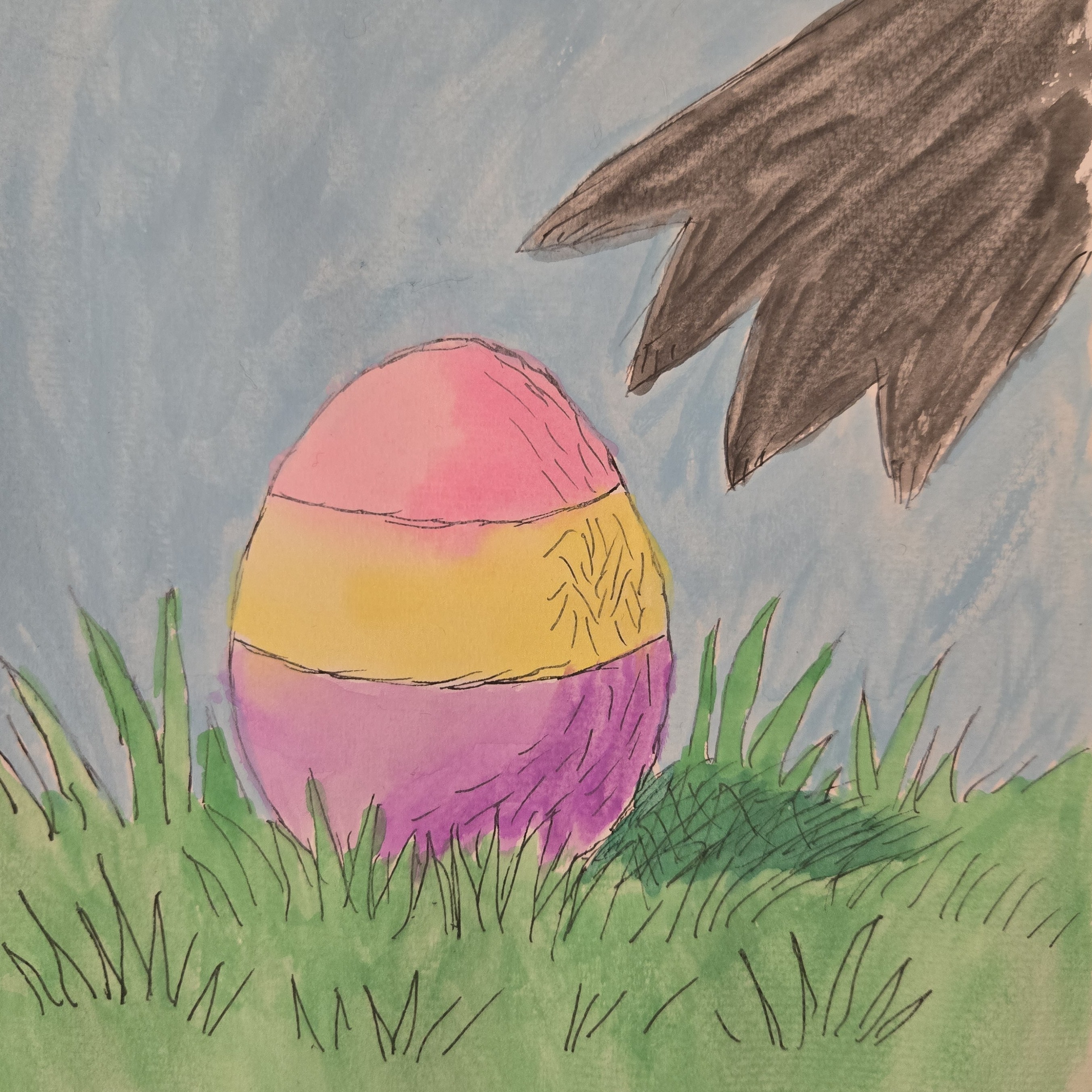
Answer: Lately I’ve noticed a lot of readers on social media using the term easter egg when what they really mean is foreshadowing. The two are not the same thing, even though they both involve details hidden in a story.
Foreshadowing is a storytelling technique. It’s when an author plants clues early in the narrative that hint at something that will happen later. A seemingly harmless line of dialogue, an object that appears briefly in chapter two, a character’s odd reaction to something—these details quietly prepare the reader for future events. When the twist or revelation finally arrives, the earlier hints suddenly make sense. Good foreshadowing makes a story feel inevitable rather than random.
An “easter egg,” on the other hand, is more like a hidden bonus for attentive readers. It’s a reference tucked into the story that isn’t necessary to the plot. Maybe it’s a nod to one of the author’s earlier books, a subtle reference to a famous line from another novel, or a character name that longtime fans will recognize. If you notice it, great—you get the inside joke. If you miss it, the story still works perfectly fine.
That’s the key difference. Foreshadowing serves the narrative. Easter eggs are just for fun. So how did the confusion start?
Social media has a funny way of accelerating language changes. Sometimes a person with a large following uses a word incorrectly, and their audience—assuming that person knows what they’re talking about—starts using it the same way. Their followers then repeat it, and suddenly the incorrect usage spreads like wildfire. Before long, people are confidently using a term without ever having checked what it actually means.
You can see similar debates happening elsewhere in publishing. For example, I’ve noticed a recent trend where some small press publishers loudly insist that they are independent publishers, while authors who publish their own work somehow aren’t. In situations like that, it’s worth asking why someone is being so adamant about controlling the definition of a term. Sometimes there’s a practical reason behind it. Other times, they simply benefit from controlling the narrative.

With the phrase, “easter egg,” though, I don’t think anyone is trying to gain anything by changing the definition. It’s probably much simpler than that: someone misunderstood the term, shared that misunderstanding with a large audience, and their followers trusted them enough not to question it.
And then those followers repeat it.
And their followers repeat it.
And suddenly everyone is using the word incorrectly.
Language shifts like this happen all the time. It’s a bit like how you’ll now see people write “sooner than later” when the phrase has always been “sooner RATHER than later.” Once enough people repeat something, it starts to feel correct—even when it isn’t.
The safest solution is simple: if you’re not sure what a word or phrase means, look it up. Don’t assume your favorite influencer is automatically correct just because they have a large following. Because believe me—there are plenty of grammar purists lurking on social media who are more than happy to point out when a term is being used incorrectly. And they’re usually very “enthusiastic” about it.
—Mandy
This column is part of an ongoing Ask the Author series, where I answer questions from writers and readers about reading, writing, storytelling, and the creative process. If you have a question you’d like me to tackle in a future post, you can submit it through the contact page on my website.
Now available in print and on Kindle!

Check out my latest novel, It Had to Happen, now available in print and on Kindle!
Book Summary
When Jack Utley loses his daughter just as his business is about to soar, it seems he’s traded financial gain for Callie’s life. After an encounter with a mysterious woman on the eve of Callie’s funeral, Jack wakes up to find that time has somehow rewound to the morning of Callie’s accident. Jack gets an opportunity that most grieving parents can only dream of – he saves his daughter’s life.
Now that Jack has been forced to reflect on everything he has to lose, he resolves to do better. He’s determined to spend more time at home with his family and repair the relationships that have suffered over the years while he’s been so focused on work. But as Callie’s behavior becomes increasingly bizarre, Jack realizes he has a lot more room to improve than he realized – and it might be too late to save his daughter after all.
For fans of We Need to Talk About Kevin, The Push, and Baby Teeth.
Are you enjoying this content? Please consider leaving a tip! You can buy me a cup of coffee or donate a larger amount to help me “make a living” writing so I can quit my day job!
Become a regular patron of my art by signing up to contribute a set monthly dollar amount to help me make a living with my writing!
You can also make an annual contribution to my writing. Select an amount below!
Choose an amount
Or enter a custom amount
Your contribution is appreciated.
Your contribution is appreciated.
Your contribution is appreciated.
