
In today’s author interview, Meg Howrey discusses Body Language, her latest novel about Alzheimer’s, caregiving, family conflict, and the difficult question of how we honor a person’s wishes when they can no longer make decisions for themselves.
When I finished Body Language, I found myself thinking about it long after I’d put the book down—not because it offers an easy answer to the difficult questions at its center, but because it refuses to. Howrey’s novel asks what it means to honor someone’s autonomy while also forcing us to consider the very real emotional, financial, and practical costs that can fall on the people left to provide care.

What I especially appreciated about the novel was the way Howrey lets each of the three sisters—Sloane, Laurel, and Nanette—have a legitimate perspective. None of them is simply the voice of reason while the others are being selfish or misguided. Their feelings about their mother’s wishes are tangled up with their own histories, fears, relationships, and ideas about what they can realistically take on. And somehow, despite the seriousness of the subject matter, Body Language is also genuinely funny in places.
I’m very happy to welcome Meg Howrey to Write on the World to talk about the personal experiences that led her to write Body Language, how she found these three very different sisters, why money belongs in conversations about caregiving, and what she discovered by writing the novel from three competing perspectives. We also talk about sisterhood, family, humor, and the surprising way psychedelic drugs can sometimes bring people closer together. And, at the end, Howrey gives us a glimpse of what she’s working on next—her first venture into historical fiction.
Q: At the center of Body Language is a question with no easy answer: How do we honor someone’s autonomy when they have made their wishes clear but may no longer have the cognitive ability to make decisions for themselves? What drew you to exploring that particular ethical dilemma through fiction?
A: My partner was caring for his mother, who had Alzheimer’s. My closest experience to the disease before that was with my grandfather, who had been cared for by my grandmother. He died fairly quickly, and before that was fairly docile and good-tempered; seemed to enjoy sitting quietly or looking out the window. It didn’t look terrible. But of course I was a younger person, largely concerned with my own doings and only visited a few times. I never saw the daily work of it, all the stages. My partner’s mother was a completely different scenario.
I kept having conversations with friends about it all, and it was really extraordinary to discover how many people either assumed that medical assistance in dying is an option for people with dementia in this country, or had extremely vague “plans” of what they might do should it happen to them.
Q: Sloane, Laurel, and Nanette are radically different women, despite sharing the same mother. Their significant age gaps and different childhood experiences also mean that, in many ways, they grew up with different versions of the same family. How did you approach creating three sisters whose shared history is both a bond and a source of such different memories and perspectives?
A: I always think of it as finding characters. They exist already, and I just need to locate them and get the specifics! It’s the novelist’s job to pay close attention to human nature, to constantly ask herself “why” and “what do they want” and “what is that all about.” Bits of Sloane, Laurel, and Nanette have been in my head for some time. Then it’s a matter of writing and rewriting and carrying them around in your head and having constant conversations with them, or imagining them in situations.
I never wanted their dynamic to hinge on one dramatic episode, or a dark secret, something like that. I liked the idea of women who were in stages of life where they were most focused on their own affairs; who didn’t have active beef with each other. The return to the house and the pressure (emotional and otherwise) of trying to help their mother lights them up in all kinds of ways. A little house of mirrors.
Q: One of the things I found especially compelling was that none of the sisters’ disagreements about Barbara’s wishes are purely philosophical. Their beliefs are shaped by their individual fears, histories, relationships with their mother, and ideas about what they can realistically give. Was it important to you to avoid presenting any one character as having the “correct” answer?
A: Yes. There is Barbara’s answer, and it is neither correct nor incorrect. It’s hers. But to carry that answer for another person, is not simple. I think when I started the novel I thought it was simple, I mean for myself personally. But in fully taking on each sister’s point of view—which of course as a writer you have to do—I had to live through every aspect of it. The scene where the sisters really fight about it, was such an exciting scene to write. I was sort of sweating, and crying, and kind of scared, to be honest.
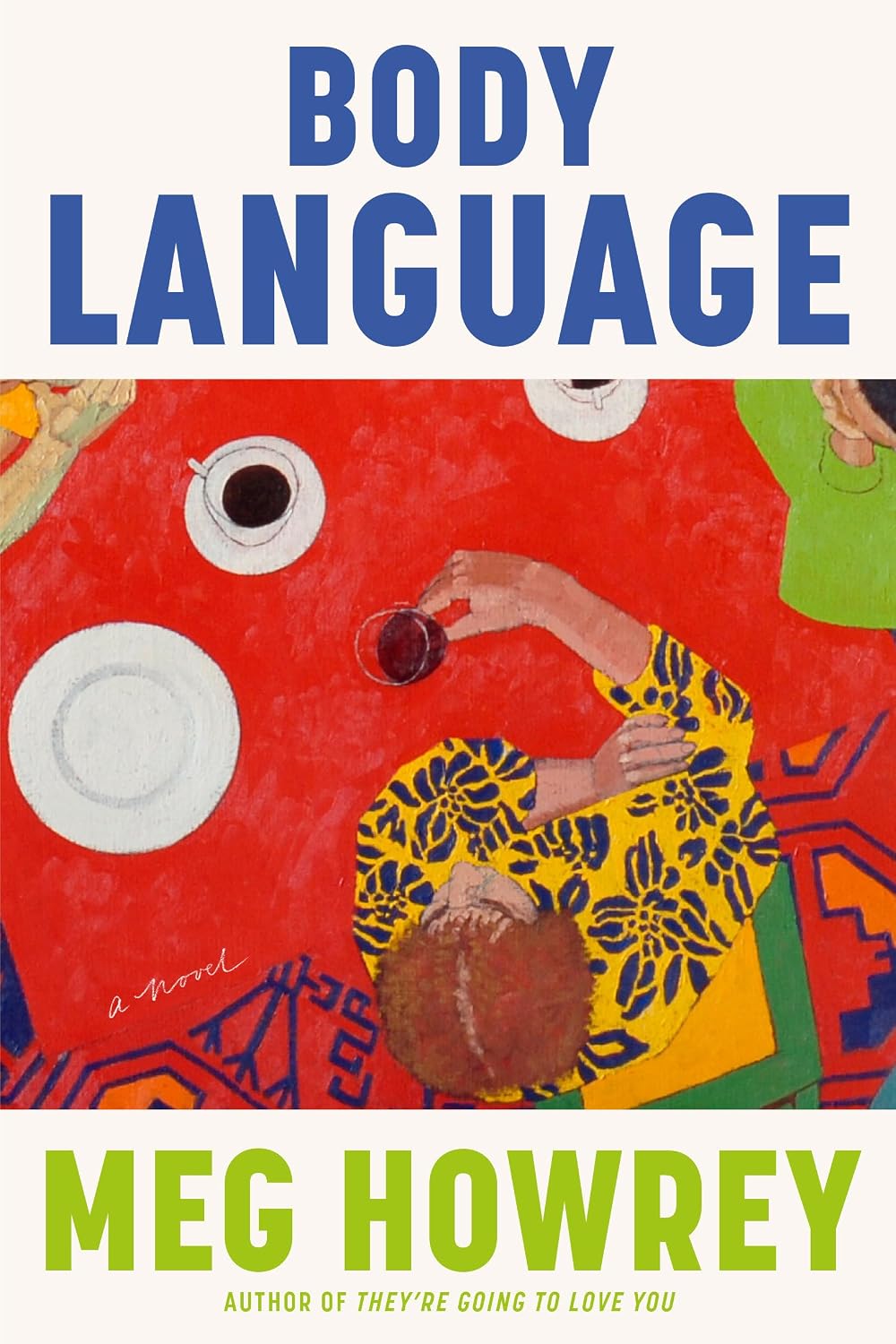
When Barbara’s three adult daughters return home to help care for their mother, who is living with Alzheimer’s, they’re forced to confront a decision Barbara made years earlier about how she wants her life to end. Sloane, Laurel, and Nanette have very different ideas about what honoring their mother’s wishes means—and what they can realistically sacrifice to do it. Body Language is a thoughtful, darkly funny novel about autonomy, caregiving, family, and the complicated ways we love the people we don’t always understand.
Q: Barbara’s situation raises difficult questions not only about autonomy but also about caregiving and sacrifice. The sisters must confront the uncomfortable reality that caring for someone with Alzheimer’s can mean years or even decades of responsibility. How did you think about balancing Barbara’s wishes with the very real needs and limitations of the people who would be responsible for her care?
A: In the novel, it is Laurel who has the most clear-eyed perspective on what that would mean. Sloane’s instinct is to see herself in a heroic role, to spin it into an opportunity for growth. Nanette’s concerns about responsibility are almost entirely spiritual.
I’ve been in a stage, lately, of being impatient with contemporary novels that don’t deal with money. We live in a country with a totally fraudulent insurance system for health care, and huge gaps in social services. The family in Body Language isn’t in dire straits financially, but it will not be a simple matter, to arrange for care. Money is on their minds, as it is for most of us.
Q: Despite dealing with aging, Alzheimer’s, family conflict, and end-of-life decisions, Body Language is often surprisingly funny. What role does humor play for you when writing about painful or emotionally complicated subjects?
A: I don’t know how you closely examine anything about human nature without finding something very funny. We are a ridiculous species, in so many ways. That said, I never actively aim for the joke, or think “this section is too sad, we need jokes.” I have often noticed that senses of humor sort of run in families too, and it was fun to think of how the daughters learned a kind of dryness from their mom, how they each interpret that, how it comes out around each other.
Q: I was struck by the way the novel portrays sisterhood. Sloane, Laurel, and Nanette probably would not have chosen one another as friends, yet they still have to find a way to listen to and understand one another. What did you want to explore about the difference between loving a family member and actually agreeing with—or even liking—them?
A: For me, when the sisters are closest to each other is not when they acknowledge or honor their biological bonds, or responsibilities as family members, but when they see and feel each other as complex beings who share a sort of larger sisterhood.
It can sometimes take something large for that to happen. A moment of great crises, a deep revelation. (Or psychedelic drugs!)
Q: Finally, what are you working on next, and can you tell us anything about what readers can look forward to?
A: I read a newspaper article about something and went “Wait, what, really, I didn’t know that happened,” and could not get it out of my head. This happened once before, with a book I wrote called The Wanderers. That book took years to research and sort of world-build, so I’m not sure what I’ve gotten myself into. This is about something that happened in 1916. My first foray into historical fiction, so we’ll see how it goes!
Author Bio
Meg Howrey is the author of the novels Blind Sight, The Cranes Dance, The Wanderers, and They’re Going to Love You, which was a New York Times Editor’s Choice and one of The New Yorker’s Best Books of 2022. Her new novel, Body Language, was published September 1st of this year. Her writing has appeared in Vogue, Harvard Review, Granta, The New York Times, Oprah Daily, and Los Angeles Review of Books.
Connect with the author

Now available in print and on Kindle!

While you’re here, don’t forget to check out my latest suspense novel, It Had to Happen, now available in print and on Kindle!
Book Summary
When Jack Utley loses his daughter just as his business is about to soar, it seems he’s traded financial gain for Callie’s life. After an encounter with a mysterious woman on the eve of Callie’s funeral, Jack wakes up to find that time has somehow rewound to the morning of Callie’s accident. Jack gets an opportunity that most grieving parents can only dream of – he saves his daughter’s life.
Are you enjoying this content? Please consider leaving a tip! You can buy me a cup of coffee or donate a larger amount to help me “make a living” writing so I can quit my day job!
Become a regular patron of my art by signing up to contribute a set monthly dollar amount to help me make a living with my writing!
You can also make an annual contribution to my writing. Select an amount below!
Choose an amount
Or enter a custom amount
Your contribution is appreciated.
Your contribution is appreciated.
Your contribution is appreciated.
