During the last few weeks, we’ve spent a lot of time on the planning stage of the novel writing process, and for good reason. Taking the time to develop a well-planned story will make writing the first draft of your novel seem like a stroll through the garden. When it comes to the drafting stage of the novel writing process, the most important piece of advice I can give you is to just start writing and don’t stop until it’s done.
The time has come to embark on the next leg of your novel writing journey! Image generated using artificial intelligence.
However, you’d probably like a bit more advice than that, so here are some helpful hints and tips to get you through this stage of the novel writing process:
The Larry Brooks story structure is one that I have used several times and find to be very useful when planning a novel. It is a structure that I will detail here in depth because – to me – it seems to be one of the more effective methods of outlining a novel.
Image generated using artificial intelligence.
Brooks is a writing coach, author, and speaker known for his expertise in the craft of storytelling. He is the author of several books on writing, including Story Engineering: Mastering the 6 Core Competencies of Successful Writing; Story Physics: Harnessing the Underlying Forces of Storytelling; and Great Stories Don’t Write Themselves: Criteria-Driven Strategies for More Effective Fiction. Brooks is also the founder of Storyfix.com, a website dedicated to helping writers develop their storytelling skills. Brooks’ approach to writing emphasizes the importance of structure, character development, and genre expectations. He believes that successful stories must meet certain criteria, and that writers who understand these criteria can create stories that are more engaging, satisfying, and marketable.
The concept of “in medias res” (Latin for “in the midst of things”) in novel writing dates back to ancient Greek and Roman literature. The Roman poet and philosopher Horace wrote about the technique in his Ars Poetica (The Art of Poetry), which was published around 18 BCE. In this work, he advised poets to begin their stories in the middle of the action, rather than at the beginning, in order to grab the reader’s attention and create a sense of urgency. As a novel writing technique, in media res also involves beginning a story in the middle of the action, rather than at the beginning, in order to capture the reader’s attention and create a sense of immediacy and urgency.
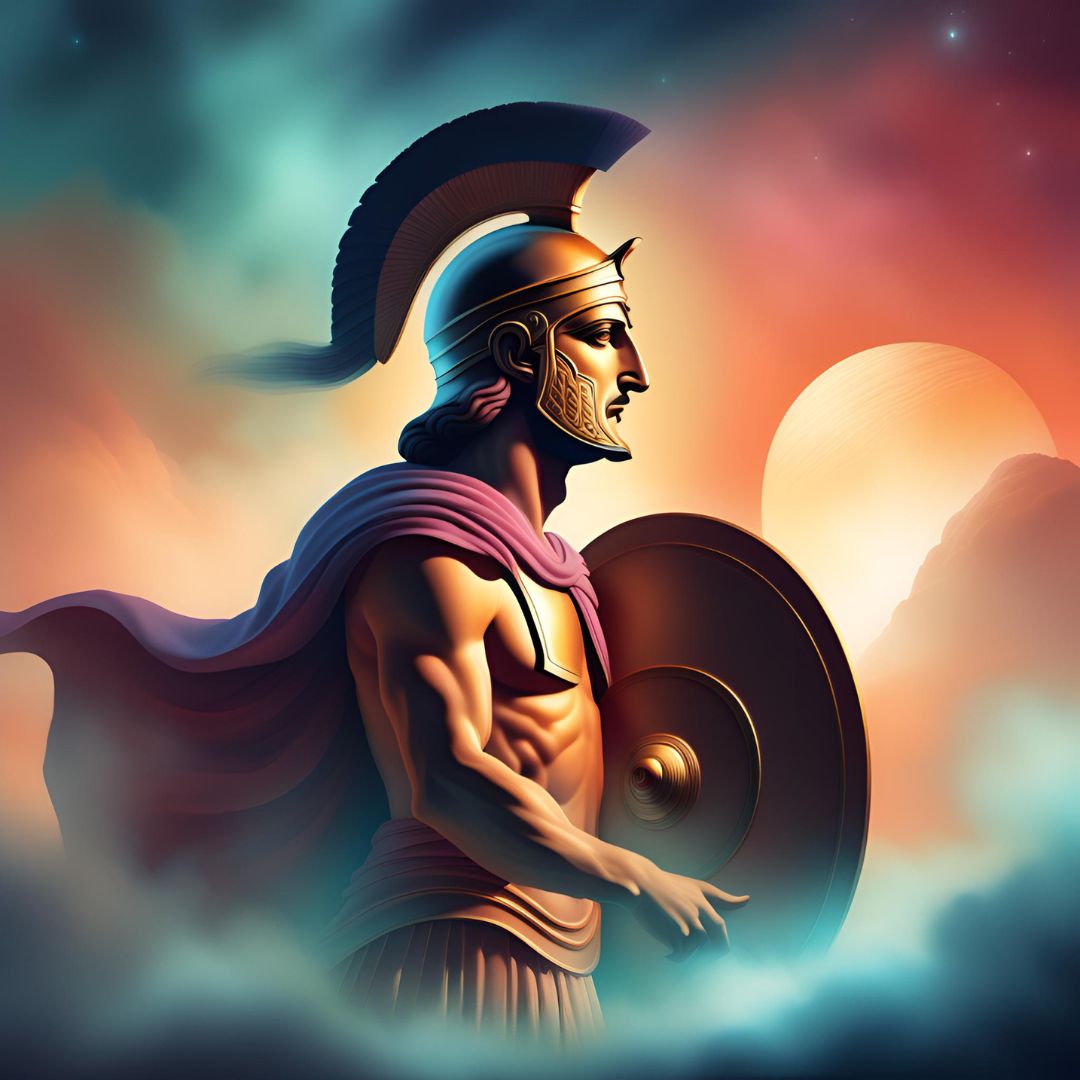
The Iliad is an early example of a story that began in the middle of the action. Image generated using AI.
One of the earliest examples of in medias res can be found in Homer’s epic poem, The Iliad, which begins in the middle of the Trojan War, rather than at the beginning. This technique was also used by other ancient Greek and Roman writers, including Virgil in his epic poem, The Aeneid.
The Five-Act Structure is similar to the three-act structure but breaks the story into five main parts, with additional turning points in the middle. This structure is commonly used in Shakespearean plays.
Image created using artificial intelligence (AI).
A five-act story structure outline breaks a story into five main parts, with additional turning points in the middle. Here is a general breakdown of each act:
“Pantsing” and “plotting” are two very different approaches to novel writing. The term “pantsing” comes from the phrase, “flying by the seat of your pants,” which means to improvise or make something up as you go along. The phrase was first used in the 1930s in reference to airplane pilots who navigated without the aid of instruments.
Few writers are successful at pantsing their way to the end of a good manuscript. Those who can do it possess a certain kind of magic that most of us will never obtain. Image created with Canva Free AI Image Generator.
The term “pantsing” in the context of writing specifically refers to a technique where the author writes without a detailed plan or outline, instead relying on inspiration and improvisation to guide the story. This technique is also known as “discovery writing” or “organic writing.” It is unclear exactly when the term “pantsing” was first used in this context, but it is thought to have gained popularity in writing communities and workshops in the 1990s. It has since become a widely used term in the writing world, particularly in discussions about outlining and planning versus improvisation and discovery.
Are you ready to start writing your novel? At the end of today’s post, you’ll find two brief writing assignments to help you get started!
Two basic elements of story
In novel writing, a concept and a premise are two different elements of a story. A concept is a basic idea or notion that provides the foundation for a story. It is the starting point for a novel and is usually expressed in a single sentence. For example, “a young girl discovers she has magical powers and must defeat an evil wizard to save the world” is a concept for a fantasy novel.
Every novel has both a concept and a premise at its core. Image created using Canva AI Image Generator.
A premise, on the other hand, is a more detailed description of the story. It includes the characters, setting, plot, and conflict, and explains how the concept will be explored in the novel. A premise is usually expressed in a paragraph or a few sentences. For example, “In a world of magic and dragons, 11-year-old Hermione Granger discovers she is a witch and must join forces with her friends Ron and Harry to stop the dark wizard Voldemort from taking over the wizarding world” is a premise for the novel Harry Potter and the Philosopher’s Stone.
Pro Tip: Grab a notebook or your laptop and take notes while you read today’s post– just jot down ideas and plans as you review each task listed. Tomorrow, I’ll be coming at you with your first writing assignment!
The first step in the novel writing process is the planning stage. The planning stage of the writing process is crucial as it sets the foundation for the entire writing project. During this stage, a writer typically engages in several activities, all designed to prepare for the drafting stage. This step is essential because once you sit down to write the first draft, you’ll be prepared to “just do it” without getting sidetracked or bogged down in details that may never make it into your final draft. The planning stage of the novel writing process includes the following elements:
Brainstorming is one of the first steps of the novel writing process. Image created with Canva AI Image Generator.
Generate ideas: The writer starts by brainstorming and generating ideas about the novel they want to write. They may use techniques such as mind mapping, freewriting, or listing to generate ideas. There are a variety of free online story idea generators that can also be helpful. These include plot generators and name generators by genre, among others. If you don’t already have an idea for your novel, play with these resources until you have something fun that you will enjoy writing. Remember, this is a fun experiment, so feel free to be as silly as you like if it helps you stay engaged with the project.
So, you think you have a novel in you, huh? The idea of having a novel inside oneself is a common sentiment among aspiring writers and creative individuals. Storytelling is an essential element of the human experience, and many people have a desire to tell their stories and share their ideas through writing. Writing a novel can be seen as a creative and fulfilling endeavor that allows individuals to express themselves and leave a lasting impact. Plus, it can be fun!
If you’re like many emerging authors though, you may have a novel manuscript that you have been writing for years with no end in sight. Or perhaps you’ve always thought you “had a novel in you” but haven’t gotten around to starting it. Once upon a time, this was me. I knew I had a novel in me, but for years I could never seem to get it out of my head and onto the page.
I know my struggle as a white person pales in comparison with the struggles of People of Color in the United States and other parts of the world. But I am struggling. Because I know I’ve been brought up in a racial world, and I want to be a good person who treats all human beings as if they are equal. Because I know – intellectually – that we are. However, it’s hard to know the “right way” to go about this when you’ve been steeped in racist messaging your entire life.
I want my writing to be inclusive, but I don’t know how to accomplish this. I’m trying to learn how. I’m reading lots of non-fiction books on the subject and fiction by people of color (see brief list of recommended reading at the bottom of this post). I’ve also watched in horror as other white writers have been ravaged on Twitter for doing it wrong. What if I mess up, despite my best efforts? What if that happens to me? Or worse, what if I unintentionally hurt people with my ignorance?





 Write on the World