Finish Writing Your Novel Now!

“Once is Usually Enough” | Avoiding Redundancy in Fiction Writing

In Self-Editing for Fiction Writers, Renni Browne and Dave King emphasize the importance of conciseness with the principle, “Once is Usually Enough.” This idea reminds writers to avoid unnecessary repetition and redundancy that can bog down prose, dilute impact, and test readers’ patience. Instead of overexplaining or reiterating points, Browne and King suggest that writers trust readers to pick up on cues, encouraging clarity and efficiency in storytelling. Let’s explore what this approach means and how it can elevate your writing.

Unlike in art where repeating shapes can create interest, redundancy in narrative writing can do the opposite.

At its core, “Once is Usually Enough” is about respect for the reader’s intelligence and the strength of your storytelling. Browne and King remind us that redundancy—whether it’s repeated words, concepts, or explanations—can slow down the narrative and weaken the reader’s engagement. Readers don’t need every detail restated, and when a writer repeats information unnecessarily, it can feel like “telling” rather than “showing.” Reducing repetition sharpens your story, giving every line and detail a specific purpose.

Continue reading ““Once is Usually Enough” | Avoiding Redundancy in Fiction Writing”


Finish Writing Your Novel Now!

“Breaking Up is Easy to Do”: Creating Flow in Fiction with Paragraph and Scene Breaks

In their practical and insightful book, Self-Editing for Fiction Writers, Renni Browne and Dave King explore techniques that make fiction writing cleaner, clearer, and more engaging. In the chapter titled “Breaking Up is Easy to Do,” they emphasize the importance of effectively breaking up paragraphs, sentences, and scenes to improve pacing and readability. This approach, they argue, is about giving readers space to breathe, shifting focus where needed, and making complex narratives feel seamless. Let’s unpack this technique and see how it can help you build a more dynamic and reader-friendly story.

Breaking up is easy — in prose!

When Browne and King talk about “breaking up,” they refer to structuring prose in a way that maximizes clarity, flow, and impact. Often, beginning writers try to cram too much information into long paragraphs, which can overwhelm readers. Overly dense text, filled with action, introspection, and description, makes it difficult for readers to stay engaged and process what’s happening. Strategic paragraph and scene breaks, on the other hand, act as “mini-pauses,” allowing readers to absorb key moments without becoming fatigued. Here are a few reasons why breaking up your prose is essential:

Continue reading ““Breaking Up is Easy to Do”: Creating Flow in Fiction with Paragraph and Scene Breaks”
Finish Writing Your Novel Now!

“See How It Sounds” | The Power of Reading Your Writing Aloud

In the craft of fiction writing, the written word isn’t just meant to be read with the eyes—it’s also meant to be heard, experienced through its rhythm and flow. This is where the concept of “see how it sounds” comes in, as highlighted by Renni Browne and Dave King in their classic book, Self-Editing for Fiction Writers. When the authors recommend this technique, they’re talking about the transformative power of reading your work out loud, a method that can reveal issues and enhance the polish of your prose in ways silent reading might miss.

Read your work aloud to “see how it sounds!”

The phrase “see how it sounds” essentially means that a writer should read their work aloud to experience the natural flow, rhythm, and tone of their words. Browne and King suggest this approach because hearing your prose can bring out flaws that are easy to overlook on the page, such as awkward phrasing, unnatural dialogue, or monotonous sentence structures. By vocalizing your text, you gain a new perspective that engages not just your visual processing but also your auditory senses.

Continue reading ““See How It Sounds” | The Power of Reading Your Writing Aloud”
Finish Writing Your Novel Now!

Understanding beats in novel writing: How small moments make a big difference

In the world of novel writing, the term “beats” might sound technical, but it actually describes something fundamental to storytelling. Beats are the subtle pauses, actions, gestures, and shifts in tone that bring scenes to life and give your narrative a natural rhythm. They’re the small but essential moments that help convey emotion, add depth, and keep readers hooked. Let’s dive into what beats are, why they’re important, and how to use them effectively to make your writing more dynamic.

A beat could be something as simple as having one character pause to glance over the top of their glasses at another: She lowered her glasses and gave him a side eye.

In creative writing, a “beat” is a term used to describe a small action or movement that a character makes during a scene. Beats can be used to convey a character’s emotions, thoughts, or intentions, and they can also be used to break up long passages of dialogue or description. In the simplest terms, beats are the little moments that create texture in a scene. Think of them as the breaths in your story—the pauses between dialogue, the glance a character gives before speaking, the way they fidget when they’re nervous. Beats can be:

Continue reading “Understanding beats in novel writing: How small moments make a big difference”
Finish Writing Your Novel Now!

How to write effective interior monologue in your novel

In novel writing, interior monologue is the narrative technique used to reveal a character’s inner thoughts, feelings, and reflections. It’s a way to give readers direct access to what a character is thinking without the character saying those thoughts out loud. This technique can deepen character development, help readers understand motivations, and create a more intimate connection between the character and the reader.

The purpose of interior monologue is to reveal a character’s inner thoughts, feelings, and reflections.

Getting interior monologue right is key in novel writing because it deepens character development by revealing a character’s private thoughts and emotions, giving readers access to their inner lives. It helps readers form a stronger emotional connection, even with flawed or conflicted characters, making them more relatable.

Continue reading “How to write effective interior monologue in your novel”
Finish Writing Your Novel Now!

What is proportion in novel writing?

In novel writing, proportion refers to the balance of different elements within the story—such as plot, character development, setting, and theme—to create a cohesive, engaging narrative. Proportion affects how much time and space are given to each element, helping to shape the reader’s experience and guide their focus. When proportion is well-balanced, readers feel drawn into the story without feeling overwhelmed by too much detail or frustrated by too little.

Proportion in novel writing is about giving each element the right amount of space to contribute to the whole story without overloading or neglecting any part.

Here are some key aspects of proportion in novel writing:

Continue reading “What is proportion in novel writing?”
Finish Writing Your Novel Now!

How to Create a Style Guide for Your Novel Manuscript

A style guide is an essential tool for any novelist who wants to stay organized and ensure consistency throughout their manuscript. Whether you’re managing character descriptions, tracking worldbuilding details, or simply making sure certain words are used the same way, a style guide helps you maintain accuracy and clarity in your story. By creating a reference document tailored to your novel, you make it easier to avoid inconsistencies and approach your work with a critical eye for detail. Here’s a step-by-step guide on how to create a style guide for your manuscript.

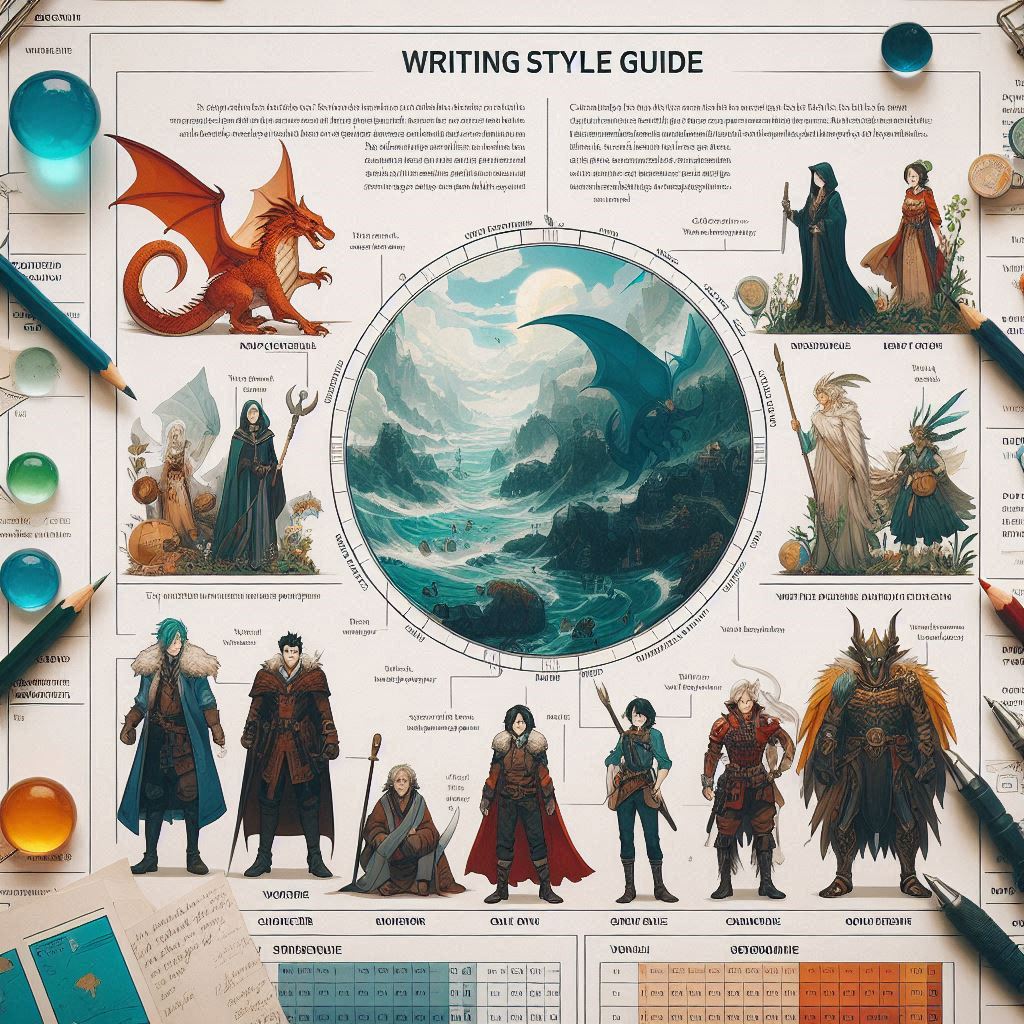
Your writing style guide doesn’t need to be quite this fancy. It could be as simple as an Excel spreadsheet, a Word document, or even handwritten note cards.

Start with Character Profiles

Character profiles are crucial for keeping track of your main and supporting characters. In this section, include essential information for each character, such as physical description, age, background, personality traits, and key relationships. If your character has specific speech patterns, catchphrases, or unique mannerisms, make note of these to ensure consistency.

Continue reading “How to Create a Style Guide for Your Novel Manuscript”
Finish Writing Your Novel Now!

How to Improve the Pacing of Your Novel Manuscript

Pacing is a vital element of storytelling that keeps readers engaged, guiding them through your novel’s peaks and lulls with the right amount of tension and release. If pacing is too slow, readers may lose interest; if it’s too fast, they might feel lost or overwhelmed. Finding the right balance is essential to delivering a satisfying story that readers can’t put down. Below is a quick guide on how to improve the pacing of your novel manuscript, from structuring scenes to managing detail and dialogue.

Your novel isn’t a race. The pacing should ebb and flow in a way that keeps readers engaged without overwhelming them. The goal is to get the reader to “The End” at a pace that leaves them wanting to read your next book.

Use Scene Structure to Build Momentum

The structure of your scenes directly impacts pacing. To maintain momentum, try following a clear goal-conflict-outcome structure in each scene. Begin with a character’s goal, introduce obstacles or conflict, and end with a consequence or revelation. This structure not only drives the plot forward but also helps create an engaging rhythm.

Continue reading “How to Improve the Pacing of Your Novel Manuscript”
Finish Writing Your Novel Now!

How to Streamline the Language in Your Novel Draft

As you work your way through the revise and refine phase of the novel writing process, it is best to start with big-picture revisions that affect your novel as a whole before homing in on the smaller elements of the manuscript. At the macro stage, you analyzed the overall plot, structure, pacing, and character arcs—making sure the story flows and resonates with the intended emotional beats. Now that those foundational issues are addressed, it’s time to zoom in and streamline the language within your story.

Eliminating redundancies is one of several ways you can streamline the language in your novel. Spelling errors COULD wait until the proofreading stage, but at this point, I say fix every typo you spot. Otherwise, one of them might slip through the cracks!

This means focusing on the rhythm of sentences, the clarity of language, and the precision of word choice. It’s where the magic of voice, tone, and style takes shape, making sure each paragraph serves its purpose in moving the story forward and engaging the reader. Streamlining language is one of the most powerful ways to improve your novel’s clarity, pacing, and impact. Refining language involves making your writing clear, concise, and effective, cutting unnecessary words, and choosing vivid, specific details.

Continue reading “How to Streamline the Language in Your Novel Draft”
Finish Writing Your Novel Now!

How to check for consistency when revising your novel manuscript

Consistency is a crucial yet sometimes overlooked aspect of novel revision. When elements like character traits, timeline details, or even place names vary across chapters, readers may feel disoriented, which can pull them out of the story. Catching these inconsistencies is key to building a cohesive, believable world for your readers.

When revising and refining your novel manuscript, it will likely feel like there are an infinite number of details to keep track of!

Following are some strategies to help you check for and maintain consistency as you revise your novel manuscript:

Continue reading “How to check for consistency when revising your novel manuscript”