Finish Writing Your Novel Now!

What is point of view in fiction? | Revise and Refine

Point of view (POV) refers to the perspective from which a story is told in fiction writing. It determines whose thoughts, feelings, and experiences are being shared with the reader. Consistent POV in fiction plays a crucial role in shaping the reader’s experience by providing clarity and enhancing immersion in the story.

In third person limited point of view, the reader only knows what the POV character knows. The reader is, in a sense, inside that character’s head and is able to see the view through the character’s eyes. In third person omniscient, the view is more like this one where the reader experiences the character — and everything else in the story — from outside of the character’s head.

On the other hand, inconsistent point of view in fiction can significantly affect the reader’s experience, often in a negative way if not handled with care. It may cause confusion for the reader or create a break in the reader’s suspension of disbelief. Inconsistent POV can also dilute the emotional impact of the story and undermine the reader’s trust in the narrative.

I’ll discuss the importance of maintaining a consistent point of view in your writing in more depth in the next few posts, but for today, let’s talk about what it is. First, there are three primary types of point of view in fiction:

Continue reading “What is point of view in fiction? | Revise and Refine”


Finish Writing Your Novel Now!

What’s the difference between character development and characterization?

Character development and characterization are two closely related concepts in fiction writing. However, there is a subtle difference between the two terms. Character development refers to the changes that a character undergoes over the course of a story. These physical, emotional, or psychological changes are all part of the character’s arc. For example, a character might start out as shy and timid, but by the end of the story, they might become more confident and outgoing.

How do you help your reader truly get to know each character in your story?

Meanwhile, characterization refers to the way that a writer reveals a character’s personality, motivations, and background. This can be done through a variety of methods, such as:

Continue reading “What’s the difference between character development and characterization?”
Finish Writing Your Novel Now!

How to develop your novel’s character arcs | Novel revision tips

Inconsistent character arcs are an essential big-picture issue that should be addressed early in the revise and refine stage of the novel writing process. A character arc is the transformation or development of a character over the course of the story. It’s the emotional or psychological journey that a character goes through as they face and overcome challenges or obstacles and change as a result.

The characters in your stories may have different types of character arcs– the important thing is that they evolve along with your story rather than remaining stagnant from start to finish.

To address these issues during the revise and refine stage of the novel writing process, it is important to first determine which of your characters are important enough for them to experience a defined character arc over the course of your story. This will often include both your protagonist and antagonist as well as any other characters who are essential to the plot of your story.

Continue reading “How to develop your novel’s character arcs | Novel revision tips”
Finish Writing Your Novel Now!

How to create a sense of verisimilitude in your novel | Novel revision tips

Verisimilitude is the appearance of truth or reality in a work of fiction. It is the quality of a story that makes it seem believable, even if it is not actually true. Verisimilitude is created by the writer’s use of details, language, and characterization. There are two main types of verisimilitude: internal and external.

Even though unicorns may not exist in real life, your treatment of them in your story world must still be realistic to maintain the reader’s interest.

Internal verisimilitude is the believability of the story within its own fictional world. This means that the events and characters of the story must be consistent with the rules and logic of that world. For example, if a story is set in a medieval castle, the characters would not be driving cars or using cell phones.

Continue reading “How to create a sense of verisimilitude in your novel | Novel revision tips”
Finish Writing Your Novel Now!

How to fix plot holes in your novel draft | Novel revision tips

When you revise your novel manuscript, you will want to start by addressing the biggest issues first. For example, you might begin by addressing any major structural issues you may have found during the evaluation stage of the novel writing process, such as plot holes.

Plot holes, at best, can make your novel difficult to comprehend. At worst, they can make your writing impossible to read.

A plot hole is a gap or inconsistency in the storyline of a novel, movie, or other narrative work that contradicts the established rules or logic of the story. It’s a flaw in the plot that can make the story confusing, illogical, or unrealistic. For example, a plot hole could occur when a character suddenly acquires a new ability or skill that was not previously established, or when an important detail or event is omitted without explanation. Another common type of plot hole is when a character acts in a way that is inconsistent with their established personality or motivations.

Here are some tips on how to fix a plot hole in a novel draft:

Continue reading “How to fix plot holes in your novel draft | Novel revision tips”
Finish Writing Your Novel Now!

Top tips for revising your novel manuscript

Once you have gathered enough outside feedback on your work to guide your novel revisions, it’s time to get down to the dirty business of revising your manuscript. Starting the revision process with a developmental edit report in hand will first help you get started and then will begin to illuminate the gaps that you were previously oblivious to in your own work.

It often helps to read your work aloud during the revising and refining stage of the novel writing process.

Here’s a general process you can follow to help you through your first round of revisions:

Continue reading “Top tips for revising your novel manuscript”
Finish Writing Your Novel Now!

What to focus on when revising your novel draft

Up to this point, your novel manuscript is still in what we call the “rough draft” stage, which means that if you feel like your manuscript is still crap, you’re probably right (and that’s ok!) Once you have conducted a thorough evaluation of your first draft, it is time to get down to the work of revising it to address the issues you discovered during the evaluation stage of the writing process.

Revising and refining a novel manuscript often requires a great deal of paper– and coffee!

Revising a novel manuscript often requires the author to make significant changes to the content, structure, and style of the story to improve its overall quality and effectiveness. This stage of the writing process typically comes after the first draft of the novel has been completed and may involve multiple rounds of revisions.

Continue reading “What to focus on when revising your novel draft”
Finish Writing Your Novel Now!

Why is it so hard to revise your own writing?

Sometimes the hardest part of revising a novel is getting started. There will always be gaps between what you think you have written and what you have actually put on the page, but it is often difficult to see those gaps until you have found a way to make space for alternative perspectives besides your own. There are a few reasons why it can be hard to see what edits you need to make in your own writing, including confirmation bias, expertise, and top-down cognitive processing.

How do you close the gap between what you think you’ve written and the actual words that you have put on the page?

Confirmation bias is the tendency to search for, interpret, favor, and recall information in a way that confirms one’s preexisting beliefs or hypotheses. People display this bias when they select information that supports their views, ignoring contrary information, or when they interpret ambiguous evidence as supporting their existing attitudes. The effect is stronger for desired outcomes, for emotionally charged issues, and for deeply entrenched beliefs. When we read our own writing, we tend to see what we want to see. We focus on the parts that we think are good and we overlook the parts that need improvement.

Continue reading “Why is it so hard to revise your own writing?”
Finish Writing Your Novel Now!

The fourth step in the novel writing process: Revise and Refine

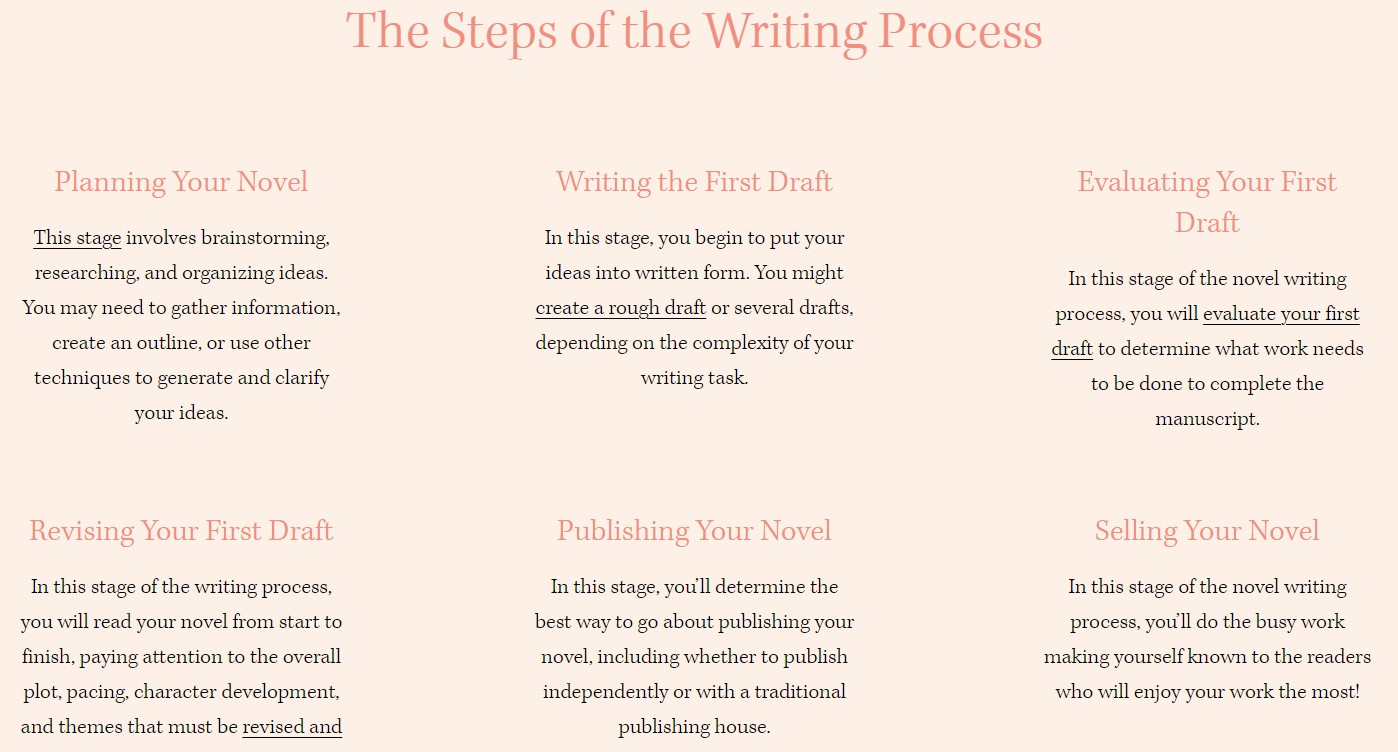
Now that you have evaluated your manuscript draft and have taken a plethora of notes to help you improve your story, it’s time to enter the next phase of the novel writing process. “Revise and refine” is an umbrella phrase that encompasses a handful of tasks that could be – and often are – divided into their own individual steps of the writing process. However, concepts like “revise, edit, and proofread” (among others) are commonly confused or conflated and are sometimes even used interchangeably as if they are all the same task. Because of this, I prefer to present these concepts together in one step so I can compare these tasks which, while all individual and important steps in the writing process, serve different purposes and involve different techniques.

In this series, we’ve reviewed the planning, writing, and evaluating steps of the novel writing process. Now it’s time to revise that first draft you wrote!

Here are a few key differences between these three central concepts that I have included in the “Revise and Refine” step of the novel writing process:

Continue reading “The fourth step in the novel writing process: Revise and Refine”