With a voice that drifts between myth and memory, ROAMING’s work feels like stepping into a dream where beauty and terror walk hand in hand. Their narrative poem J’ai Besoin De La Morte, featured in Bad Moon on the Rise: An Anthology of the Unsettling, captures that delicate balance perfectly. In this interview, ROAMING discusses the influence of authors like Holly Black and Angela Slatter, the intertwining of art and myth in their creative process, and how they’ve learned to embrace the chaos of storytelling as both a mirror and a calling.

Q: What/who were your early literary influences, and how do you think their writing has shaped you as a storyteller today?
A: Holly Black. She’s the Queen of Faerie. I first read The Spiderwick Chronicles when I was eight or nine, then got into her Modern Faerie Tale series, and have absorbed everything she’s put out since. Her writing was what taught me that things can be beautiful and terrifying, which is something I’ve carried forth into my own writing.
Q: Who are some of your favorite authors that you feel were influential in your work? What impact have they had on your writing?
A: My favorite author of all time is Angela Slatter (aka A.G. Slatter). I have never read another author like her. Her earlier work was a compilation of short stories that spanned across several collections and timelines, that all drift back into each other in unexpected ways. Dark, creepy, strange, female-fronted narratives, where not all the characters are conventional or even likeable. I love to write short stories that play off well-known folk lore but are entirely original. I have taken many leaves out of her book in this regard. Her latest works are novels that still take place inside the same world, the building of which is just (fucking) phenomenal.
Other favorites include: Holly Black (as previously mentioned), Leigh Bardugo, Sharon Shinn, Glenn Duncan, R.S. Belcher, Nick Tosche (controversial, I know, but he also wrote incredibly long run on sentences), and countless others. All have left marks on my psyche.
Q: What’s been the most unexpected lesson you’ve learned about yourself through writing?
A: The age-old, totally cliche, absolutely real, and also simultaneously embarrassing and enlightening and literal mantra: we write what we know. I didn’t realize how much of my life’s story would play out across the pages of my various tales, yet here we are.
Q: What’s one writing habit you can’t live without and one you wish you could break?
A: I write almost everything on the notes app in my phone, which is hilarious. I know there’s something to be said about hand-writing, how it’s supposed to be a more natural flow, but my thumbs type much faster than my hand writes. This gives me the ability to write whenever, wherever, keeping the flux of ideas nearly endless.
This isn’t necessarily a habit to break, but I find it impossible to write unless inspiration strikes. One can imagine that makes certain deadlines hard to meet.
Q: What’s the best piece of advice another writer has given you about storytelling?
A: “Tell the story you want to write, not the one others want to hear.”
I’m not even entirely sure where I heard this, or who said it first. To be honest, it could have been from a meme I just happened to see one day, but it’s had a profound impact on the way I write. No “people pleasing,” just flow.
Q: When do you feel most “in the zone” with your writing—early mornings, late nights, or somewhere in between?
A: Usually my zone time is early morning, before the world is awake. But if I’m struck completely by the genius-on-my-shoulder, it’s anytime of day.
Q: Do you find inspiration in other art forms (music, film, visual art)? If so, how does it shape your work?
A: Music is a huge one for me. It has always had a profound impact on my life. I hear the lyrics – more words – and feel their echoes through melody and instrumentation, often finding random scraps of song sprinkled in the midst of my narratives. Sometimes a lyric line becomes the base from which an entire piece is crafted.
As far as other art mediums, I draw a lot. Before I found the flow of words, I found the flow of sketching. To this day, I draw every character I create and illustrate my own world maps. One of these days I intend to draw an entire Tarot deck based off my world.
Q: Do you have your own circle of writer friends? If so, what other authors are you friends with, and how do they help you become a better writer?
A: My circle is small, but mighty: my partner is a writer, a philosopher, an artist. We are constantly bouncing ideas off each other, sending pieces back and forth for review or editing, taking snippets of conversation and turning them into stories.
Actually, the title of my piece, “J’ai Besoin de la Morte” came from a video call between the two of us. He misspoke two words, combining ‘death’ and ‘need’ into one. I translated it into French, and thus my Incubus was born.
We are each other’s biggest fans. It’s truly a beautiful thing we’ve got.
Q: What themes do you find yourself returning to again and again in your work?
A: This is a big one, so I’ll just lay them out:
- That there is beauty in the Monstrous.
- That the Fates are bitches.
- That every experience – no matter how terrible or fantastical – is an act in the art of becoming.
- That there is always a person behind the character.
- That love is the greatest undercurrent of all.
- And another bonus one for funsies: I don’t believe in Redemption Arcs; I believe in Damnation Arc superiority.
Q: How do you approach writing characters with experiences different from your own?
A: This is an inevitability, but I enjoy the challenge of putting on someone else’s face for a little while. If I know someone who has personally experienced the situation I’m trying to present – and I feel comfortable enough – I ask for their input. Otherwise, my browser history/open tabs do the explaining for me. Generally speaking though, it isn’t hard to ‘be’ someone else for a novel or a few chapters; call it hyper empathy, if you will. But as I’ve often said, I myself don’t actually write. Something has decided I’m the vessel through which the words are made manifest.
Q: Do you have any rituals or routines to help you transition into “writer mode”?
A: I don’t actually. Writing is such an integral part of my daily life that it just feels like it never turns off. Sometimes I need quiet, and that’s about it.
Q: What’s the most rewarding feedback you’ve ever received from a reader?
A: I once had a friend liken the origin story for my main novels to the Poetic Edda, and I just about died. Considering that my fantasy series takes a hearty draught of inspiration from both the Nordic and Celtic mythos, I don’t know that I could have received a better compliment.
Q: Have you ever had to cut a scene or character you loved? How did you handle it?
A: This rarely happens, but if it does, I save the scene/character for later. It could be that I’ll release it only to subscribers, or that it will live on solely for my own sake. Just because it was cut does not mean it should die completely. Character death, however, is another matter altogether. If I kill someone off, I mourn them for days. It’s highly emotional work.
Q: How do you define success as an author? Has that definition evolved over time?
A: Success for me has never truly been about how many people read what I’ve written, or buy the books, or any of that ‘fame’ nonsense. It has always been whether or not I’ve said all I needed to say. If I can do that, then I’ve accomplished all I’ve set out to do. It wasn’t always that way; once upon a time I dreamed of being a best seller. If that happens, of course I’ll be overjoyed. But for now, it’s more about the words.
Q: What have you written that you found to be the most fun to write?
A: My novels are mostly about Faeries, and a bloodline of Shape Shifters who are descendants of the Welsh Goddess Cerridwen. I wrote a scene where the main characters turned themselves into flies in order to sneak into the lair of a giant spider. It was pretty (fucking) hilarious to ‘be’ an annoying insect for a while, and to superimpose their more ‘human’ thoughts onto the instincts of a fly.
Cue: The Fly by Cosmo Sheldrake here.
Q: What’s your favorite under-appreciated novel?
A: There’s a series, actually, that I think is one of the best fantasy works of all time. It’s called The Mirror Visitor, by Christelle Dabos. Originally written in French, then translated to English, it’s got some of the best world building and character arcs I’ve ever read. Ms. Dabos’ play on mythology and the cosmos at large is breathtaking.
Q: What is your favorite genre to read? Do you write in that genre? Has that always been your favorite genre, or has your taste evolved as you have grown as a writer?
A: I read a lot of fantasy, and do write in that vein. When I was younger, I was really into Faerie stories. During adolescence it was a ‘guilty pleasure’, but I kept returning to them again and again. As an adult I started writing them, and then became obsessed with Celtic/Welsh mythology, and got to know the legends behind the novels. Of course I’ve dabbled in other genres, but I always return to the tales.
Q: If you could live in the world of one of your books for a day, which would it be and why?
A: Oh, I would live in my world, and do. I’ve often said I have one foot in reality, and one foot in my novels. The majority of my series takes place on a continent called Albion, where a great, mystical Wood grows wild over the heart of everything. I’d love to spend a day – or eternity – wandering through that Wood.
Q: If your life were a novel, what would the title be?
A: Chaos, a Memoir.
Just kidding.
Not really.
Q: What do you think the future of storytelling looks like in a world of evolving technology?
A: This is an interesting one. I find that there are both positives and negatives to the way that story telling is evolving. On the one hand, a lot of myths are being brought to light in ways that were damn near impossible not so very long ago. On the other, there is so much room for error in the form of glossing over major points and important nuances when one only searches for a general overview of the story itself. I use technology in my writing, of course I do. But I prefer to do my research the old fashioned way.
That being said, the point of stories – myths especially – is to grow and evolve to fit the culture they are currently expressing. To change with the times is inevitable. Like everything, technology is a double edged sword.
Q: What projects are you working on at the present?
A: I am finishing up my ninth fantasy novel, with the hopes of getting the first one published in the very near future. I’m also writing an auto-fictography that consists of short stories, semi-autobiographical essays, and poems that are all about my spiritual journey and life on the spectrum.
Q: What do your plans for future projects include?
A: I have several books in the baby stages, including one that delves into South American mythology, and another that combines traditional High Magick with fantasy.
Author Bio
ROAMING is the Myth Master, intent on bridging the gap between Past and Future.
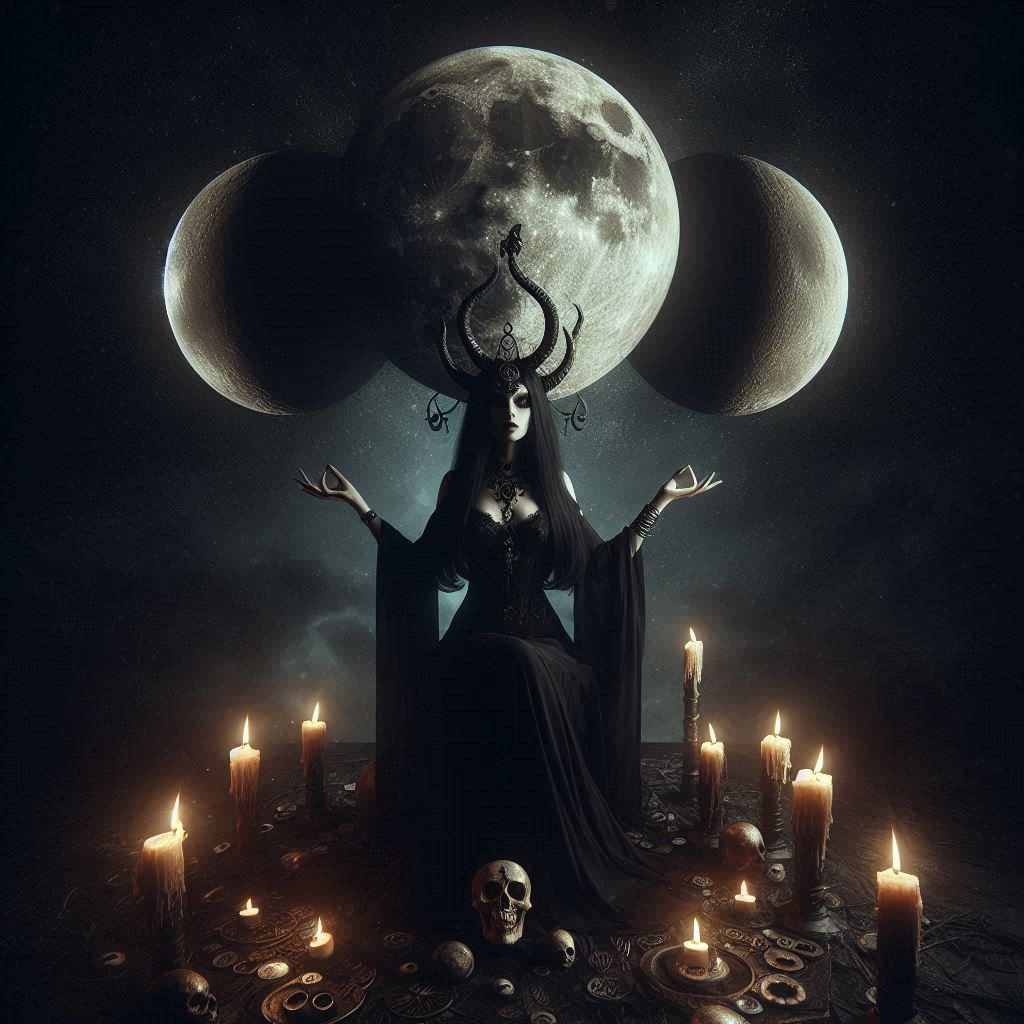
ROAMING is currently transcribing an eleven-part high fantasy series that ties the Myths of Old into modernity, called The Wood and the People In It.
It looms.
It weaves.
It teems.
It beckons.
BLESSED BE.
Now available in print and on Kindle!

While you’re here, don’t forget to check out my latest suspense novel, It Had to Happen, now available in print and on Kindle!
Book Summary
When Jack Utley loses his daughter just as his business is about to soar, it seems he’s traded financial gain for Callie’s life. After an encounter with a mysterious woman on the eve of Callie’s funeral, Jack wakes up to find that time has somehow rewound to the morning of Callie’s accident. Jack gets an opportunity that most grieving parents can only dream of – he saves his daughter’s life.
Are you enjoying this content? Please consider leaving a tip! You can buy me a cup of coffee or donate a larger amount to help me “make a living” writing so I can quit my day job!
Become a regular patron of my art by signing up to contribute a set monthly dollar amount to help me make a living with my writing!
You can also make an annual contribution to my writing. Select an amount below!
Choose an amount
Or enter a custom amount
Your contribution is appreciated.
Your contribution is appreciated.
Your contribution is appreciated.
