
There’s something deeply unsettling about taking a story associated with innocence and wonder and revealing the horror that may have been lurking beneath it all along. It Came from Neverland by Cynthia Pelayo does exactly that, transforming the mythology of Peter Pan into a dark, grief-soaked horror novel that feels equally inspired by It and gothic fairy tales whispered to children who are already old enough to know monsters are real. Releasing June 9, 2026, the novel delivers both supernatural terror and an unexpectedly emotional exploration of trauma, manipulation, and survival.
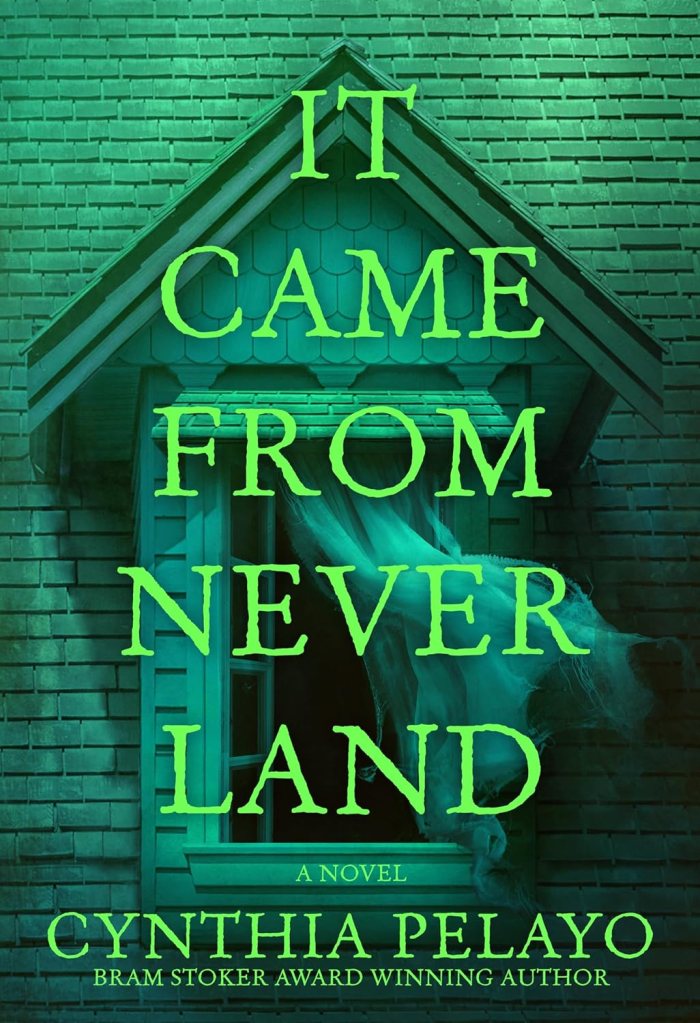
Set during World War I, the story follows Wendy Darling, now an adult working at a children’s home while also assisting wounded soldiers returned from the Western Front. One of the soldiers lies trapped in an unshakable sleep until he murmurs the words “Peter Pan,” forcing Wendy to confront memories she has spent years trying to bury. When a young girl under Wendy’s care disappears, the past comes roaring back. Wendy knows the truth no one else believes: Peter Pan is real, and he is not the whimsical boy immortalized in storybooks. He is a predator.
One of the most compelling aspects of this novel is the way Pelayo reframes the original Peter Pan mythology. In this version, the familiar tale was twisted into a comforting fantasy that obscured the horrifying truth. Peter Pan is an ancient entity, sometimes described as a faerie, who lures children away to Neverland so he can consume them entirely, crushing not only their bodies but their very souls. Captain Hook, traditionally the villain, becomes something closer to a tragic hero who understood the danger Peter represented. It’s an inversion that works remarkably well because it taps into something already eerie about the original story: the refusal to grow up, the isolation from parents, the seductive pull of eternal childhood.
What makes the novel especially effective is that beneath all the horror imagery and supernatural dread is a dark allegory about abusive relationships. Peter Pan isn’t simply a monster stalking children. He is possessive, manipulative, and obsessive. Wendy escaped him once, believing she had destroyed him, but now he has returned to collect on the promise she made long ago to stay with him forever. The novel understands how abuse can linger psychologically long after someone physically escapes, and Wendy’s fear carries the exhaustion of someone who has spent years trying to convince herself the nightmare was over.
Wendy herself is an excellent protagonist because she balances gentleness with fierce determination. Children gravitate toward her warmth and protectiveness, but when those children are threatened, she becomes relentless. The book summary suggests the story centers heavily on Wendy trying to prove her innocence after suspicion falls on her during the investigation into the missing children, but honestly, that element feels less important in the actual novel. Wendy’s focus is never really on clearing her name. Her attention is on saving Agnes and finally ending Peter Pan once and for all. That choice actually makes her more compelling because her priorities never drift toward self-preservation when children are in danger.
One aspect of the story that frustrated me, though likely intentionally, was the way people responded to Wendy after she returned from Neverland as a child. Wendy and her brothers came back alongside the bodies of missing boys, and instead of recognizing her erratic stories and emotional instability as obvious trauma responses, public opinion seemingly decided she must somehow be involved in the deaths herself. I can understand why no one would believe her fantastical claims about Neverland and Peter Pan, but the readiness to place suspicion on a traumatized child instead of recognizing that she was psychologically shattered by whatever she experienced felt deeply cruel. Even Wendy’s parents essentially abandon her afterward, leaving her at the children’s home where she later teaches.
To be fair, the novel is set during a time when psychology was still developing as a field, and trauma was poorly understood compared to today. Still, there were moments where the adults surrounding Wendy seemed almost willfully blind in ways that became frustrating. That frustration, however, also reinforces the novel’s themes. Wendy survives not only the monster itself, but the isolation that comes from no one wanting to face uncomfortable truths.
Pelayo’s prose leans atmospheric without becoming overly dense, creating a constant feeling of decay and melancholy that suits the story perfectly. The wartime setting adds another layer of sorrow to an already grim narrative, emphasizing a world where innocence is being consumed everywhere, both literally and metaphorically. The horror elements are vivid and disturbing, but the emotional undercurrent is what gives the novel its staying power.
Fans of dark fairy tale retellings, gothic horror, and stories that reinterpret familiar childhood myths through a sinister lens will find a lot to love here. It Came from Neverland isn’t interested in preserving nostalgia. It wants to interrogate it, asking what horrors might exist behind stories we’ve romanticized for generations.
If you pick this one up, be prepared for a version of Neverland that feels less magical escape and more waking nightmare.
What are your favorite dark fairy tale retellings? Let me know in the comments.
An advance reader copy of this book (ARC) was provided to me by the publisher via Netgalley in exchange for an honest review.
Related Content
- Interview: Cynthia Pelayo (Nightmare Magazine)
- Author Cynthia Pelayo: Children of Chicago (Chicago Public Library)
- Q&A: Cynthia Pelayo, author of Vanishing Daughters (The Nerd Daily)
- How I spend my Halloween: Cynthia “Cina” Pelayo (Cemetary Dance Publications)
Now available in print and on Kindle!
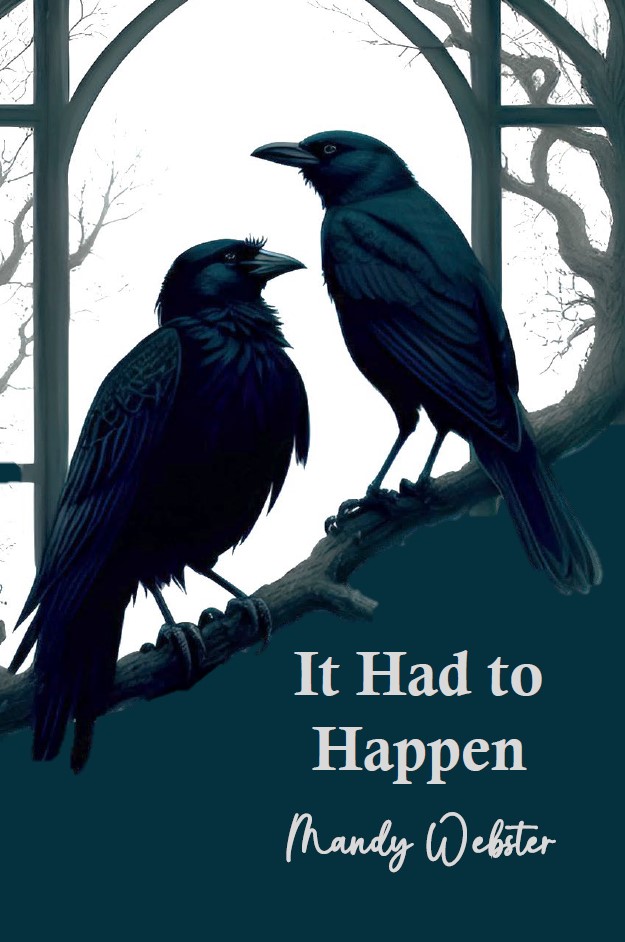
Check out my latest novel, It Had to Happen, now available in print and on Kindle!
Book Summary
When Jack Utley loses his daughter just as his business is about to soar, it seems he’s traded financial gain for Callie’s life. After an encounter with a mysterious woman on the eve of Callie’s funeral, Jack wakes up to find that time has somehow rewound to the morning of Callie’s accident. Jack gets an opportunity that most grieving parents can only dream of – he saves his daughter’s life.
Now that Jack has been forced to reflect on everything he has to lose, he resolves to do better. He’s determined to spend more time at home with his family and repair the relationships that have suffered over the years while he’s been so focused on work. But as Callie’s behavior becomes increasingly bizarre, Jack realizes he has a lot more room to improve than he realized – and it might be too late to save his daughter after all.
For fans of We Need to Talk About Kevin, The Push, and Baby Teeth.
Are you enjoying this content? Please consider leaving a tip! You can buy me a cup of coffee or donate a larger amount to help me “make a living” writing so I can quit my day job!
Become a regular patron of my art by signing up to contribute a set monthly dollar amount to help me make a living with my writing!
You can also make an annual contribution to my writing. Select an amount below!
Choose an amount
Or enter a custom amount
Your contribution is appreciated.
Your contribution is appreciated.
Your contribution is appreciated.

 Write on the World