As the author of the Sentient trilogy, Jay Vanlandingham’s writing explores the transformative power of empathy. “Through meaningful connection, empathy can flourish, opening us to the freedom of all beings—ourselves, animals, and nature alike,” he says. “Above all things, I wish for peace and serenity in my life, as well as the lives of all beings.”

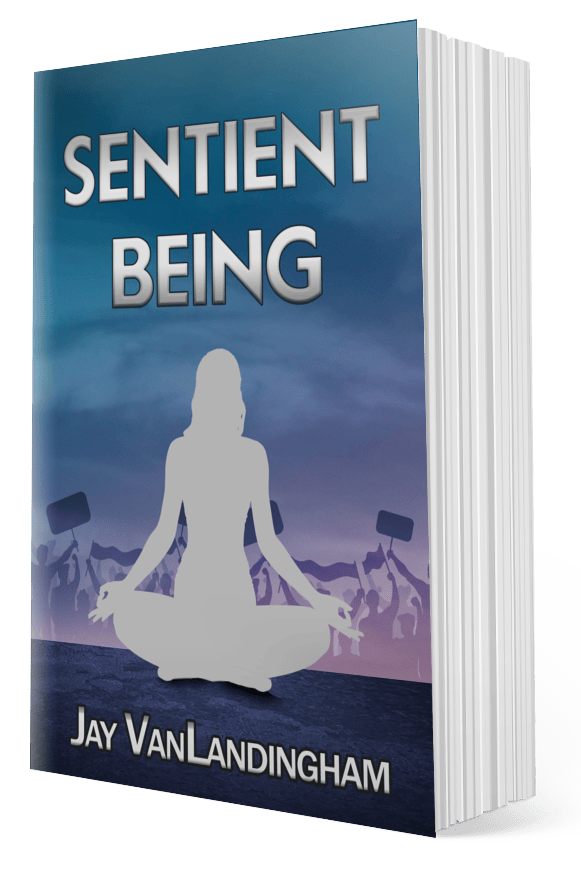
Vanlandingham is in the process of publishing his third novel, Sentient Being, which serves as the final installment of the Sentient trilogy. This series delves into the depths of the human spirit, with themes that reflect the author’s core values: freedom, non-judgment, and compassion for all beings. Sentient Being examines humanity’s response to the climate crisis, our relationship with animals, and other pressing issues, including immigration and LGBTQIA+ representation.
The author discovered a passion for writing at the age of seven and quickly fell in love with the craft. He enjoys creating fiction that sparks discussion and invites readers to ponder questions rather than presenting definitive answers. Vanlandingham’s body of work spans literary fiction and the Sentient dystopian series, which incorporates elements of magical realism and speculative fiction. Writing part-time since 2014, he views his work as a reflection of his commitment to social justice, a commitment also evident in his ten years as a vegan. His professional experience includes working with people living with HIV/AIDS, supporting individuals with severe mental illnesses, and serving as a social worker.
Beyond his writing and advocacy, Vanlandingham has traveled to Central America six times and worked with undocumented immigrants. He holds a Master’s degree in Social Work and a Bachelor’s degree in English, as well as certification as a Mindfulness Meditation Teacher. In his free time, he enjoys spending time in nature, connecting with friends and family, and caring for his one-eyed cat, Lucky.
Q: When did you first catch the writing bug? What drove you to persist?
A: When I was seven. I was in an after-school program and the teacher had us make our own books. While I don’t recall the process of writing and illustrating, I do remember vividly lying on the living room floor with my book in my hands, paging through it with amazement that I had created this piece of work, all by myself. That was a lot of power for a child to have, so that feeling is what drove me to continue. From that moment on I wrote stories constantly, and only stopped intermittently throughout adulthood. I just loved doing it too much to stop.
Q: What is your approach to incorporating elements of diversity and inclusion in your writing?
A: As a trans person myself, I feel it is EXTREMELY IMPORTANT, now more than ever, for there to be accurate, affirming representation of diversity in fiction. In my Sentient series in particular, the protagonist Bray Hoffman is a lesbian. One of the side characters, Elliott, is Black. And Kage Zair is transgender. There are a number of more minor characters throughout the series that are transgender as well. It happens naturally for me because I am diverse, so having diverse characters isn’t something I really “think” about. I just do it because it’s natural for me, so I wouldn’t say there’s an approach for me other than doing what feels most natural for the story. Elliott, for example, was Black because he was just Black. When I began picturing him, I saw him that way. It wasn’t something I thought, “how can I incorporate more diversity and is there a character I can make more diverse?” It just happened.
Q: If you could tell your younger writing self anything, what would it be?
A: That he can do anything he wants and be anything he wants. That nothing is impossible. That what his teacher said about anything being possible is true. That he can write all the stories and make a living out of it if it’s what he wants, and he deserves to do what he loves.
Q: Do you have an all-time favorite writer, or does your favorite change over time? Who is your favorite writer today?
A: Mine have changed over time. Dave Eggers was my favorite up until I got back into Stephen King about three or four years ago. I still love Dave’s work. His books and short stories are solid and his writing is effortless, but as of today, Stephen King is my favorite. I also love Cormack McCarthy, rest in peace.
Q: What kind of music or sounds do you like to listen to as you write, or do you prefer complete silence?
A: I use a writing playlist I put together on Spotify (for my Sentient series). Other, more literary stories it depends on the subject matter. I’ve listened to anything from M83 to jazz to write some of my stories. But overall, I tend to gravitate toward cinematic, instrumental music, such as movie soundtracks (Interstellar, Requiem for a Dream, Memento, Oppenheimer, most anything by Hanz Zimmer and James Horner.
Q: What have you written that you found to be the most fun to write?
A: I have a children’s book series, “Animals of Justice” about endangered animals throughout the world that gain special powers and work to fix climate problems that humans are creating. It’s been a total blast to write and I love it! Finishing up the first book soon, so I look forward to sharing it with the world.
Q: How did you become involved in the subject or theme of your book?
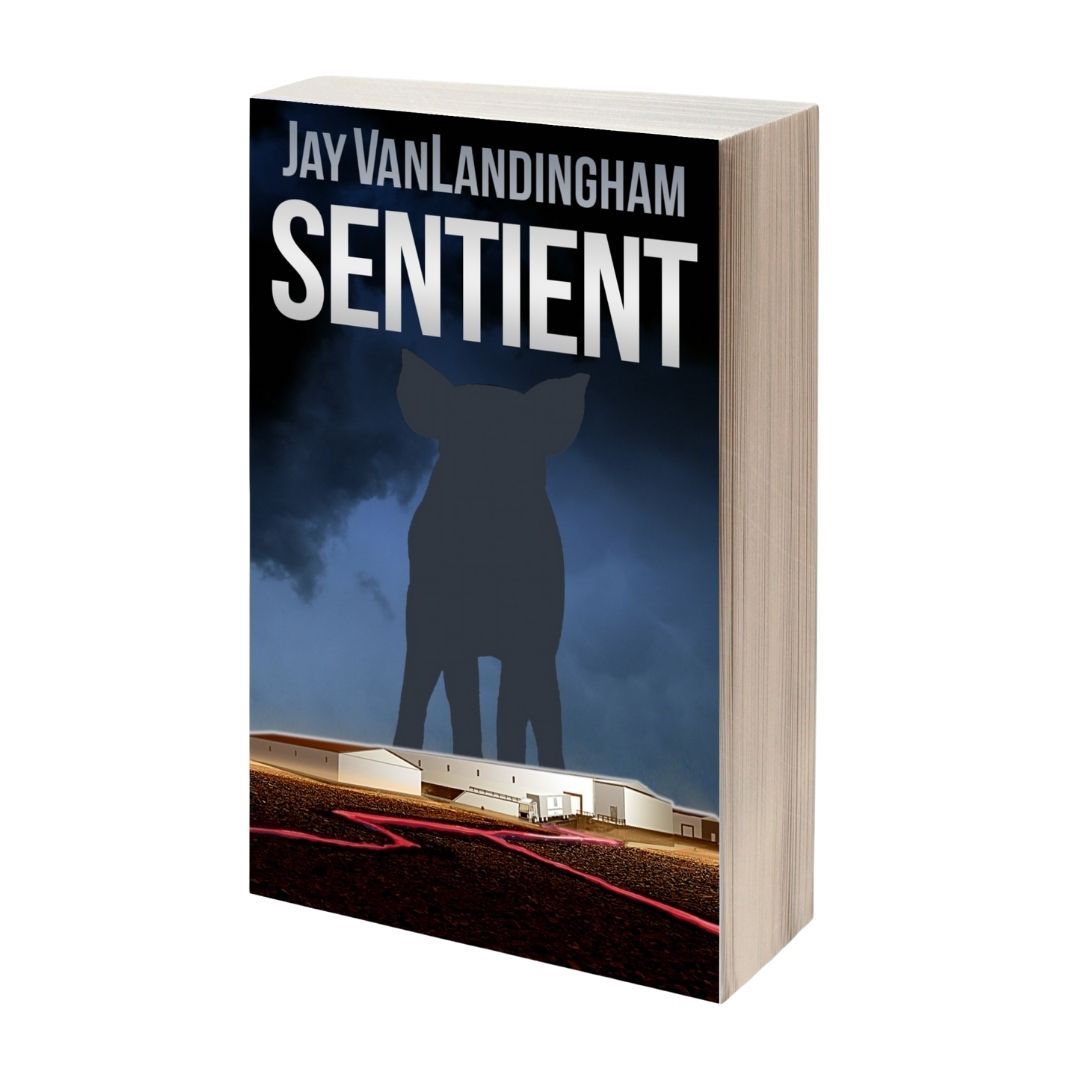
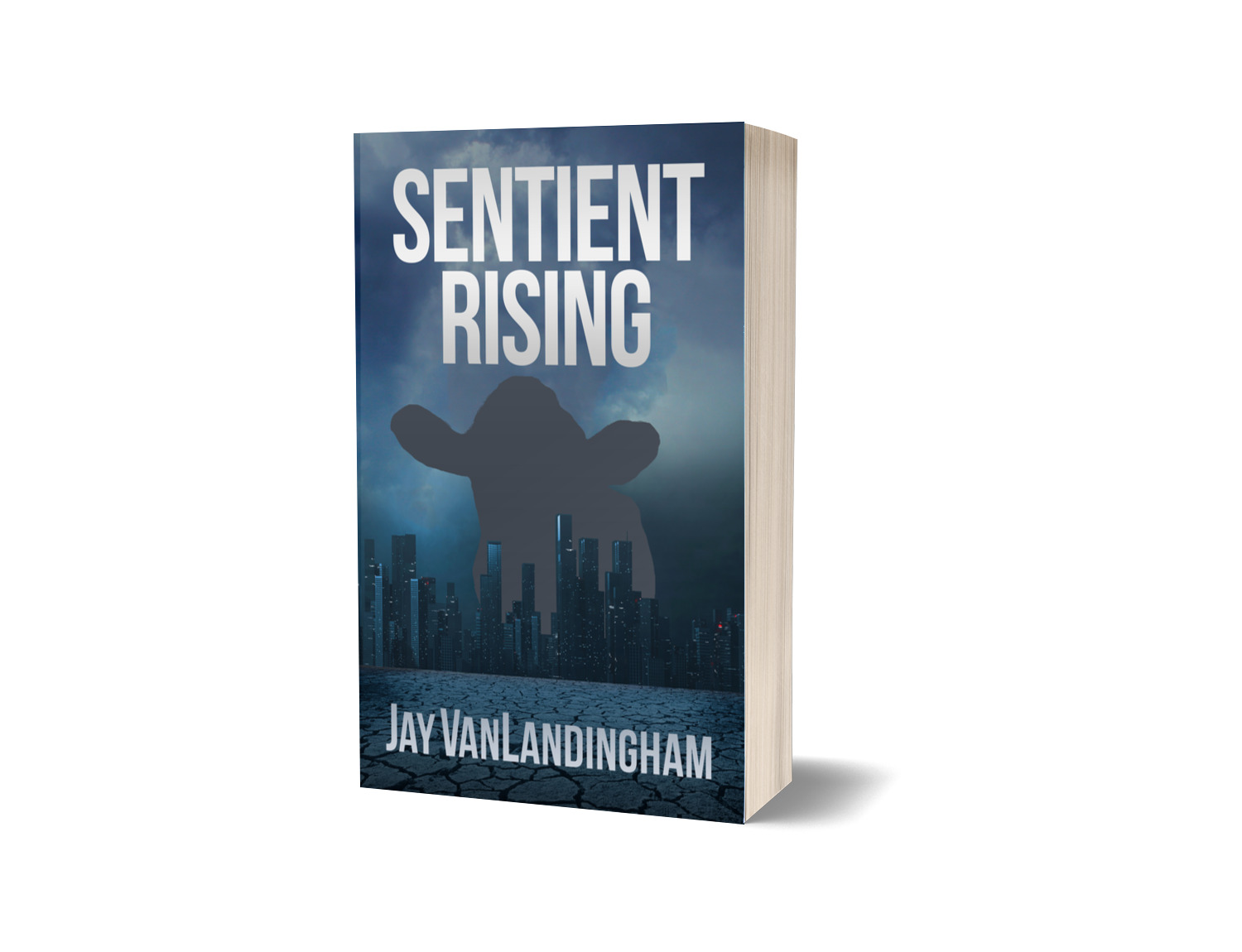
A: I went vegan over ten years ago after seeing documentaries about animals confined in factory farms. I’m the kind of person that gets very angered about injustice in the world, and when I get angry, I act. One way I’ve chosen to act is through my writing, so the idea for Sentient came to me, dropped right in my lap, while I was doing all this learning about the use of animals for food, etc.
Q: Are there misconceptions that people have about your book? If so, explain.
A: Yes and no. Often people express concern that it will be too graphic, and they are not wrong. I also get the impression that people assume the book is going to be “preachy”; and that it only serves to convince people to go vegan. Although it is there, on one level, to educate people about what happens to animals, it is so much more than that. It is about the characters and how they respond to injustice, how a group of people can create change in society, which I think a lot of people can relate to, especially right now.
Q: What are some day jobs that you have held? If any of them impacted your writing, share an example.
A: My day job is in social work. Over the years I’ve worked with the severely mentally ill, people living with HIV/AIDS, and people living with cancer. Currently I help mostly the transgender and non-binary population. All of these jobs have impacted my writing. One example is in my upcoming book, Sentient Being. Much of my work focuses on the importance of relationship and social justice. The novel explores the importance of community, of people coming together for the same cause. That when we build connections and relationships and focus on empathy, we can overcome anything.
Q: What makes your book stand out from the crowd?
A: Well, first and foremost there are only a small number of books out there currently that address the use of animals for food. Tender is the Flesh comes to mind. But more than that, I think this book stands out because of its overall messaging, that we need to focus on developing deeper empathy, and that this empathy starts with ourselves. Sentient Being in particular focuses on the main character’s most daunting task, which is to accept her feelings and to overcome her own inner demons. There is a spiritual aspect to the book, and also some magical realism that I think is incredibly unique.
Q: Do you write more by logic or intuition, or some combination of the two? Summarize your writing process.
A: I write mostly by intuition. My ideas come to me by way of intuition, a “feeling” or “instinct”. I think logic can get too much in the way. I use intuition to begin, to move the idea into a first draft. I do the upfront work of really getting to know the characters first. Doing a lot of character development, followed by world building. Much of the world building is more logical. And some of the character development needs to be, as well. But beyond that, at a certain point I need to just sit down, let go, and trust the creative process. Trust the Muse.
When I let go, I’m not sure if it’s intuition that takes over, but I’ve always felt I am more of a conduit for the story to move through me and onto the page. So yes, it’s a feeling. What do I feel the character would do? And often times, the story completely takes over, or the characters do, and magic happens. That is when my “self” is most removed, and the story can do what it was intended to do. For me, the writing process is very spiritual and about removing my own barriers and my own limiting thoughts and beliefs, like panning for gold, so that the good stuff can get through.
Connect with the author
- Author website: https://www.jayvanlandingham.com/
- Substack: https://jayvanlandingham.substack.com/
- Instagram: https://www.instagram.com/jayvanauthor/
- Linktree: https://linktr.ee/JayVeganWriter
Now available in print and on Kindle!

While you’re here, don’t forget to check out my latest suspense novel, It Had to Happen, now available in print and on Kindle!
Book Summary
When Jack Utley loses his daughter just as his business is about to soar, it seems he’s traded financial gain for Callie’s life. After an encounter with a mysterious woman on the eve of Callie’s funeral, Jack wakes up to find that time has somehow rewound to the morning of Callie’s accident. Jack gets an opportunity that most grieving parents can only dream of – he saves his daughter’s life.
Are you enjoying this content? Please consider leaving a tip! You can buy me a cup of coffee or donate a larger amount to help me “make a living” writing so I can quit my day job!
Become a regular patron of my art by signing up to contribute a set monthly dollar amount to help me make a living with my writing!
You can also make an annual contribution to my writing. Select an amount below!
Choose an amount
Or enter a custom amount
Your contribution is appreciated.
Your contribution is appreciated.
Your contribution is appreciated.

1 thought on “Author interview with dystopia writer Jay Vanlandingham”