
The M.I.C.E. Quotient is a method of categorizing stories based on the four core narrative elements of Milieu, Idea, Character, and Event. This method was developed by science fiction writer Orson Scott Card and is used by many writers and editors to help identify and refine the central focus of a story.
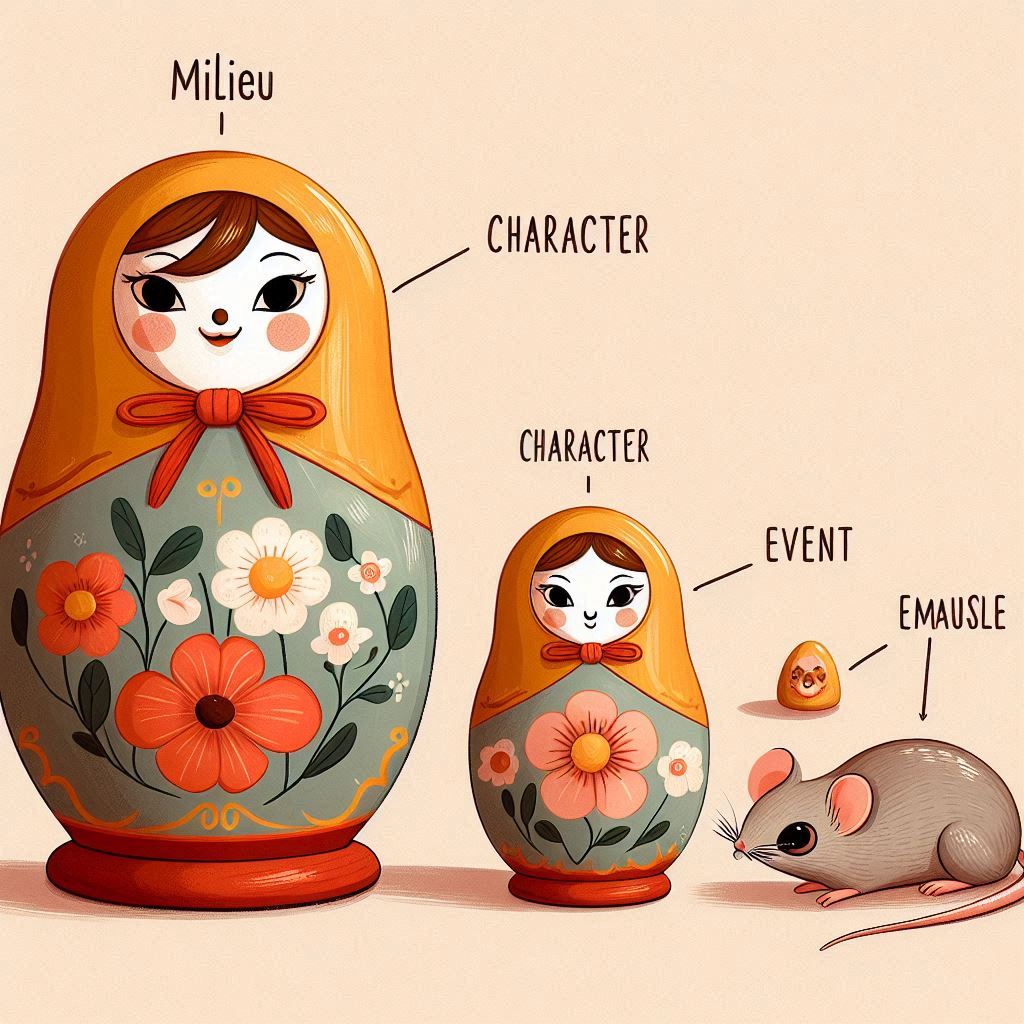
The M.I.C.E. Quotient is an excellent place to start when evaluating the focal point of a novel manuscript. It helps the writer determine whether the first draft concentrates on the appropriate element or elements that will most effectively achieve their creative vision. The following is a breakdown of each element:
- Milieu: This refers to the setting and world-building of the story. Stories with a strong Milieu focus are often characterized by richly detailed descriptions of the world, its history, and its cultures.
- Idea: This refers to the central concept or “big idea” that drives the story. Stories with a strong Idea focus are often characterized by philosophical or moral questions and may explore complex themes or issues.
- Character: This refers to the development and growth of the characters in the story. Stories with a strong Character focus are often characterized by deep, complex characters with complex motivations and relationships.
- Event: This refers to the plot and action of the story. Stories with a strong Event focus are often characterized by fast-paced, exciting action and suspenseful, high-stakes moments.
When evaluating your novel draft, you might start by asking yourself which of the M.I.C.E. Quotient elements are most important to achieving your creative vision. Rank the elements in the order of their importance to that vision and then review your manuscript to determine whether what you have written meets the expectations you have set forth in your rankings. For example, you may have a big idea that you want to be the focal point of your story, yet when you evaluate what you have written, you find that you focused so much on the event that the idea has been lost. In such case, this is something you will want to take note of and begin to consider how you might address the problem in revisions.
Each of the narrative elements listed above has the potential to become the main driver of your story. For example, if you love world-building, then richly detailed descriptions might be your top priority. However, most successful stories will rely on a certain mix of all the aforementioned narrative elements to write a complete story that the intended audience will enjoy reading. What that mix looks like will depend on you, the author, making certain artistic decisions designed to create a final product that achieves the intended impact. It will also depend, to a certain extent, on your intended genre and audience as readers often hold specific expectations of a novel that depends on its perceived genre.
By analyzing a story’s core narrative elements using the M.I.C.E. Quotient, writers and editors can identify the key strengths and weaknesses of the story and work to refine its focus and structure. Not only can this help you achieve your creative vision, but it can also help you create a more engaging, cohesive, and satisfying reading experience for your audience.
Now available in print and on Kindle!

Check out my new novel, It Had to Happen, now available in print and on Kindle!
Book Summary
When Jack Utley loses his daughter just as his business is about to soar, it seems he’s traded financial gain for Callie’s life. After an encounter with a mysterious woman on the eve of Callie’s funeral, Jack wakes up to find that time has somehow rewound to the morning of Callie’s accident. Jack gets an opportunity that most grieving parents can only dream of – he saves his daughter’s life.
Now that Jack has been forced to reflect on everything he has to lose, he resolves to do better. He’s determined to spend more time at home with his family and repair the relationships that have suffered over the years while he’s been so focused on work. But as Callie’s behavior becomes increasingly bizarre, Jack realizes he has a lot more room to improve than he realized – and it might be too late to save his daughter after all.
For fans of We Need to Talk About Kevin, The Push, and Baby Teeth.
Are you enjoying this content? Please consider leaving a tip! You can buy me a cup of coffee or donate a larger amount to help me “make a living” writing so I can quit my day job!
Become a regular patron of my art by signing up to contribute a set monthly dollar amount to help me make a living with my writing!
You can also make an annual contribution to my writing. Select an amount below!
Choose an amount
Or enter a custom amount
Your contribution is appreciated.
Your contribution is appreciated.
Your contribution is appreciated.
